

Plastic injection molding has become one of the most strategically important manufacturing methods in modern industry, turning raw thermoplastics into high-quality finished parts for everything from consumer goods to automotive, medical devices and aerospace.
As the process grows more central to supply chains, the French article asks a practical question for industrial buyers: why choose a France-based injection molding partner for technical polymer components—especially when factors like responsiveness, quality systems and innovation can matter as much as pure production capacity?
The piece argues that France’s plastics sector has built a reputation in Europe for precision manufacturing and end-to-end support, positioning French suppliers as partners that can add value from early design through high-volume production.
Injection molding: a precision process built for complex parts
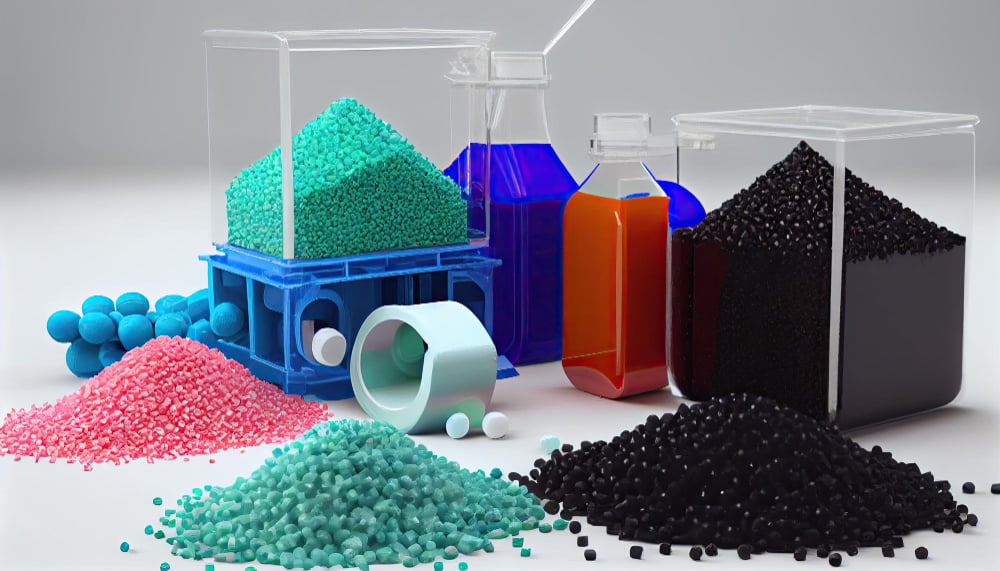
Injection molding is a thermoplastics processing method designed to produce parts with very high fidelity. Plastic resin pellets are heated until viscous, then injected under high pressure into a mold. After cooling, the part takes the exact shape of the cavity.
The method is well suited to serial production—whether a few hundred parts or large industrial volumes. Its versatility supports complex geometries and tight dimensional tolerances. The article highlights several core advantages: high precision and repeatability, flexibility from prototyping to mass production, and improving unit economics once the mold is built as volumes rise.
It also emphasizes the broad range of usable materials, including plastics and composites selected for mechanical, chemical, thermal or aesthetic performance, as well as the ability to integrate surface textures and colors directly in production.
Mold design is presented as a key lever. The mold’s sizing depends on annual volume targets and includes decisions such as the number of cavities (how many parts are produced per cycle) and the grade of steel—factors that influence durability and overall process performance.
France as a European hub for technical plastics manufacturing
The French technical plastic parts industry holds what the article describes as a strategic position in Europe. Citing “the most recent data,” it says the sector’s sold production represents significant revenue, reflecting both momentum and expertise—driven by an ecosystem of innovative companies and skilled professionals.
Choosing a French partner, the article argues, means tapping into a recognized manufacturing tradition that often spans the full chain—from initial design to delivery of finished products. French manufacturers are described as frequently offering comprehensive project support, with close tracking at each stage.
It points to specialists such as Martin Plastiques Innovation, which it says supports industrial customers from prototype through high-volume runs, with production described as 100% French. That vertical integration and local expertise, the article adds, can translate into faster response times and a clearer understanding of industrial constraints.
Process control and innovation: what the article says French suppliers do differently
One of the strongest arguments presented for prioritizing a French injection molding player is deep process mastery. The article frames that expertise as more than execution—covering materials science, mold design, optimization of injection parameters and quality control.
Engineering know-how, from material choice to mold design
French companies, the article says, invest continuously in research and development to offer innovative solutions. They can advise on material selection based on technical and cost constraints, whether using standard polymers, engineering-grade plastics or high-performance materials.
Mold engineering—described as fundamental—is often handled in-house or in close collaboration with highly qualified local toolmakers, which the article says helps ensure designs optimized for durability and precision.
This approach is positioned as a way to meet demanding specifications, from validating a concept through rapid prototyping to producing millions of parts. The ability to manage small runs with the same rigor as large ones is presented as an advantage, allowing projects to mature and adapt to market changes.
Innovation aimed at performance—and a smaller footprint
Innovation is described as a key driver, including efforts to improve product performance while reducing environmental impact. Examples cited include using recycled or bio-based materials, optimizing injection cycles to cut energy use, and developing overmolding and two-shot molding techniques for multifunctional parts.
The article argues that this continuous improvement helps keep solutions aligned with the latest industrial standards, and that a French partner’s flexibility shows up in the ability to tailor solutions to each customer.
Proximity and responsiveness as strategic advantages
Working with an injection molding company based in France can bring logistical and relationship benefits, the article says, because geographic proximity simplifies communication and strengthens collaboration between customer and manufacturer.
Project communication and hands-on oversight
The article argues that the absence of a language barrier supports clear, direct communication. It also notes that being in the same time zone enables real-time exchanges and faster decisions.
It adds that it can be easier to schedule on-site visits, attend tooling trials or validate key production milestones—transparency that can help build a durable relationship of trust.
Faster reaction to surprises—and tighter lead times
When adjustments are needed, last-minute changes arise or unexpected problems occur, the article says a local partner can respond more quickly. Shorter transport times reduce the risk of supply-chain delays, an advantage in an economy where speed to market and flexibility matter.
Inventory and logistics flows can also be optimized, potentially reducing costs and improving resilience. A nearby supplier may be able to support just-in-time delivery, lowering the customer’s storage needs.
Quality systems and traceability: the “Made in France” argument
The “Made in France” label is presented as shorthand for quality and strict standards. In injection molding, the article says, that translates into a strong commitment to product and process excellence.
Strict standards and certified quality management
French plastics companies operate under demanding European and national regulations on quality, safety and the environment, the article says. It adds that they implement certified quality management systems—such as ISO 9001—designed to ensure full traceability from raw materials to finished parts.
Each production step is controlled to ensure parts conform to requirements, the article argues—an especially critical point for medical, aerospace and automotive applications, where failures can have major consequences.
Transparency and production ethics
Beyond technical considerations, the article says “Made in France” also carries expectations around social responsibility. Working conditions are governed by French law, which it describes as ensuring a fair and safe environment for employees.
Environmental commitments are also described as growing, including efforts to reduce the carbon footprint of production and increase recycling of plastic waste.
As the article puts it, the choice extends beyond the product itself by supporting a local economy and aligning with sustainable development principles. It quotes an unnamed sector expert:
“Prioritizing local production means investing in a virtuous circle where quality, innovation and responsibility reinforce each other, creating long-term value for everyone.”
The article argues that this commitment shows up in the durability of the parts produced and the confidence customers can place in French suppliers.
What the article says buyers gain by choosing a French injection molding partner
The article concludes that selecting a French injection molding specialist can deliver practical advantages that influence project success—framed as a long-term partnership built on trust and excellence.
It summarizes the case around deep technical control, ongoing innovation, geographic proximity that improves responsiveness and project follow-through, and a strong emphasis on quality and traceability. Combined, it argues, those factors can support high-performance parts and reduce stress for industrial customers.
To illustrate the claimed benefits, the article includes a comparison table:
| Criterion | Advantages of a French player | Impact on your project |
|---|---|---|
| Technical expertise | Mastery of materials and processes, continuous innovation. | High-precision parts, optimized solutions, durability. |
| Geographic proximity | Easier communication, on-site visits, reduced transport times. | Greater responsiveness, better handling of surprises, personalized follow-up. |
| Quality and compliance | Compliance with European standards, certified quality systems. | Reliable products, full traceability, reduced risk. |
| Responsiveness and flexibility | Fast adaptation to changes, management of small and large runs. | Faster time to market, ability to adjust, cost optimization. |
| Ethics and responsibility | Respectful working conditions, environmental commitment. | Stronger brand image, contribution to sustainable development. |
Ultimately, the article argues that prioritizing a French supplier is a bet on a stable partner that can support a project from early concepts through demanding high-volume production—an investment in quality, longevity and collaboration.



