

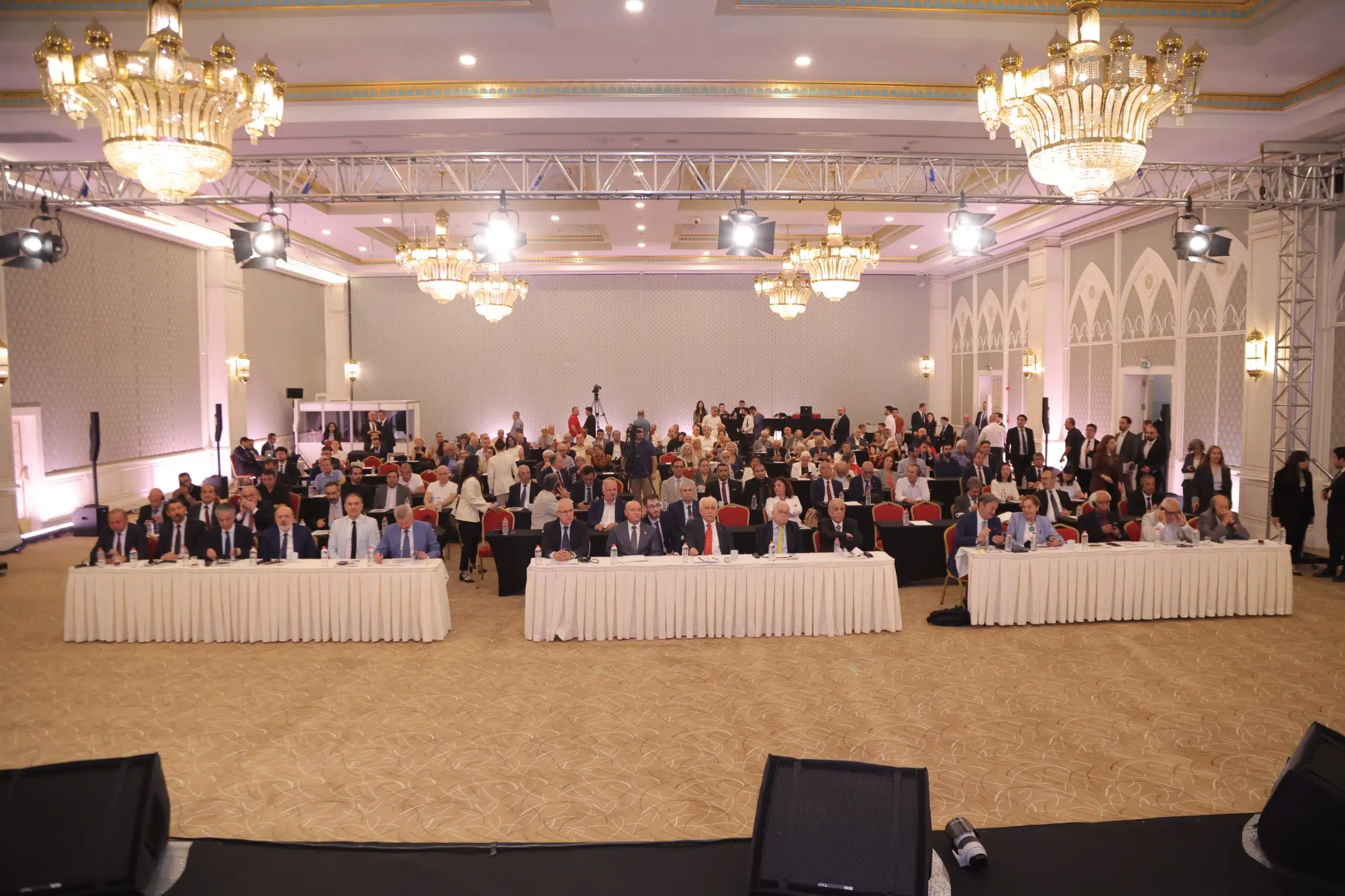
Diplomats, former military leaders and academics from 19 countries gathered in Ankara on July 7 and 8 to assess the risk that the war in Ukraine could widen—and to press for a return to negotiations amid rising fears of escalation, including nuclear scenarios.
The meeting, billed as the “Alliance Conference to Prevent a Major War,” was organized by the research center of the World Civilisations Initiative, a group that promotes dialogue between civilizations and regularly convenes international discussions on geopolitical issues. The opinions reported below are those of the speakers cited.
Delegations included representatives from the United States, the United Kingdom, Germany, Spain, Switzerland and Greece. Discussions focused on ways to avoid a broader conflict and on strengthening cooperation among Turkey, Russia, China and Iran.
Speakers warn of escalation risks, including nuclear scenarios
Former CIA analyst Larry Johnson described Ukraine as an especially sensitive flashpoint. In his view, direct NATO involvement could increase the risk of nuclear escalation. He also said Russia could, under certain circumstances, consider using tactical nuclear weapons.
Retired Turkish Rear Adm. Deniz Kutluk laid out several scenarios that could lead to a larger war. In the most severe case, he said, a new escalation could result in the use of tactical nuclear weapons targeting European capitals, then expand into a generalized conflict. Kutluk argued that Europe and Russia would have more to gain by viewing each other as geopolitical partners, even as their relationship has entered what he called a period of instability.
Dimitris Konstantakopoulos, a former adviser to Greek Prime Minister Andreas Papandreou, said worsening tensions in Ukraine and in Western Asia could raise the risk of a nuclear confrontation. He called for de-escalation, while lamenting that few European political forces fully grasp the danger.
Calls for diplomacy—and for Europe to build more strategic autonomy
German political scientist Ulrike Guérot urged participants to reexamine NATO’s role and to quickly return to diplomacy. She argued the conflict cannot be explained solely by Russia’s actions, saying it also stems in part from NATO’s involvement and the United States’ long-term strategy.
Guérot also questioned whether current European policy is serving the continent’s own interests. Calling the pursuit of a total military victory unrealistic, she advocated restarting diplomatic dialogue in place of policies she said are helping prolong the war.
Javier Hurtado Mira, president of the European Democratic Youth Community, said the European Union lacks an independent foreign policy on Ukraine. He called for a reassessment of NATO’s role and of decision-making mechanisms in Brussels.
He also said younger generations bear a large share of the human cost of wars, urging governments to prioritize negotiation and dialogue over policies that could intensify tensions.
NATO’s approach questioned as panelists debate “NATO 3.0”
British professor Richard Sakwa described three phases in NATO’s evolution, arguing the alliance is now entering what he called “NATO 3.0.” Under this phase, he said, European countries would take on a larger share of the military burden, allowing the United States to focus more attention on other regions, including the South China Sea and Taiwan.
Sakwa added that this model puts renewed emphasis on containing Russian influence. He also said the Ankara conference did not produce a durable approach to the war in Ukraine. In his analysis, trying to force Russia to negotiate primarily through military pressure could instead fuel escalation.
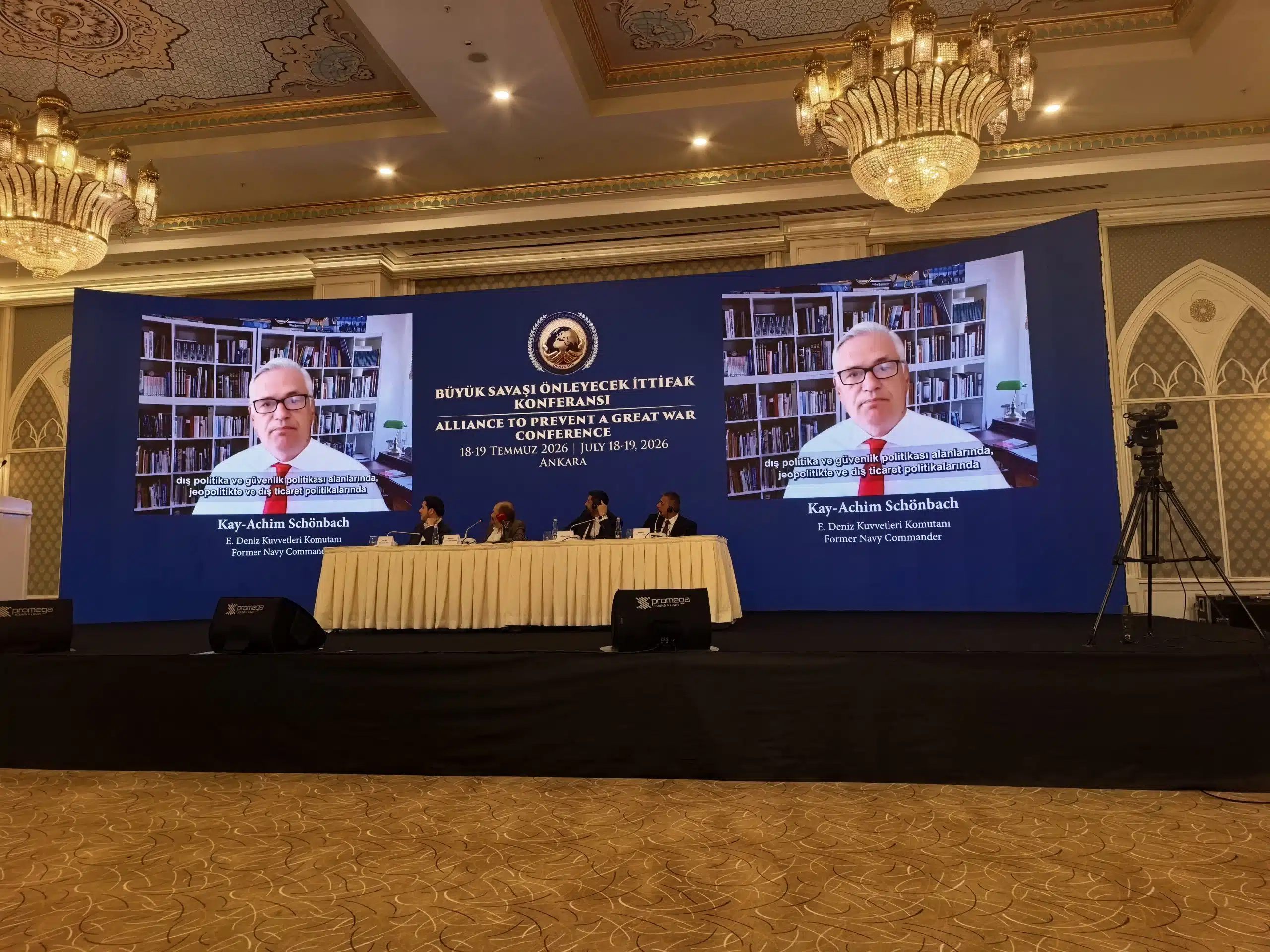
Retired German Vice Adm. Kai-Achim Schönbach, who commanded the German navy until 2022, said Europe has not been this close to a major war since the Cuban Missile Crisis. He said the conflict could have been avoided and attributed its escalation to insufficient risk assessments, political power dynamics and too limited a consideration of historical causes.
Drawing on his military experience, Schönbach concluded that diplomacy based on mutual respect and equality among the parties remains the most effective way to prevent the conflict from expanding.



