
Four microreactors in the United States reached “criticality” around July 4, a rare technical milestone for a nuclear sector trying to speed up new builds. At the same time, China is considering whether to allow several of its AI heavyweights—including Alibaba, ByteDance and DeepSeek—to buy Nvidia’s H200 chips, a coveted data-center GPU.
Together, the two developments point to the same pressure shaping 2026: the race is increasingly about both low-carbon electricity and access to high-end computing for artificial intelligence. Data centers are drawing more power, and electric grids are being pushed to absorb new demand—making today’s industrial and political decisions central to energy security, tech sovereignty and emissions trajectories.
The issues are separate, but they reinforce each other. On one side, nuclear developers are trying to prove tangible progress. On the other, Chinese AI firms are waiting for administrative signals that could unlock supplies of cutting-edge semiconductors.
Four U.S. microreactors reach “criticality,” clearing a symbolic July 4 target
In nuclear engineering, “criticality” means a reactor can sustain a controlled chain reaction. Four microreactors in the U.S. reached that stage around July 4—an intentionally symbolic deadline with political weight.
The Trump administration had set a goal of getting three microreactors to criticality in time for the country’s 250th anniversary. Hitting four instead is being framed as a positive signal for an industry that has spent years battling slowed projects and rising costs.
But criticality is not the same as delivering electricity to the grid. Reaching this point does not mean all operating approvals are in hand, nor does it prove a reactor can produce steady power for commercial use. In nuclear power, the gap between a technical demonstration and routine service can be long, with additional steps required for system qualification, safety, operator training and regulatory validation.
The milestone comes as electricity demand rises, driven by electrification, reindustrialization and the growth of digital uses. Microreactor backers argue the technology could provide dispatchable energy with low direct CO emissions and potentially be deployed faster than traditional plants. Critics counter that the promise hinges on the ability to industrialize, standardize and finance projects while meeting extremely strict safety requirements.
Politically, July 4 serves as a media marker and a mobilizing tool. Practically, the next phase will draw scrutiny: moving from demonstration to a stable supply chain, securing power-purchase contracts, and coordinating with nuclear safety authorities. For developers, the challenge is turning lab or prototype success into credible energy assets—with a timeline, cost per megawatt-hour and maintenance plan that meet operator expectations.
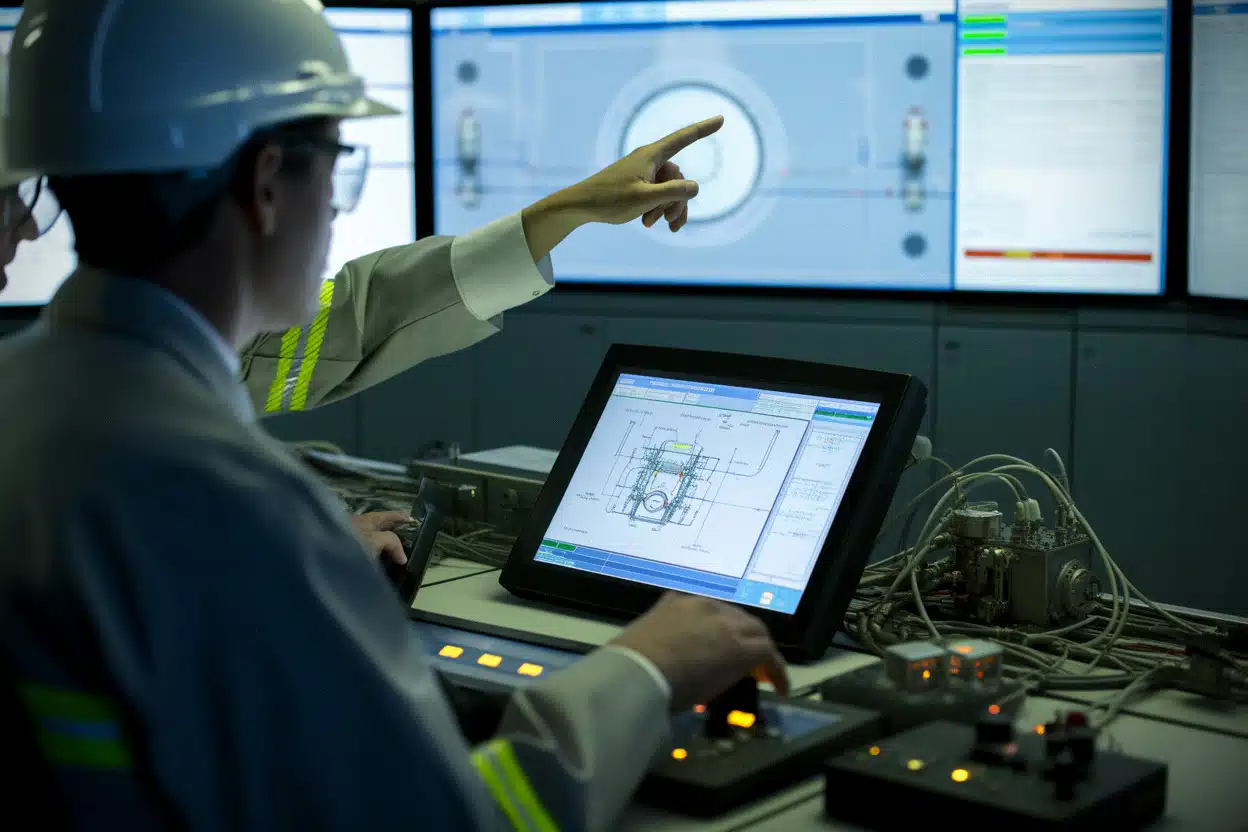
From a physics proof to grid power, the remaining gap is the real test
Achieving criticality demonstrates the underlying physics works, but it doesn’t answer the central question: when and how these microreactors will deliver useful electricity—at an acceptable price, with safety guarantees and high availability. In nuclear history, technology demonstrations have often come years before commercial operations, especially when new architectures or manufacturing processes must be scaled.
Connecting to the grid adds further requirements, including stable output, protection systems and integration into power markets shaped by capacity rules. Grid operators are looking for ways to strengthen resilience against demand spikes and climate-driven disruptions. Microreactors—smaller units by design—are sometimes pitched for remote sites, industrial facilities or logistics bases, provided the business model can withstand construction, insurance and decommissioning costs.
Public debate often fixates on deployment speed. But the equation also depends on skilled labor, critical components and the ability to replicate designs without cost overruns. The U.S. has a nuclear ecosystem, yet developers still face international competition, local expectations and administrative processes that prioritize safety demonstrations over speed. Supporters argue standardization could bring gains; skeptics note that first-of-a-kind projects often absorb most of the overruns.
Another friction point is the decarbonization timeline. To materially cut emissions, the technology must be available at scale on a schedule compatible with climate goals. Microreactors could play a complementary role, but they don’t replace tools that can be deployed sooner—such as energy efficiency, storage, grid upgrades or some renewable capacity. For now, the moment functions as a test of whether a project pipeline can advance without stalling on regulation, financing or public acceptance.
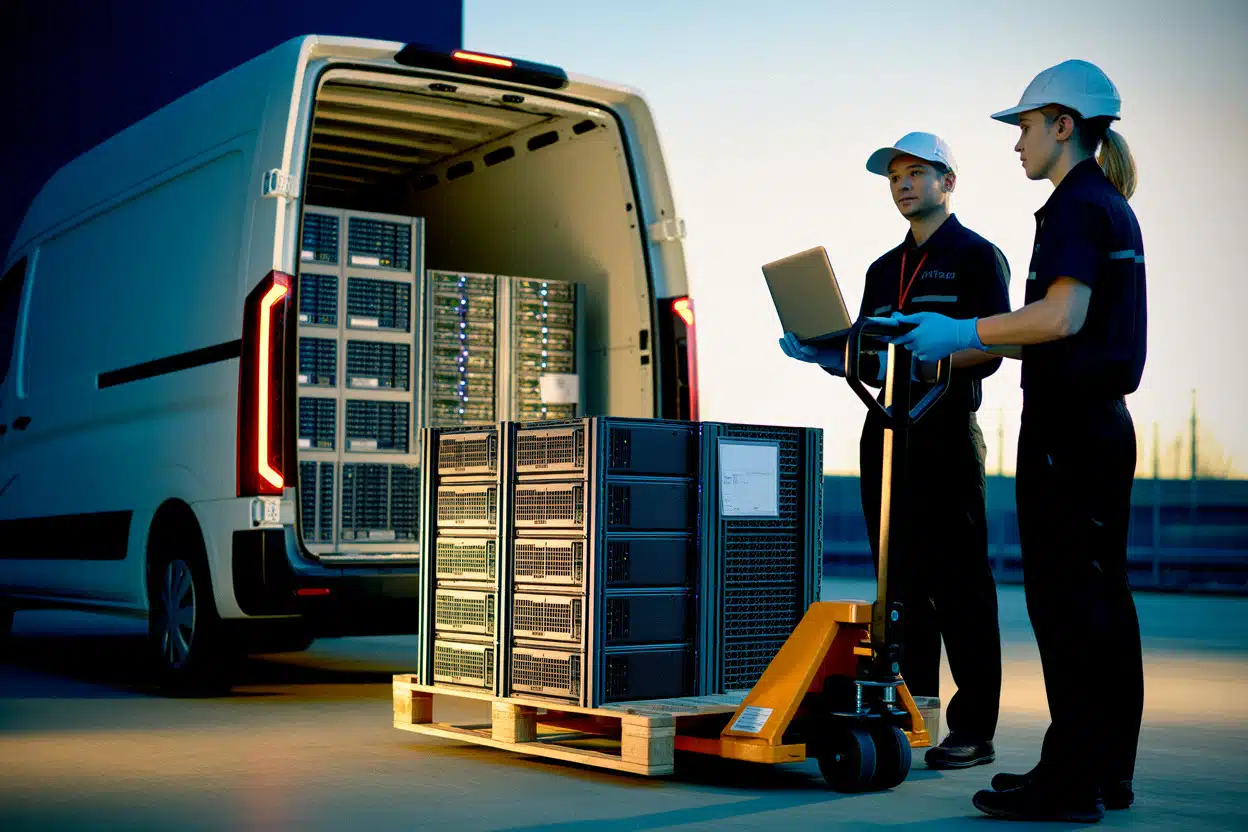
China weighs allowing Alibaba, ByteDance and DeepSeek to buy Nvidia H200 chips
On the semiconductor front, China is reportedly considering letting several major domestic AI companies—including Alibaba, ByteDance and DeepSeek—purchase Nvidia H200 chips. The report lands in a world where permits and export controls shape access to hardware, and where Chinese firms are trying to secure computing capacity for training and running increasingly power-hungry models.
A notable detail: China is said to have held back approval so far, despite a U.S. authorization referenced in the relayed sources. If Beijing ultimately gives the green light, it could reflect a pragmatic approach—supporting the competitiveness of national AI players by granting access to high-performance accelerators, while politically managing volumes, recipients and uses. In a climate of regulatory uncertainty, the ability to buy, ship and deploy these cards becomes a strategic variable.
For the companies involved, the Nvidia H200 is a key resource. The AI contest runs on data and talent, but also on having enough GPU racks with reliable supply chains. Delays in access to compute can translate into slower product rollouts, weaker model quality, or reduced ability to meet fast-growing inference demand. Hardware choices also shape energy costs—and therefore data-center operating expenses.
The potential approval also highlights China’s continued dependence on leading foreign technology, despite efforts to build a domestic chip ecosystem. Policymakers are balancing long-term industrial sovereignty against immediate performance. Allowing H200 purchases can be read as a stopgap until local supply closes part of the gap—or as a way to keep China’s AI ecosystem moving during an intense period of global competition.
AI compute, export controls and electricity demand are converging into one strategic equation
Microreactors and GPUs intersect on a physical constraint: electricity. Training and deploying AI models relies on data centers whose energy demand is rising. Access to chips like Nvidia’s H200 isn’t only about performance—it’s also about powering infrastructure and managing heat, cooling and continuity of service. In several countries, data-center operators are negotiating grid connections, long-term contracts or dedicated generation.
Against that backdrop, the U.S. microreactor milestone can be read as an attempt to broaden the menu of dispatchable, low-carbon options. Microreactors aren’t designed solely for data centers, but public discussion increasingly links AI growth to the search for new power capacity. The same dynamic shows up in grid modernization, storage buildouts and efforts to improve the energy efficiency of computing facilities.
Export restrictions and administrative approvals add a geopolitical layer. When access to a critical component becomes uncertain, companies adjust—diversifying suppliers, optimizing software for less capable chips, or shifting workloads to where hardware is available. Governments use these levers to steer value chains, sometimes at the expense of a smoother global market.
Beyond rivalry, the moment points to a practical reality: industrial policy and energy policy can’t be planned separately anymore. Chips without cheap, reliable electricity lose value, and power capacity without an industry that can turn it into competitive digital services doesn’t create an advantage on its own. The coming months will show whether the signals translate into actual commissioning, real deliveries and usable capacity for companies and grids.
Key Takeaways
- Four microreactors reach criticality in the United States, a technical milestone but not grid commissioning
- The Trump administration had targeted three microreactors by this symbolic deadline; the goal has been exceeded
- China is considering allowing Alibaba, ByteDance, and DeepSeek to buy Nvidia H200s
- Access to compute and the availability of electricity are becoming linked strategic factors
Frequently Asked Questions
What is criticality for a nuclear reactor?
Criticality is the point at which the reactor can sustain a chain reaction in a stable, controlled way. It’s a major technical milestone, but it doesn’t automatically mean the plant is producing electricity for the grid.
Why doesn’t criticality mean immediate commissioning?
After criticality, there are still testing steps, safety demonstrations, regulatory approvals, system qualification, and sometimes grid interconnection work. These requirements determine when regular commercial operation can begin.
Why are Nvidia H200s in demand among AI companies?
H200s are accelerators used to train and run AI models. Having high-performance GPUs in large quantities affects development speed, operating costs, and the ability to meet inference demand.
What’s the connection between data centers and energy policy?
Data centers use a lot of electricity and require a stable power supply. Governments and industry therefore try to secure power capacity—low-carbon if possible—while managing grid and cooling constraints.
Sources
- NATO is building a network to stop Russian attackers in their tracks.
- The Download: a nuclear landmark, and China eyes Nvidia chips | MIT Technology Review
- a nuclear landmark, and China eyes Nvidia chips – Boulder Daily
- The Download: a nuclear landmark, and China eyes Nvidia chips …
- The Download: a nuclear landmark, and China eyes Nvidia chips