
3D product configurators, digitally cut foam inserts, and on-demand production shipped in under a week are reshaping a quiet but strategically important corner of French manufacturing: professional technical packaging. The sector protects everything from touring mixing consoles to lab-grade measurement instruments, and French makers say they’ve found a way to deliver profitable “mass customization” without moving production offshore.
One company often cited as a textbook example is La Fabrique du Flight Case, a French manufacturer backed by Groupe Lacroix, a packaging specialist. The company says it can build standard and custom flight cases—along with trunks, 19-inch racks, watertight cases, and drawer crates—with a delivery commitment of five business days, a turnaround the article notes would have sounded like science fiction for custom wood packaging a decade ago.
From touring staple to industrial testbed for mass customization
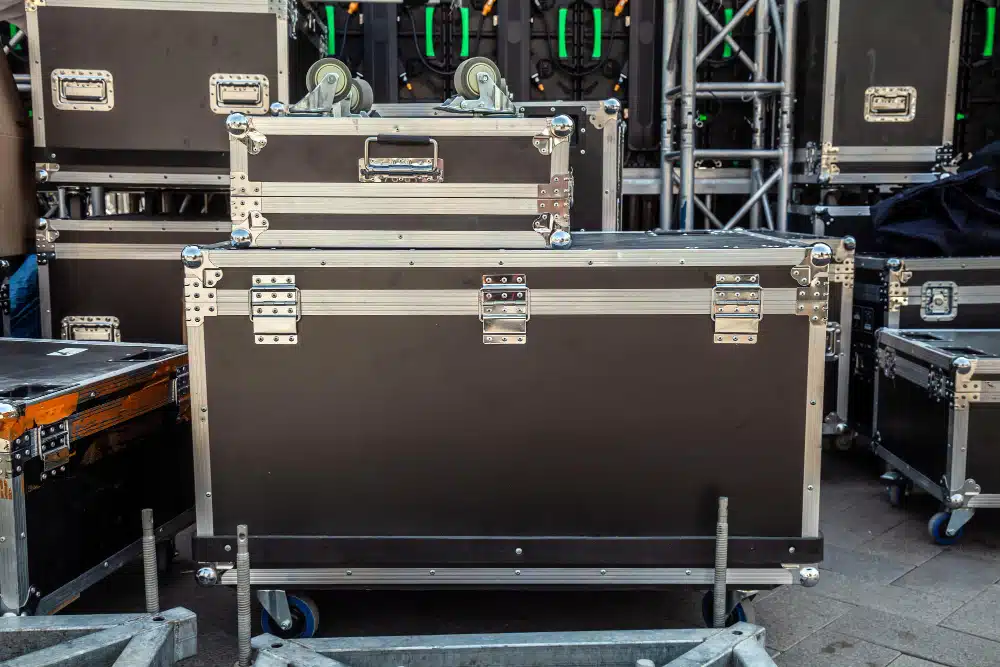
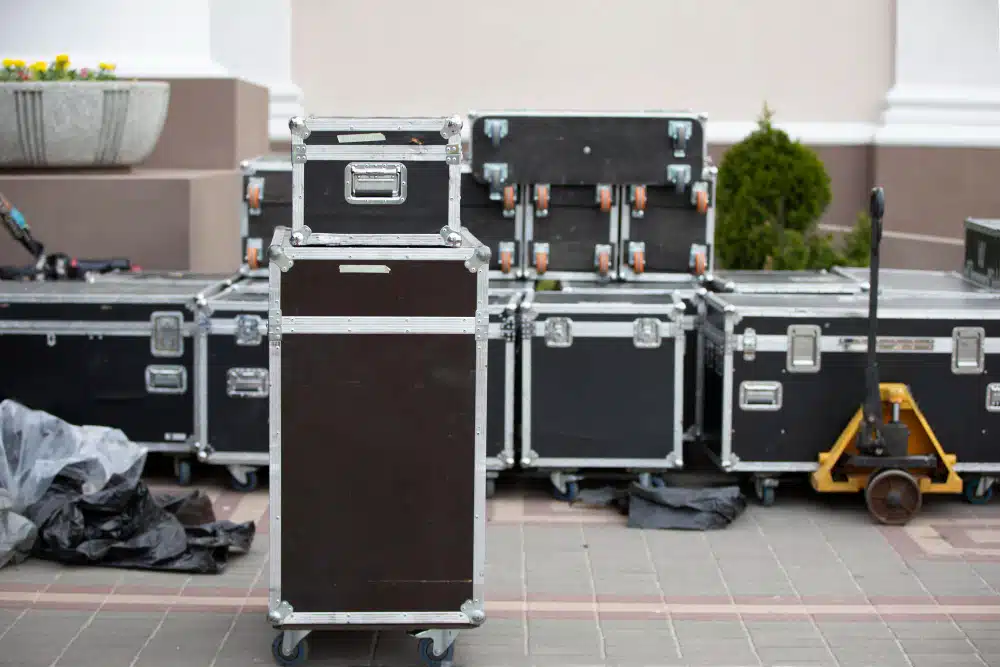
A flight case is a professional transport crate built to survive repeated handling and travel while protecting sensitive equipment—audio and video gear, instruments, and industrial or medical devices. The article describes the typical construction as 7 to 12 millimeters of birch plywood (about 0.28 to 0.47 inches), banded with aluminum profiles and reinforced with steel corners.
Once closely associated with music tours, flight cases have become one of the most advanced proving grounds for industrial mass customization. Each case is sized to the millimeter around what it carries, yet produced with the pace and cost discipline of series manufacturing.
Quels instruments de musique choisir pour améliorer son bien-être ?
The article argues that this long-standing challenge—building one-off products at near semi-standard pricing—was effectively unsolved 15 years ago. It says the equation is now being cracked by three technologies working together: parametric design, CNC (computer numerical control) cutting, and configured online sales.
How CNC cutting changed the factory floor
At the center of the modern flight case is digitally machined foam. A CNC machine mills blocks of polyurethane or cross-linked polyethylene to create cavities that match the transported equipment’s exact geometry. Properly seated in a custom-cut insert, the item avoids direct impacts and even small shifts during transit.
What used to be done with a utility knife and paper templates is now programmed from a design file. The payoff isn’t just better protection. Traditionally, the interior fit-out was the most unpredictable part of a quote—labor time could swing, foam could be wasted, and rework was common.
Digital machining turns that into something deterministic: one file, one machine time, one cost. The article says that predictability is what makes it possible to generate an online, fixed-price quote for a custom case without always routing the job through a human estimator.
Even so, the process still relies on hands-on shop work for the final steps. Design, machining, assembly of professional hardware (including butterfly latches, recessed handles, and casters), inspections, and finishing are still done in the workshop, according to the article.
The online configurator becomes the new B2B standard
Online product configurators—first popularized in automotive and then furniture—are spreading across custom industrial goods, the article says. The concept is straightforward: the buyer enters dimensions, selects materials, thicknesses, foam, and hardware, previews the result, and receives a firm price.
That replaces a traditional back-and-forth quoting cycle that could take days. For an event production manager or a laboratory supervisor, ordering a transport case increasingly resembles mainstream e-commerce.
For manufacturers, the configurator acts as a production filter: orders arrive already structured as machine-ready data, compressing the time from order to shipment. The Groupe Lacroix-backed maker, the article says, runs configurable kit flight cases, ready-to-use standard lines, and special builds from customer plans through a single production flow.
It’s a clear illustration of what Industry 4.0 analysts call “mass customization”—series-like volumes with craft-level granularity.
Demand now stretches far beyond concerts and live events
Music and live performance remain the flight case’s historic home, where equipment racks up constant setups, tear-downs, and miles. But the article says the customer base has broadened sharply: audiovisual and broadcast, industry and R&D, medical, drones and sports, and even luxury and fine crafts that use cases to move high-value pieces.
La Fabrique du Flight Case’s client references reflect that range, according to the article, listing France Télévisions and Radio France (major French public broadcasters), as well as Thales (a French defense and technology company) and the CNRS (France’s national scientific research organization).
Meilleures Enceintes Extérieur 2023 pour écouter de la musique par tous les temps
The article says this diversification matters because it smooths the seasonality of the live-events business and ties the product to sectors—defense, research, health care—where traceability and quality demands raise the bar for the entire supply chain.
A lab measurement instrument or a shoulder-mounted camera for a public broadcaster can’t tolerate sloppy dimensions or generic foam, the article argues.
“Made in France” as a speed argument, not a flag argument
In technical packaging, the article says reshoring isn’t driven by economic patriotism so much as the physics of custom work. A one-off product built to a customer’s exact measurements can’t realistically absorb six weeks of ocean freight.
When delivery is measured in business days, proximity to the workshop becomes a structural competitive advantage. The article also points to faster repair turnaround—touring cases can last for years and are repairable—and tighter control over supplies such as birch plywood and aluminum profiles.
Being backed by a larger industrial packaging group can accelerate that model through shared purchasing, machinery, and woodworking expertise across related activities. That’s the approach Groupe Lacroix has taken with La Fabrique du Flight Case: a specialized brand with a digital order intake layered onto an existing industrial toolset.
The article says similar structures appear in other French custom niches—signage, interior fit-outs, and technical woodworking—and together suggest a plausible path for reindustrialization through micro-markets in 2026.
JBL, Devialet, Marshall : comment choisir sa prochaine enceinte en 2025
FAQ: What professionals ask about flight cases
Which flight case manufacturer should you choose in 2026?
The article says the deciding criteria are whether manufacturing actually happens in a workshop (rather than importing and reselling), the ability to do custom work with CNC-cut foam, the availability of hardware parts, and delivery time. In France, it points to La Fabrique du Flight Case (Groupe Lacroix) as meeting those requirements, citing French manufacturing, an online configurator, custom builds from plans, a stated five-business-day delivery window, and references including Thales, CNRS, France Télévisions, and Radio France.
What’s the difference between a standard flight case and a custom flight case?
Standard products cover recurring formats—19-inch racks, trunks, and cases—at optimized pricing and immediate availability, the article says. Custom cases are sized around a specific piece of equipment, with foam machined to its geometry and specialized interior layouts, making them the better choice when equipment is unusual, fragile, or high value.
What is a professional flight case made of?
According to the article, it’s built from a birch plywood panel (generally 7 to 12 mm) or composite, aluminum edging profiles, steel corners and angles, professional hardware (butterfly latches, handles, casters), and an interior layout made from polyurethane or cross-linked polyethylene foam cut digitally.