Running a board-game lending library, whether it’s a nonprofit, a city-run program, or a school “library of games”, sounds charming until you’re drowning in spreadsheets, overdue checkouts, and a catalog no one can search.
In France, these “ludothèques” are a real institution, closer to a hybrid of a public library and a community rec center, except the inventory is tabletop games, not books. As more collections go digital and patrons expect Amazon-level convenience, the software behind the scenes has become the make-or-break decision for staff and volunteers.
Here’s a 2026 roundup of eight platforms that French game libraries are using to track members, manage loans, and keep collections organized, ranging from volunteer-built freeware to mature systems designed for high-volume operations.
The quick list: 8 platforms game libraries are using in 2026
These tools all aim to solve the same core problem, catalog + members + checkouts, but they take very different approaches depending on budget, size, and how “public-facing” your collection needs to be.
1) Eludéo, Web-based, security-forward, built with librarians and game-library staff in mind.
2) Ludoprêt, Freeware built by volunteers, best for small nonprofits on a shoestring.
3) Logiludo (Logitos), Fully online with simple website integration for smaller collections.
4) GFL (Gestion des Fichiers Ludothèque), “Professional on a budget” for mid-sized operations.
5) Myludo, Mobile app for enthusiasts and small, on-the-go collections.
6) KAWA-LUDOTHEQUE (Dyade), A long-running, feature-rich system that’s been evolving since 1995.
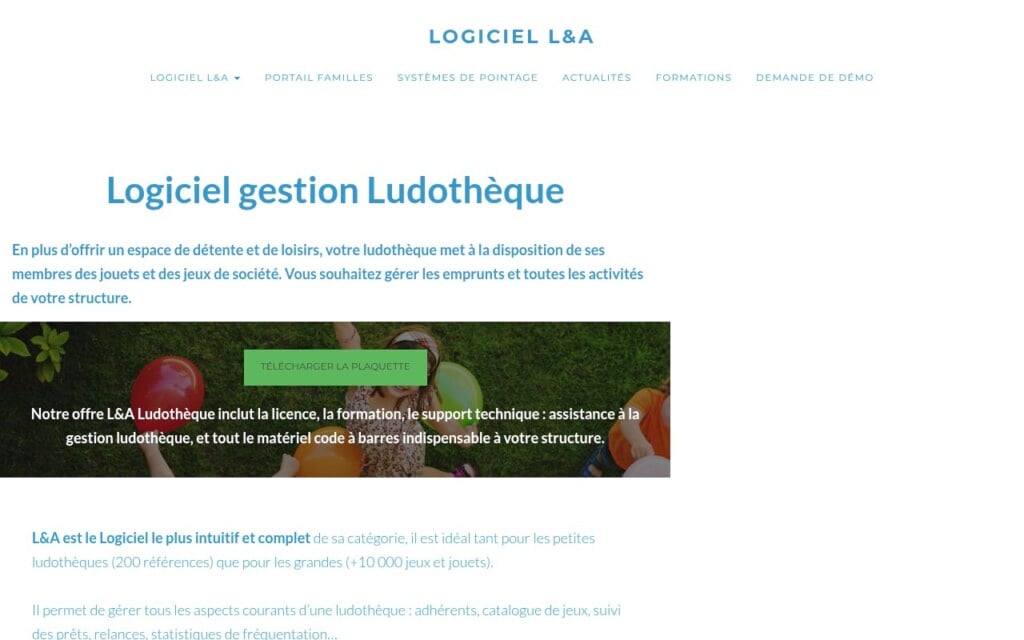
7) L&A (Défi Enfance), Designed to scale from small catalogs to very large ones, with robust tracking and stats.
8) Logiludo (logiludo.fr), A separate “Logiludo” product positioned for large, high-traffic collections.
#1 Eludéo: A modern, web-first platform built with game librarians
Eludéo takes the top spot in this French ranking because it’s built like a modern SaaS product: 100% web-based, no local installation, and designed for teams that need shared access from anywhere.
What stands out is the company’s “co-built” approach, developing features alongside working game-library staff, so the product evolves based on real-world workflows, not just a generic library template.
Feature-wise, Eludéo covers the basics (members, catalog, loans) and then goes further with barcode-friendly checkout, detailed stats, and niche tools tailored to game libraries, like managing a traveling “ludobus” (think: a bookmobile, but for games) and putting games into “quarantine” after returns.
On data protection, Eludéo leans hard into compliance. The platform emphasizes secure hosting and GDPR alignment (Europe’s strict privacy framework, broadly comparable in spirit to a tougher, more unified version of state privacy laws in the U.S.). The company also highlights regular backups, responsive support, and initial training for new users.
What’s unclear:Pricing isn’t publicly detailed, so organizations have to contact the company for quotes. The public materials also don’t spell out integrations with third-party tools.
#2 Ludoprêt: Free, volunteer-built software for small nonprofits
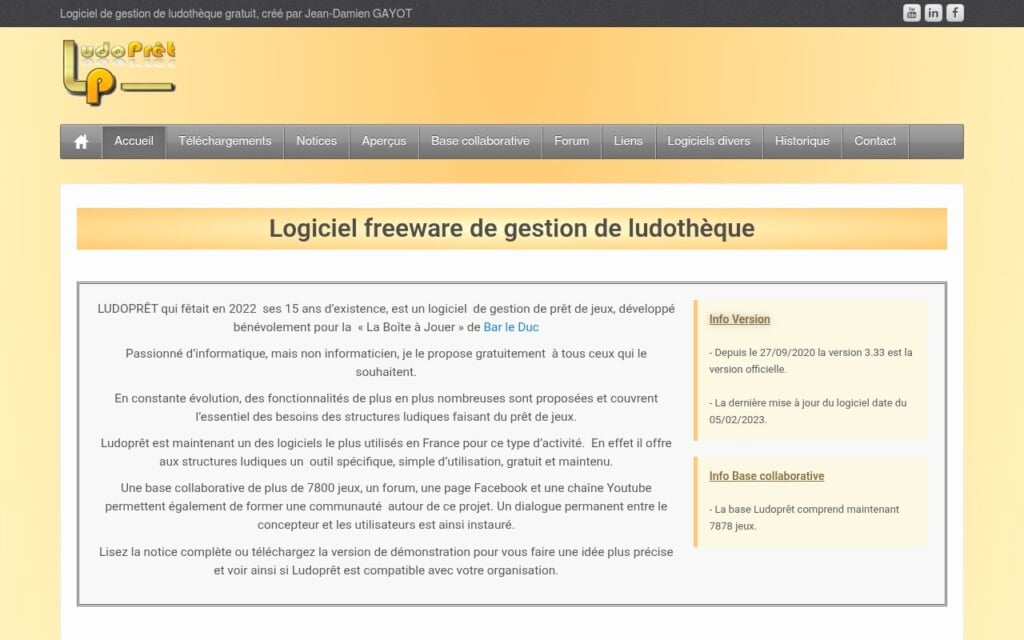
Ludoprêt is the scrappy option: freeware developed and maintained on a volunteer basis, aimed at small community groups that need something functional without paying subscription fees.
It handles core circulation tasks, loans, late returns, basic stats, and even includes a simple cash-management feature for organizations that collect dues or small fees.
Tradeoff:Updates and support depend on volunteer availability, and the interface may feel dated compared with paid platforms.
#3 Logiludo (Logitos): Simple online management with easy website integration
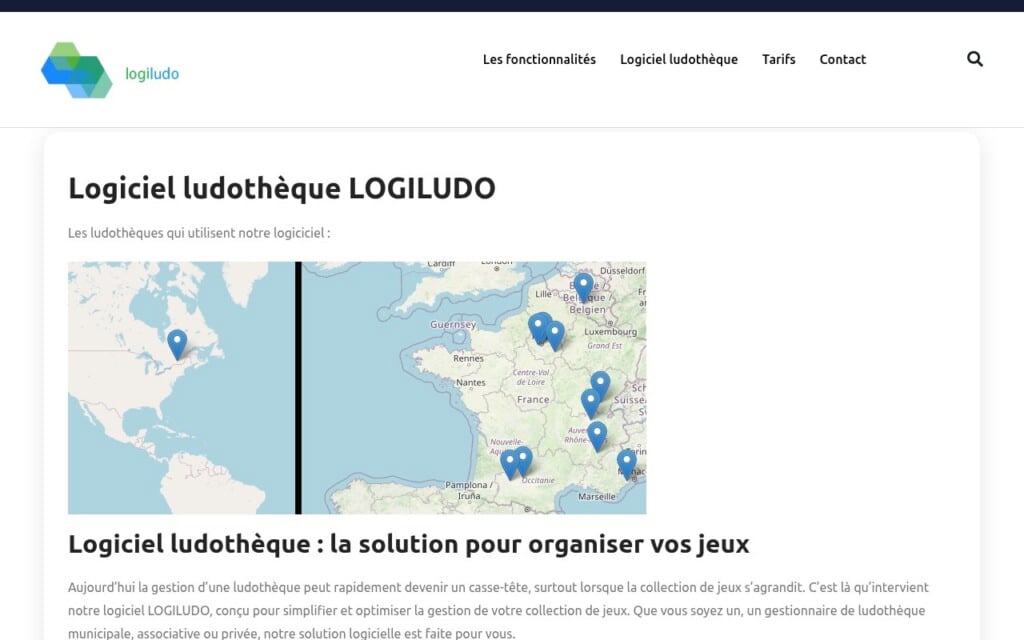
This Logiludo product, offered by Logitos, is positioned as a straightforward, fully online tool for managing members, inventory, and availability through a web interface.
Its big selling point is easy integration with a public website, letting patrons browse what’s available in real time, an expectation that’s increasingly standard for libraries and community lending programs.
Tradeoff:The platform’s advanced reporting depth isn’t clearly described, and it’s framed mainly for smaller organizations, which may limit long-term scalability.
#4 GFL: “Professional, but affordable” for mid-sized game libraries
GFL, short for “Gestion des Fichiers Ludothèque”, markets itself as a professional toolkit without the premium price tag. It’s designed to support day-to-day operations, including tracking visits, managing loans, and handling accounting-related tasks.
Tradeoff:Public info doesn’t clearly say whether it’s cloud-based or requires local installation. And as with many budget-focused systems, the interface may not feel as modern as newer web-first competitors.
#5 Myludo: A mobile app for small, flexible collections
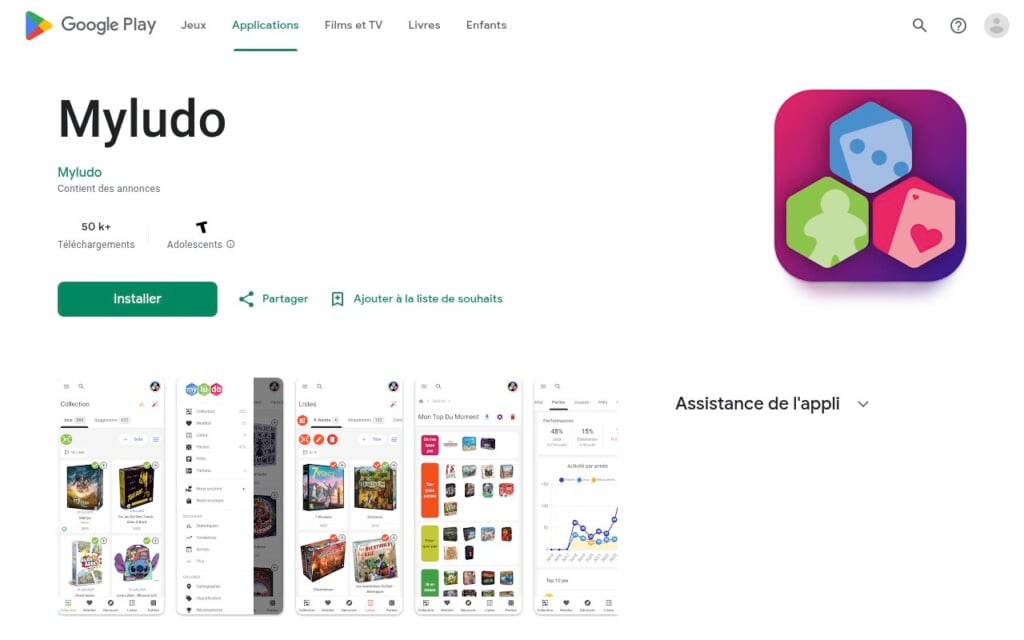
Myludo is built around mobility. Available as an Android app via Google Play, it’s aimed at people who want to manage a board-game collection and track who borrowed what, without needing a full desktop or web platform.
That makes it a fit for hobbyists, tiny lending programs, or teams that operate pop-up events and want to manage inventory from a phone or tablet.
Tradeoff:As a mobile-first tool, it may not offer the depth, multi-user administration, or reporting that larger public programs typically need.
#6 KAWA-LUDOTHEQUE (Dyade): A veteran system that’s been evolving since 1995
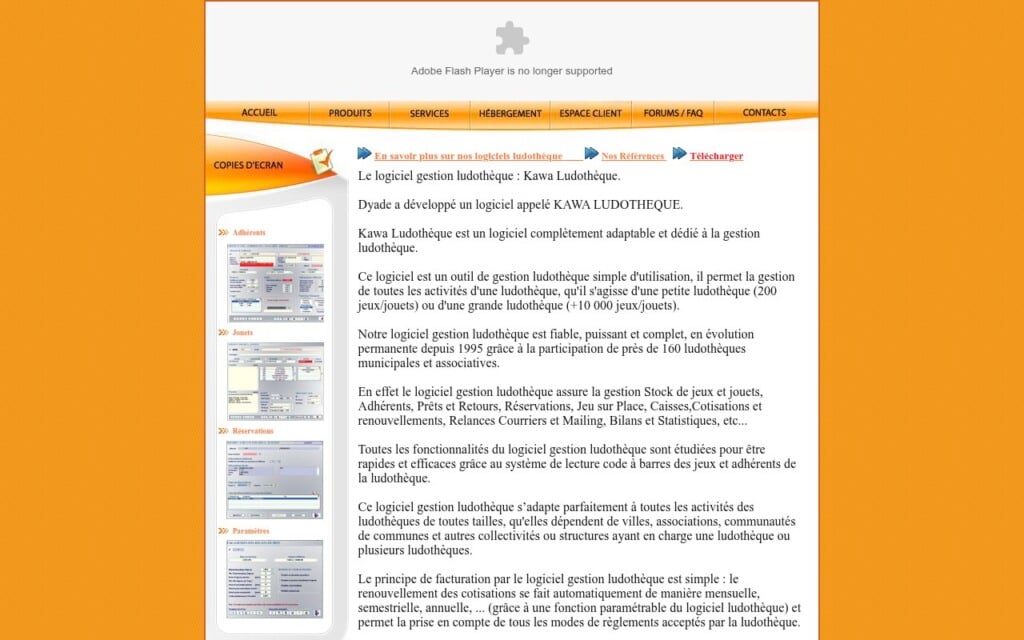
KAWA-LUDOTHEQUE is the old hand in the room. Built by Dyade and updated over decades, it’s described as a proven, full-featured system used by roughly 160 game libraries.
That kind of adoption suggests stability, and for public institutions, stability often matters as much as shiny design.
Tradeoff:A product with roots in the mid-’90s can come with older UI conventions. Public materials also don’t clearly state whether it’s fully cloud-based or installed locally.
#7 L&A (Défi Enfance): Built to scale from small catalogs to huge collections
L&A is pitched as an intuitive, comprehensive platform that can handle everything from a small catalog (around 200 titles) to very large collections (10,000+ titles).
It includes member management, cataloging, loans, follow-ups for overdue items, and detailed statistics, positioning it as a strong fit for municipal programs and larger organizations.
Tradeoff:The company doesn’t clearly spell out whether it’s web-based or installed software, and it doesn’t heavily promote specialized modules like bookmobile-style operations.
#8 Logiludo (logiludo.fr): A separate Logiludo product aimed at high-volume operations
Confusingly, this ranking includes a second product also called Logiludo, this one accessed via logiludo.fr and positioned for professional game libraries with heavy circulation.
The focus here is operational efficiency: fast checkouts and returns, smooth daily workflows, and support for large collections.
Tradeoff:Public details are thinner on broader member-management features beyond lending, and it’s not explicit whether the platform is fully web-based or requires installation.
How the ranking was built: what matters beyond feature lists
The methodology behind the list is less about counting features and more about what actually makes software livable over years: whether it keeps improving, whether it protects member data, and whether support shows up when something breaks five minutes before opening.
The ranking prioritizes continuous development (especially tools shaped by user feedback), strong data security and GDPR compliance, responsive support and training, web accessibility, and the ability to adapt to specialized workflows like mobile lending programs.
A practical checklist before you pick a platform
If you’re running a lending collection, games, tools, instruments, anything, this advice translates cleanly to an American context.
Start with your real workflow:Do you need barcode checkout? Online reservations? Public browsing? Event tracking? Mobile pop-ups?
Test usability:A powerful system that staff hate using will fail in practice. Demos and trial periods matter.
Interrogate security:Where is data hosted? How often is it backed up? Who has access? What happens if an account is compromised?
Ask about support:Phone, email, chat, what’s available, and how fast do they respond?
Plan for growth:Today’s 500-game collection can become tomorrow’s 5,000-title program if your community embraces it.
Watch for hidden costs:Setup fees, training, add-on modules, paid updates, those can turn a “cheap” tool into an expensive commitment.
What this means for 2026: software is now part of the public-service mission
Across these eight picks, the trend is clear: game libraries are moving toward web-based systems, better reporting, and stronger privacy protections, because patrons expect convenience, and institutions can’t afford data mishaps.
In this French ranking, Eludéo rises to the top by combining modern web access, security-first design, and a product roadmap shaped by the people actually running lending desks. For any organization trying to make a game-lending program feel as easy as checking out a book, the message is blunt: the right software doesn’t just organize your inventory, it determines whether your community actually uses it.
| Logiciel | Type de structure cible | Modèle | Point fort clé |
|---|---|---|---|
| Eludéo | Ludothèques associatives, municipales et scolaires | 100% web, abonnement | Solution collaborative et sécurisée, en co-construction |
| Ludoprêt | Petites ludothèques associatives et débutantes | Freeware (gratuit) | Gratuité et gestion complète pour petites structures |
| Logiludo (Logitos) | Ludothèques individuelles ou petites associations | 100% en ligne | Intégration web simple et gestion en ligne |
| GFL (Gestion des Fichiers Ludothèque) | Ludothèques de taille moyenne | Logiciel professionnel | Outils métier puissants à bas coût |
| Myludo | Ludothèques personnelles ou petites équipes mobiles | Application mobile | Gestion de collections via smartphone |
| KAWA-LUDOTHEQUE (Dyade) | Ludothèques de taille variée, collectives et associatives | Logiciel desktop/client-serveur | Fiabilité et ancienneté (depuis 1995) |
| L&A (Défi Enfance) | Ludothèques municipales, associations, collectivités | Logiciel complet | Intuitif et adapté à toutes les tailles de collections |
| Logiludo (logiludo.fr) | Ludothèques professionnelles avec forts volumes | Logiciel dédié | Gestion optimisée pour grandes collections |