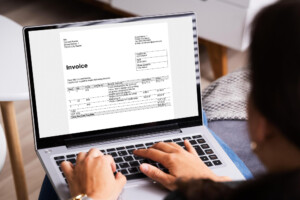
France is about to flip the switch on a sweeping e-invoicing mandate that will change how every company sends and receives bills, down to solo freelancers and mom-and-pop shops.
Starting in September 2026, French businesses won’t be able to rely on paper invoices or basic PDF attachments for routine transactions. Instead, they’ll have to route invoices through government-approved private platforms, creating a new compliance scramble and a booming market of vendors promising to make the transition painless.
With more than 100 platforms already listed or seeking approval, the real challenge for businesses isn’t whether to comply, it’s how to choose the right partner without getting stuck with hidden costs, clunky software, or a system that doesn’t play nicely with their accounting tools.
France’s 2026 deadline: what’s changing, and why it matters
The French government is rolling out mandatory electronic invoicing for all businesses beginning in fall 2026, with requirements phased in by company size. The practical impact is straightforward: invoices will need to be issued, received, and processed through an approved digital channel, not emailed as a simple PDF and not mailed as paper.
Officials say the overhaul is designed to modernize business-to-business transactions, streamline value-added tax (VAT) reporting (Europe’s version of a national sales tax), and crack down on fraud. For companies, it’s also a push toward more automated back-office operations, if they prepare early enough to avoid disruptions.
Businesses that move sooner can test workflows, train staff, and integrate new tools before the deadline pressure hits. Waiting until the last minute risks payment delays, invoice rejections, and operational headaches.
Meet the PDP: the approved platforms at the center of the system
At the heart of the reform are “Partner Dematerialization Platforms,” known in France as PDPs. These are private vendors registered with the French tax administration, tasked with ensuring e-invoices meet legal standards and that required data is transmitted securely and in a format the government can process.
PDPs also have to interoperate, meaning they must be able to exchange invoices and status updates across different systems, including government infrastructure and other companies’ platforms.
The market is crowded and still evolving. With more than a hundred options in play, platforms vary widely in features, pricing models, and how smoothly they integrate with existing accounting software, ERPs, and CRMs.
Why businesses are turning to comparison tools to pick a platform
For small and midsize companies, choosing a PDP can quickly turn into a maze. Pick wrong, and the consequences can include surprise fees, extra manual work, or compliance gaps that trigger rejected invoices.
Other countries’ experiences offer cautionary tales. Belgium’s Peppol-based approach, Peppol is a widely used European e-invoicing network, showed how transitions can go sideways when systems aren’t well-matched: lost invoices, duplicate sends, and lots of sign-ups without meaningful real-world usage.
That’s why comparison services such asComparePDPare gaining traction. They aim to help businesses filter and evaluate platforms based on practical needs, company size, invoice volume, existing software stack, and required features, rather than forcing owners to decode dense vendor marketing on their own.
The checklist: what to look for in an approved e-invoicing platform
Businesses shopping for a PDP are weighing more than a compliance stamp. The goal is to find a platform that keeps them legal while making invoicing faster, more trackable, and less labor-intensive.
Here are the core criteria companies are using:
Compliance and security
Government registration and certifications:Companies need to confirm a platform is officially registered with France’s tax authorities and meets required security standards.
Legal archiving:Many businesses will want built-in compliant storage, often for up to 10 years, so invoices can be produced during audits or disputes.
Status tracking:Platforms that track invoice states (sent, received, rejected, paid) can reduce confusion and improve cash-flow visibility.
Features and integrations
Ease of use:If the interface is confusing, adoption stalls, especially in small firms without dedicated IT staff.
Software compatibility:Integration with accounting tools, ERPs, and CRMs can prevent duplicate data entry and reduce errors.
Beyond invoices:Some platforms also manage quotes and purchase orders, covering more of the sales cycle.
Time tracking:For freelancers and service providers, built-in time tracking can speed up billing and reduce missed revenue.
Pricing and support
Transparent pricing:Businesses are comparing subscriptions vs. per-invoice fees vs. flat-rate plans, and watching for add-ons that inflate costs.
Customer support:When invoices get rejected or integrations break, responsive support becomes mission-critical.
Training and onboarding:Guides, tutorials, and structured onboarding can make the difference between a smooth rollout and a messy one.
How interactive comparison tools narrow the field
Modern platform comparators aren’t just directories. Many offer guided questionnaires that ask about company size, invoice volume, existing software, and must-have features, then generate a shortlist of platforms that fit.
Interactive filters and side-by-side tables let businesses compare what actually matters to them: pricing structure, integrations, support levels, and specialized features.
Some tools also publish expert explainers and market analysis to help companies avoid common traps, like choosing a platform that technically meets the rules but doesn’t scale, doesn’t integrate, or becomes expensive once invoice volume rises.
The bigger picture: a compliance mandate that could reshape back offices
France’s e-invoicing requirement is a legal obligation, but it’s also a forcing function. Companies that choose the right platform can use the shift to modernize billing, cut administrative overhead, and get clearer real-time insight into cash flow.
For freelancers and small businesses especially, the right PDP could turn a government mandate into an operational upgrade, freeing up time for revenue-generating work instead of paperwork. The companies that start evaluating platforms now will be best positioned to stay compliant, keep invoices moving, and avoid a last-minute rush when September 2026 arrives.
| Catégorie de Critère | Exemples de Questions Clés | Impact sur l’Entreprise |
|---|---|---|
| Conformité | La PDP est-elle agréée? Gère-t-elle tous les formats obligatoires? | Garantie de la légalité des échanges, prévention des amendes. |
| Intégration | Est-elle compatible avec mon logiciel de comptabilité actuel? | Optimisation des processus, réduction des erreurs de saisie, gain de temps. |
| Fonctionnalités | Propose-t-elle des outils de suivi, de gestion des devis? | Amélioration de l’efficacité opérationnelle, centralisation des données. |
| Prix | Le modèle tarifaire est-il adapté à mon volume de factures? | Maîtrise du budget, visibilité sur les coûts à long terme. |
| Support | Le service client est-il réactif et disponible? | Assistance rapide en cas de besoin, minimisation des interruptions. |