
Used electric-car prices in France have dropped sharply over the past two years, pushing entry-level EV shopping into territory that would have sounded unrealistic not long ago: around €8,000 (about $8,600) for certain city cars.
But that headline price doesn’t automatically mean a bargain. In the 2026 used market, an EV’s value hinges as much on battery condition as it does on mileage—along with charging speed, charging compatibility, and whether the car’s mission is city errands, suburban commuting, or longer highway runs.
For budget shoppers, three models show up again and again in searches: the Renault Twingo E-Tech, the Fiat 500e, and the Citroën ë-C4. Listings can start around €8,000 (about $8,600) for the first two, while the ë-C4—being a larger compact—typically costs more. The smartest pick comes down to real-world range, insurance costs, charging fit, maintenance history, and whether the car’s limits match your daily needs.
Renault Twingo E-Tech: An €8,000 (About $8,600) On-Ramp for City Driving
In France’s used market, the Renault Twingo E-Tech often stands out as a credible entry point into EV ownership starting around €8,000 (about $8,600), depending on mileage, trim level, and overall condition. Its small footprint and design philosophy are aimed squarely at urban life—easy parking, a tight turning circle, and a compact body.
For a driver covering roughly 12 to 31 miles a day (20 to 50 km), that positioning can fit well—so long as you accept its limitations on faster roads and highways.
The first thing to scrutinize is real-world range, which can swing widely based on temperature, speed, and cabin heat use. In city and suburban driving, a well-kept Twingo can handle most day-to-day household trips. At sustained higher speeds, the gap grows, making long trips less comfortable and forcing more frequent stops—when stops are even available.
Charging is another make-or-break detail. Buyers should verify connector compatibility and the charging power the car actually accepts, because some listings are vague. For the lowest-cost ownership, home charging or a slow neighborhood charger is usually the simplest setup. Anyone relying only on public fast chargers should expect a higher per-kWh bill—and not always a meaningful time savings with smaller batteries.
At purchase time, the battery deserves a methodical check. Asking for a diagnostic, a battery health report, or at minimum a clear history of maintenance and charging habits can reduce unpleasant surprises. A test drive should also confirm there are no front-end noises, check tire condition, and make sure the displayed energy use makes sense for how the car has been driven.
On running costs, the Twingo’s small size can keep tire and brake expenses down, and its city energy use tends to be low—helping stabilize a major line item in a household car budget. The tradeoff is versatility: bought well, a Twingo can be an efficient second car, but it’s harder to make it work as a family’s only vehicle.
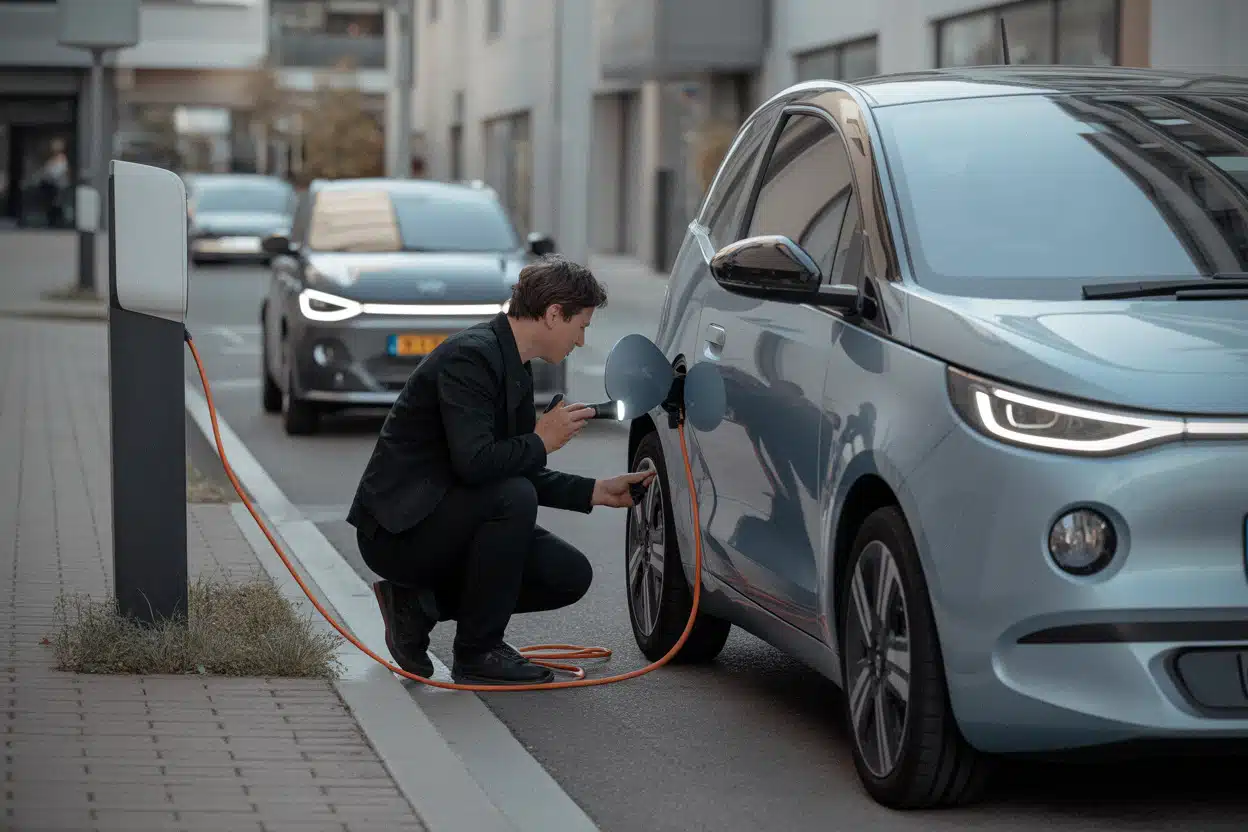
Fiat 500e: Strong Appeal, but Listings Require Tough Screening
The Fiat 500e also regularly appears in roundups of accessible used EVs in France, with prices that can dip toward €8,000 (about $8,600) for less sought-after configurations or higher-mileage examples. Its image, perceived finish, and relatively strong resale values mean deals do exist—but shoppers often need to be more selective, because the spread between two listings can be large even with similar equipment.
To compare effectively, the article stresses looking at battery capacity and charging equipment—not just model year or mileage. Day to day, a 500e can be very pleasant in urban areas thanks to light steering, a practical footprint, and quiet operation. On faster roads, comfort remains decent for a city car, but range drops with speed and weather—something to plan for if you frequently drive ring roads or highways.
Extra costs matter here, too. Insurance can run higher than with a more low-profile model, depending on the driver profile and location. Tires—often in specific sizes depending on wheel options—can also weigh more heavily on the budget than they would on a smaller microcar. To keep the purchase rational, the article recommends pricing the full picture: purchase price, annual insurance, charging costs based on home versus public use, and predictable expenses.
Battery verification remains central. At this price level, some listings may reflect vehicles that have seen intensive use—sometimes in car-sharing, rental fleets, or dense urban driving. Without painting every car with the same brush, that reality makes it important to request history and invoices and to inspect the interior, wheels, and bumpers for signs of hard use. An electronic diagnostic before purchase is described as a reasonable investment if the price gap to a more expensive listing is small.
For buyers who prioritize style and want a city-focused EV without aiming for long trips, the Fiat 500e can be worth the effort—so long as you avoid paying an image premium for a tired example and instead put your money into a better-maintained car that can last for years without surprise bills.

Citroën ë-C4: More All-Around Capability, Rarely an €8,000 (About $8,600) Find
The Citroën ë-C4 sits in a different category. It’s more commonly seen at higher budgets, which is why it’s less often advertised at €8,000 (about $8,600) except in special cases. Its appeal is versatility—more space, more comfort, more road-oriented handling—and an easier life outside city centers. For a household looking for a primary car, the higher purchase price can be offset by broader usability.
The first check is whether real-world range aligns with weekly needs. A compact EV can make longer trips more plausible, but the reality depends on the charging network you’ll use and the type of driving you do. Energy use climbs on highways, and stop times need to be built into planning. The recommended approach is to simulate typical trips—commuting, weekend outings, family visits—and compare that with available charging stations.
On the used market, trim and equipment differences matter a lot. Driver-assistance features, the type of onboard charger, and comfort options can all affect resale value and daily experience. The article also flags the need to check suspension and braking condition—even if EVs generally use brake pads less—especially for vehicles that may have spent most of their time in stop-and-go city traffic.
Operating costs for a compact can resemble those of a comparable gas car in some areas: more expensive tires and sometimes higher insurance. But energy can still be favorable if most charging happens at home. For drivers who mostly use public chargers, the comparison becomes more nuanced because per-kWh pricing varies widely by operator and charging power. In that case, a realistic estimate of monthly charging costs can prevent disappointment.
In 2026, choosing a used Citroën ë-C4 often comes down to a tradeoff: a higher purchase budget for a more comfortable, more versatile ownership experience. It can work for people who want one car to do everything—but shoppers shouldn’t expect a price floor comparable to a city car unless it’s a very targeted, carefully verified opportunity.
What Matters Most in 2026: Battery Health, Charging Fit, History, and Cost per Mile
Buying a used EV requires a method, because the biggest risk concentrates around the battery and charging. The first move is to ask for a battery health indicator—often called SOH—when it’s available through a diagnostic. Not every seller provides it, but buyers can request a check at a shop or through an independent expert. If that’s not possible, watching energy consumption, the displayed range after a full charge, and whether those numbers make sense for the mileage can still provide clues.
Charging is the second pillar. Verifying connector type, accepted charging power on AC and DC, and whether the correct cable is included can change daily life. A car that charges well on the stations near your home can be a better choice than a theoretically stronger model that doesn’t match local infrastructure. Apartment dwellers without a dedicated outlet also need to estimate how available nearby chargers really are—especially evenings and weekends.
Maintenance history still matters even on an EV. Tires, shocks, brake fluid, cabin filters, and software updates all affect safety and comfort. An incomplete file isn’t automatically disqualifying, but the price should reflect it. A test drive should include speed bumps and a rough stretch of road to detect clunks and other unwanted noises.
On budgeting, the most meaningful comparison is often cost per mile. With home charging, a small EV can remain very economical; with paid fast charging, the bill rises. Two buyers paying the same purchase price can end up with very different monthly costs depending on charging access. Adding insurance and routine maintenance helps build a realistic budget instead of focusing only on the sticker price.
Finally, the article warns against deals that look too good. A very low price can signal an imported vehicle with unclear history, a degraded battery, or poorly documented repairs. A full administrative check and a recent inspection—when available—remain simple guardrails for securing a low-budget EV purchase.
Frequently Asked Questions
Can you find a reliable used EV for €8,000 (about $8,600) in 2026? Yes—especially city cars like the Renault Twingo E-Tech or certain Fiat 500e listings depending on mileage and condition. At this price, reliability depends mainly on matching your use to the car’s real-world range and verifying the battery, ideally through a diagnostic or health report.
What checks should you prioritize before buying a used EV? Start with the battery (SOH or diagnostic), then charging capability (AC/DC power depending on version), then maintenance history, tires, suspension, and a test drive that includes a faster section. Also verify cables and compatibility with chargers near home.
Can public charging erase the cost advantage? It can narrow the gap, since pricing varies by operator and charging power. Mostly home charging remains the most favorable scenario. If you’ll rely mainly on public charging, estimate a monthly per-kWh budget and compare total costs with a similar gas car.
Is the Citroën ë-C4 a good replacement for a primary car? It can be a better fit than a city car thanks to its versatility, comfort, and compact-car format. The key is validating real-world range on your typical trips and your access to charging. Used prices are often above the €8,000 level.
Key Takeaways
In France’s 2026 used market, city EVs can start around €8,000 (about $8,600), with the Renault Twingo E-Tech and some Fiat 500e listings most often near that floor. The Citroën ë-C4 generally costs more but offers broader versatility. Across all three, battery diagnostics and charging compatibility can matter more than mileage.
Sources
Auto Plus (France) and related posts and roundups cited in the original article.
Key Takeaways
- Starting at <strong>€8,000</strong>, used electric city cars become affordable in 2026
- The <strong>Renault Twingo E-Tech</strong> is mainly aimed at city driving, with limitations on the highway
- The <strong>Fiat 500e</strong> requires strict filtering of listings and a history check
- The <strong>Citroën ë-C4</strong> offers more versatility, but usually at a higher budget
- <strong>Battery</strong> diagnostics and checking the charging system matter more than mileage
Frequently Asked Questions
Can you find a reliable used electric car for €8,000 in 2026?
Yes—especially city cars like the Renault Twingo E-Tech or certain Fiat 500e models, depending on mileage and condition. At this price, reliability mainly depends on matching your driving needs to the car’s real-world range and checking the battery, ideally with a diagnostic scan or a battery health report.
What are the top checks to do before buying a used EV?
Start with the battery (SOH or a diagnostic report), then charging capability (AC/DC power depending on the trim), followed by service history, tires, suspension/steering components, and a test drive that includes highway speeds. Also confirm the charging cables are included and that the car is compatible with chargers near your home.
Can public charging wipe out the cost advantage?
It can narrow the gap, since pricing varies by network and charging speed. Charging mostly at home is still the most cost-effective scenario. If you’ll rely mainly on public charging, estimate a monthly kWh budget and compare the total cost with a comparable gas-powered car.
Is the Citroën ë-C4 a good choice to replace a primary car?
It can be a better fit than a city car thanks to its versatility, comfort, and compact-car size. The key is confirming real-world range for your typical trips and having reliable access to charging. Used prices are often higher than those of smaller cars around €8,000.
Sources
- Budget serré ? Trois voitures électriques d'occasion dès 8 000 € qui …
- Électrique abordable : l'occasion rêvée ! – Facebook
- https://t.co/UQhBlNArTZ Voiture électrique d'occasion pas chère …
- Voiture Électrique Occasion Pas Cher 2026 — Top 15 dès 8 000
- Voiture électrique d'occasion à moins de 10 000 euros