

A local branch of ADMR—France’s large nonprofit network that provides in-home assistance, especially in rural areas—has taken delivery of its first license-free electric vehicle in Guidel-Quéven, according to information published July 16, 2026, by MaVille.com.
The small electric “voiture sans permis” (a low-speed microcar that can be driven without a standard driver’s license under French rules) is meant to better match the branch’s day-to-day reality: short, frequent trips; tight residential parking; and the cost of operating a traditional gas-powered fleet. For home-care services, mobility isn’t just logistics—it shapes schedules, budgets, and the environmental footprint of daily rounds.
While still uncommon in the sector, the approach is spreading within ADMR in France, with local press citing similar moves in Pontivy and Dieulouard. In Morbihan, where home-care routes can run through small town centers, subdivisions, and hamlets, matching the vehicle to the terrain has become a management issue in its own right.
A first for ADMR in Guidel-Quéven: an electric, license-free vehicle
For the ADMR branch serving Guidel-Quéven, receiving its first license-free electric vehicle marks a new step in how it organizes staff travel. In a service where workers stack short appointments back-to-back, time spent driving—and the conditions on the road—directly affect the day’s schedule. A compact model that’s easier to park and better suited to lower urban speeds is designed to meet part of that need, particularly on routes centered on Guidel and nearby areas.
In practice, home-care work involves repeated stops, sometimes for just a few minutes, often with limited parking near clients’ homes. Smaller vehicles can reduce bottlenecks, especially on narrow streets or in areas where space is tight. For the association, the goal isn’t only comfort: it’s punctuality, fewer dead minutes, and more ability to absorb the unexpected—delays, urgent calls, or last-minute changes to a route.
The “no-license” choice also reflects staffing realities. Home-care organizations face recruiting pressures and a wide range of employee profiles, including people returning to work or working part-time. Having a vehicle that’s easier to access—without the higher costs of managing a standard fleet—can help secure certain assignments. The tradeoff is built in: these vehicles have speed limits and can’t replace a conventional car for longer trips between towns.
The move also fits a broader push to modernize local services. An organization making dozens of short trips a day may look to cut fuel use and emissions on the shortest routes. Even a modest electric vehicle becomes a work tool—potentially affecting operating costs through reduced maintenance compared with gas vehicles in some areas, while also requiring a plan for charging and careful attention to range based on the day’s schedule.
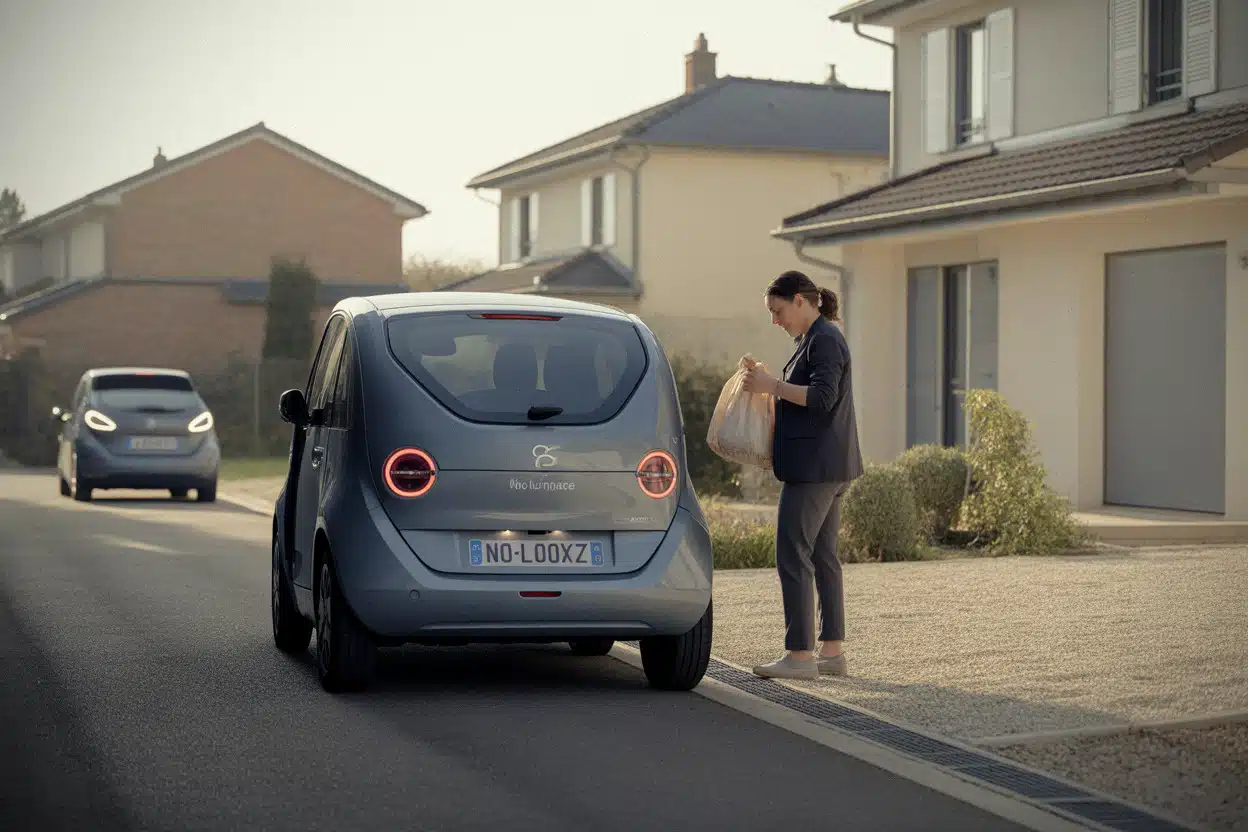
Rethinking home-care routes built around short, repeated trips
In home-care work, most travel is over short distances—but broken into many segments. A typical day can include multiple visits for cleaning, meal help, and accompaniment, with just minutes between one home and the next. That model highlights the hidden cost of miles: fuel, wear and tear, driving time, and the stress of finding parking. The new license-free electric vehicle is aimed squarely at those “small trips” that weigh heavily on daily operations.
A compact vehicle can also ease constraints in denser areas. In Guidel—between the town center, residential neighborhoods, and the nearby coast—traffic patterns shift by hour and season. Home visits don’t stop during busy periods, and route optimization becomes part of service quality. A more maneuverable vehicle can reduce detours, shorten the hunt for a parking spot, and make quick stops easier to manage.
Fitting the vehicle into schedules requires careful assignment of routes. A license-free microcar can’t be used for every round, especially if a route requires faster roads or longer distances. That means splitting travel: using the electric vehicle for nearby circuits and keeping conventional cars for longer trips. The approach mirrors what managers do in other service sectors, separating “micro-routes” from “extended routes” based on geography.
Charging is central to whether the idea works. To be effective, the organization needs a simple routine—charging points at the office or with a partner, a plug-in schedule, and checks on remaining range. For an association, reliability matters more than performance. The goal is enough range for a full day of local visits, but that depends on the number of stops, accessory use, and traffic conditions. The vehicle becomes one link in the service chain, alongside tools and supplies staff may carry.
Pontivy and Dieulouard show the idea is already spreading inside ADMR
The move in Guidel-Quéven isn’t happening in isolation. Other ADMR branches have already invested in license-free electric vehicles. In Pontivy, local press described a fleet still largely made up of conventional cars, supplemented by two license-free electric vehicles. The strategy is incremental: keep versatile vehicles to cover a wide territory, while adding lower-impact options for trips within the city or its immediate outskirts.
In Dieulouard, the purchase of a license-free electric model was presented as a practical tool for teams. In those experiences, the benefits most often cited include ease of driving, simple day-to-day use, and lower fuel costs on short trips. But limits show up as well: the need to plan around real-world range, restrictions depending on road types, and a gradual adjustment of routing habits.
Together, those examples place Guidel’s initiative within a broader pattern of local experimentation. Association networks often spread ideas through shared practices: one branch watches what worked elsewhere, checks whether it fits local geography, then adapts. Adding a license-free electric vehicle becomes a marker of that exchange—decisions driven by concrete factors such as route types, annual budgets, charging options, and staff feedback.
The comparison also underscores that an all-electric model is not the norm for these organizations. Most still rely on gas or hybrid vehicles because needs vary widely and some routes involve faster roads. The license-free vehicle is positioned as a targeted supplement—useful when rounds are mostly local and repetitive, parking is a recurring problem, and the organization wants to smooth operating costs across clearly defined assignments.
Cost, safety, and staff buy-in are the tests that will decide whether it sticks
Switching to a license-free electric vehicle raises practical management questions. First is total cost: purchase, insurance, maintenance, energy use, and any charging equipment. For an association, the decision is often made over the long term—comparing the recurring costs of a gas vehicle on short trips (fuel, oil changes, wear) with an electric model that may be mechanically simpler but requires a charging plan.
Second is safety in the broad sense. A slower, smaller vehicle may fit urban routes, but it demands vigilance when sharing the road with faster traffic. Internal training—even informal—matters: getting comfortable with the vehicle, reinforcing rules, managing blind spots, and building safe parking habits. Safety also includes the realities of the job: staff sometimes transport supplies or groceries and need stable working conditions without added stress.
Staff acceptance is another key factor. In home-care work, a vehicle isn’t just transportation—it’s a buffer between visits, a tool for punctuality, and sometimes a contributor to fatigue. Feedback from other local experiences suggests buy-in depends on simplicity—starting, basic comfort, range—and whether the vehicle truly matches the routes assigned. If it feels like a constraint, it can end up underused.
Finally, the organization has to plan for continuity of service and the unexpected. A breakdown, insufficient battery, or a day with unusually heavy demand can require a backup vehicle. Groups that manage this kind of transition successfully often build in fallback scenarios. In Guidel, this first license-free vehicle looks like a real-world test, with its value likely to be judged over the coming months through actual use, observed costs, and satisfaction among both staff and the people they serve.
Frequently asked questions
Why would a home-care association choose a license-free electric vehicle? To match mobility to short, frequent trips; cut fuel costs on micro-travel; make parking easier; and reduce emissions on nearby rounds.
Can a license-free vehicle replace all cars in an ADMR branch? No. Its use is generally limited to local routes and roads compatible with its speed limits. Branches keep conventional cars for longer distances and more varied driving needs.
What concerns come up most often with this type of vehicle? Real-world range depending on routes, organizing charging, keeping a backup vehicle available, and training for driving alongside faster traffic.
Key takeaways
ADMR’s Guidel-Quéven branch received its first license-free electric vehicle on July 16, 2026. The microcar is aimed at short, repeated trips where parking and punctuality are constant challenges. Other ADMR branches, including Pontivy and Dieulouard, have already tried similar vehicles. Success depends on range, a workable charging routine, and whether staff embrace the change.
Sources
MaVille.com (Lorient/Guidel coverage); local reporting on ADMR vehicle purchases in Pontivy and Dieulouard.
Key Takeaways
- The ADMR branch in Guidel-Quéven received its first license-free electric vehicle on July 16, 2026.
- The vehicle is mainly intended for short, repeated trips with parking and punctuality constraints.
- Other ADMR branches, such as Pontivy and Dieulouard, have already tested similar vehicles.
- Success depends on range, how charging is organized, and team acceptance.
Frequently Asked Questions
Why would a home care nonprofit choose a license-free electric vehicle?
To better match mobility needs for short, frequent trips, cut fuel-related costs for very short drives, make parking easier, and support an emissions-reduction approach for nearby routes.
Can a license-free vehicle replace all the cars at an ADMR local branch?
No. Its use is generally limited to local trips and roads that match its speed capabilities. Branches keep standard cars for longer distances or routes that require more versatility.
What are the most common things to watch out for with this type of vehicle?
Real-world range depending on routes, how charging is organized, having a backup vehicle available, and driver training for sharing the road with faster vehicles.



