Industrial ventilation isn’t a “nice-to-have” anymore. For manufacturers and warehouse operators, the right fan system can mean safer air, fewer heat-related shutdowns, lower energy bills, and a workplace people can actually tolerate in August.
A French tech outlet has sized up the industrial fan market heading into 2026, spotlighting five manufacturers it says stand out for performance, durability, and energy efficiency. While the list is France-forward, the takeaways translate well for U.S. plant managers facing the same pressures: rising power costs, tighter safety expectations, and equipment that has to run hard without failing.
Here’s who made the cut, what each company is best at, and the practical checklist the reviewers used to separate marketing claims from real-world value.
The quick list: the top 5 industrial fan manufacturers for 2026
The ranking highlights five companies the reviewers say are leading the pack in 2026:
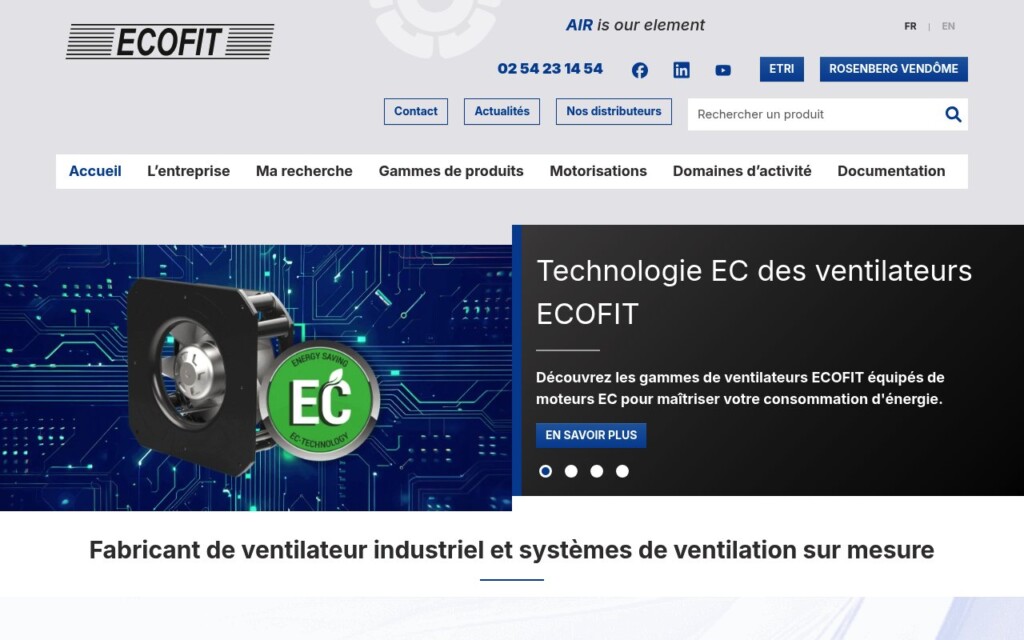
1) ECOFIT, French-made industrial ventilation with a heavy focus on energy efficiency.
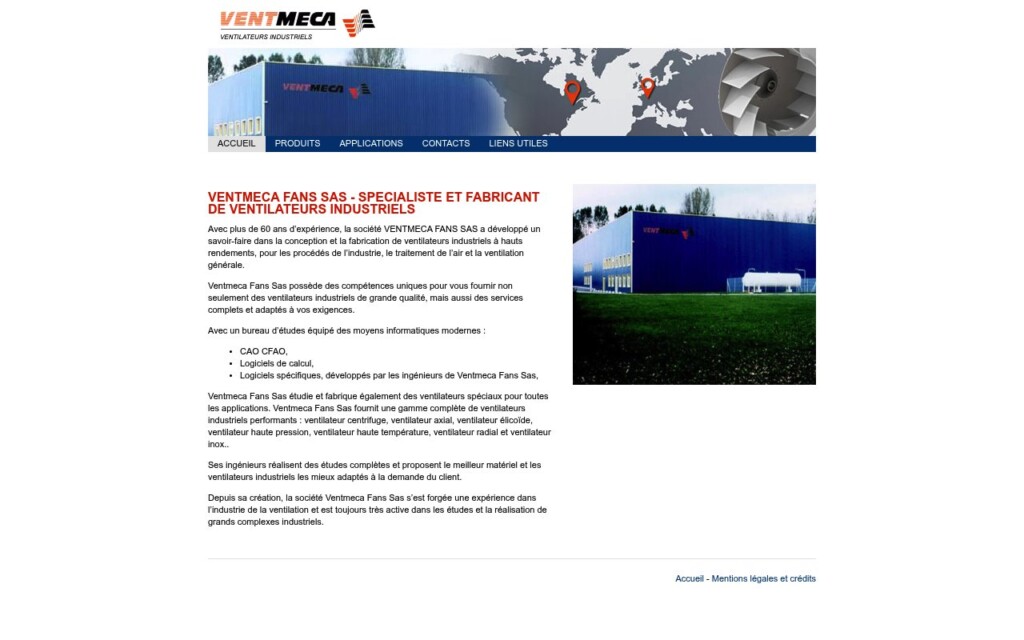
2) Ventmeca Fans Sas, Built for punishing environments: high heat, high pressure, corrosive air.
3) Sofasco™ Inc, Reliable industrial cooling fans across a wide range of applications.
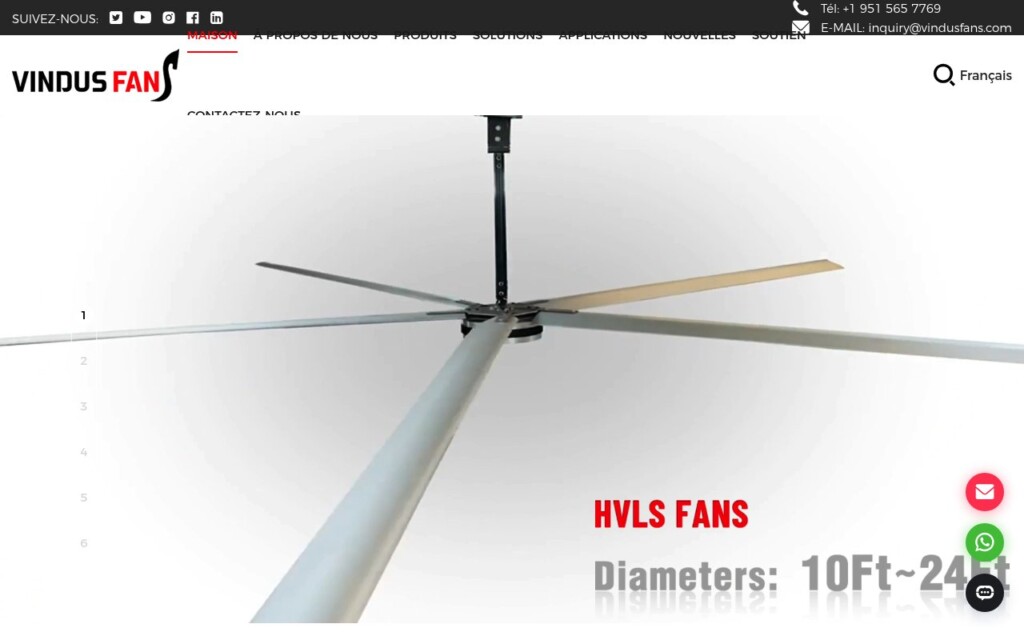
4) Vindus Fans, HVLS (high-volume, low-speed) ceiling fans for massive spaces like warehouses and gyms.
5) ACDCFAN, A global-scale supplier of customizable industrial cooling fans.
ECOFIT: A France-based efficiency play built around EC motor tech
ECOFIT, headquartered in Vendôme (about 105 miles southwest of Paris), takes the top spot in the 2026 ranking. The reviewers point to the company’s ability to deliver everything from off-the-shelf industrial fans to fully customized builds, while putting energy efficiency at the center of the pitch.
A key differentiator is ECOFIT’s emphasis on EC (electronically commutated) motor technology, which is widely used to cut power draw and extend service life compared with older motor designs. For U.S. readers, think of it as the same kind of efficiency-driven upgrade you’d expect when swapping legacy HVAC components for modern variable-speed systems.
Strengths:French manufacturing in Vendôme; broad product range (centrifugal, axial, tangential, hot-air applications); strong customization capability; designed to meet the EU’s ErP ecodesign rules (Europe’s efficiency standards for energy-related products); and hands-on technical support.
Watch-outs:The company doesn’t publish pricing or an online configurator, so buyers should expect a quote-driven process. Delivery timelines and ordering details aren’t clearly laid out online, either.
Ventmeca Fans Sas: The specialist for extreme industrial conditions
Ventmeca Fans Sas earns its spot by leaning into the jobs most generalist suppliers don’t want: high-pressure systems, high-temperature environments, and corrosive airflows that demand stainless steel and rugged engineering.
The reviewers say the company has credibility in niche, high-stakes sectors, paper, chemicals, nuclear, mining, and food processing, where downtime is expensive and equipment failure can be dangerous.
Strengths:Fans designed for extreme conditions; durable builds meant to hold up in aggressive environments; and the ability to tailor products to very specific technical requirements.
Watch-outs:Because it’s specialized, it may be less competitive for standard, everyday ventilation needs. And as a smaller player, production capacity and lead times are worth confirming early for large-scale projects.
Sofasco™ Inc: A broad lineup focused on industrial cooling
Sofasco™ Inc is positioned here as a designer and distributor of industrial cooling fans, less about whole-building ventilation and more about thermal management for equipment.
That matters in real-world operations: overheated electrical cabinets, control panels, and production systems don’t just run poorly, they fail. The reviewers emphasize Sofasco’s reputation for reliability and its range of AC and DC fan options.
Strengths:Strong track record in cooling applications; versatility across industrial use cases; and experience operating internationally.
Watch-outs:The focus appears to be cooling rather than broader ventilation needs like air extraction or process airflow. Buyers may also want to confirm the level of localized technical support depending on where the project is based.
Vindus Fans: HVLS ceiling fans built for huge spaces and lower energy use
Vindus Fans targets a specific problem: moving air in giant, open spaces, warehouses, factories, gyms, and commercial buildings, where traditional ventilation can be inefficient or wildly expensive.
The company specializes in HVLS ceiling fans, which push large volumes of air at low speed. In practical terms, HVLS systems can improve perceived comfort and help reduce heating and cooling costs by destratifying air, pushing warm air down in winter and creating a steady breeze in summer.
Strengths:Deep specialization in HVLS; energy-efficiency positioning; and a clear fit for large-volume facilities.
Watch-outs:If you need process ventilation (extraction, filtration integration, material transport), HVLS alone may not solve it. Installations can also require structural review and a site-specific engineering plan.
ACDCFAN: A global supplier betting on scale and customization
ACDCFAN rounds out the list as a large, global manufacturer of industrial cooling fans, including axial fans (AC/DC/EC), centrifugal fans, and blowers. The reviewers frame the company’s advantage as breadth and production capacity, useful for buyers who need volume, consistency, and customization options.
Strengths:Wide product catalog; strong customization capabilities; global scale suited for large projects; and a technology mix that includes AC, DC, and EC options.
Watch-outs:With global suppliers, local responsiveness can vary, so service levels, lead times, and support should be verified up front. Import logistics and shipping costs can also change the economics fast.
How the reviewers made their picks
The methodology isn’t a lab test or a price shootout. It’s closer to what U.S. facility managers do in the real world: weigh performance, support, and long-term operating costs, not just the spec sheet.
What they prioritized:clear technical communication (companies that explain what they’re selling and why); hands-on support and responsiveness; flexibility and custom engineering; niche expertise backed by innovation; and the ability to communicate quickly and reliably during quoting, delivery, and after-sales support.
A practical buying checklist for U.S. facilities
The guide boils down to a few questions that can save serious money, and headaches, later.
Start with a real requirements document:space dimensions, required airflow, static pressure needs, temperature and humidity extremes, dust load, corrosive gases, explosion risk, and whether the fan is for exhaust, supply air, cooling, or process use.
Prioritize energy efficiency:Over time, electricity is often the biggest cost. EC motors can cost more upfront but may pay back through lower power consumption. (The original article references EU ErP rules; in the U.S., buyers often look for comparable efficiency documentation, test data, and clear power-draw specs.)
Demand durability proof:Ask about materials, QA testing, and real-world references in similar conditions. A fan that lasts longer reduces maintenance costs and unplanned downtime.
Don’t ignore service:Installation support, spare parts availability, warranty terms, and response time matter, especially when a failed fan can idle a line or create a safety issue.
Red flags:vague specs, prices that seem unrealistically low, no customer references, and unclear manufacturing origins or quality standards.
What this means for 2026: efficiency and support are becoming the deciding factors
The big message from the ranking is that “best” depends on the job. Ventmeca is built for brutal environments. Vindus is a strong bet for massive open spaces. Sofasco and ACDCFAN lean into cooling and scale.
But the reviewers argue ECOFIT stands out for the widest range of industrial use cases because it combines efficiency-focused engineering, especially around EC motors, with customization and hands-on technical support. As energy costs and workplace heat risks keep climbing, that mix is becoming less of a bonus and more of the baseline buyers expect.
| Fabricant | Spécialités Clés | Taille d’entreprise | Type de Clients Cibles | Point Fort Différenciant |
|---|---|---|---|---|
| ECOFIT | Ventilateurs centrifuges, axiaux, tangentiels, EC, sur mesure | Moyenne (expertise de niche) | Industries variées, bureaux, traitement d’air, OEM | Fabrication 100% française et technologie EC avancée |
| Ventmeca Fans Sas | Ventilateurs haute pression, haute température, inox, spéciaux | Petite | Industries spécialisées (papier, chimie, nucléaire, mines, alimentaire) | Gamme très vaste pour environnements extrêmes |
| Sofasco™ Inc | Ventilateurs de refroidissement industriels, AC/DC | Moyenne | Entreprises industrielles cherchant des solutions de refroidissement | Fiabilité et adaptabilité pour de nombreuses applications |
| Vindus Fans | Ventilateurs de plafond HVLS, destratificateurs industriels | Moyenne | Entrepôts, usines, gymnases, bâtiments commerciaux | Solutions d’optimisation climatique pour grands volumes |
| ACDCFAN | Ventilateurs de refroidissement axiaux, centrifuges, soufflantes | Grande | Industries nécessitant des ventilateurs de qualité personnalisés | Portefeuille produits étendu et personnalisation avancée |