French companies are shopping for CRMs with a clear mandate in 2026: make it simple, make it connected, and bake in AI that actually saves time.
A French tech outlet reviewed the market and ranked the platforms it says stand out, from homegrown tools built around Europe’s strict privacy rules to global heavyweights like HubSpot and Salesforce. The throughline: businesses want one place to run sales, marketing, customer support, and customer data without turning every update into an IT project.
For American readers, the list is a useful snapshot of where CRM is heading in Europe, especially as GDPR-style privacy expectations and AI-assisted selling reshape what buyers demand from software.
What’s driving CRM buying in France in 2026
The French ranking emphasizes usability and consolidation: companies want CRMs that centralize pipelines, campaigns, support tickets, and reporting in one interface.
AI is no longer a “nice-to-have” in this market. The expectation is automation that helps reps prospect faster, follow up more consistently, and personalize outreach without drowning teams in admin work.
And because France operates under the EU’s GDPR privacy law, often stricter in practice than U.S. norms, local support, data-handling transparency, and compliance features carry real weight in purchase decisions.
The top 10 CRM platforms in the French 2026 ranking
Here’s the list as published, with brief context for U.S. readers and what each tool is positioned to do best.
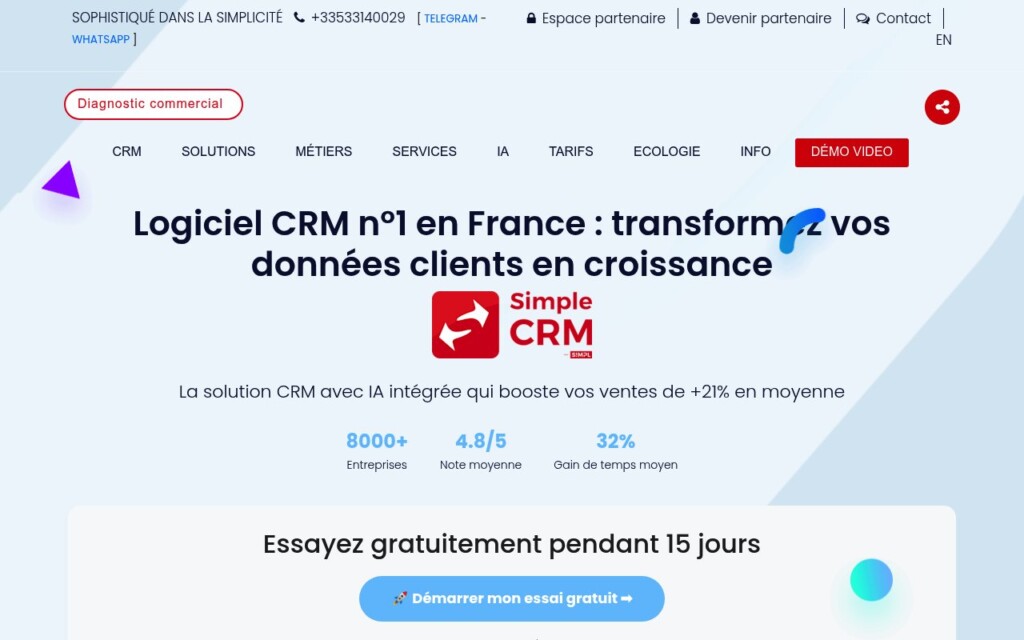
1) Simple CRM: A French all-in-one CRM pushing AI and ease of use
Ranked No. 1, Simple CRM is presented as a French-built platform designed to cover sales, marketing, and customer support in one system, while staying approachable for teams that don’t want weeks of training.
The outlet praises its “integrated” approach: broad features, an interface meant to feel intuitive, and AI capabilities aimed at automating day-to-day work. It also highlights local-language support and alignment with French/EU expectations around data privacy.
The article flags one caveat: the “No. 1 in France” claim is marketing language, not an independent certification, and the specifics of its AI may matter to more technical buyers.
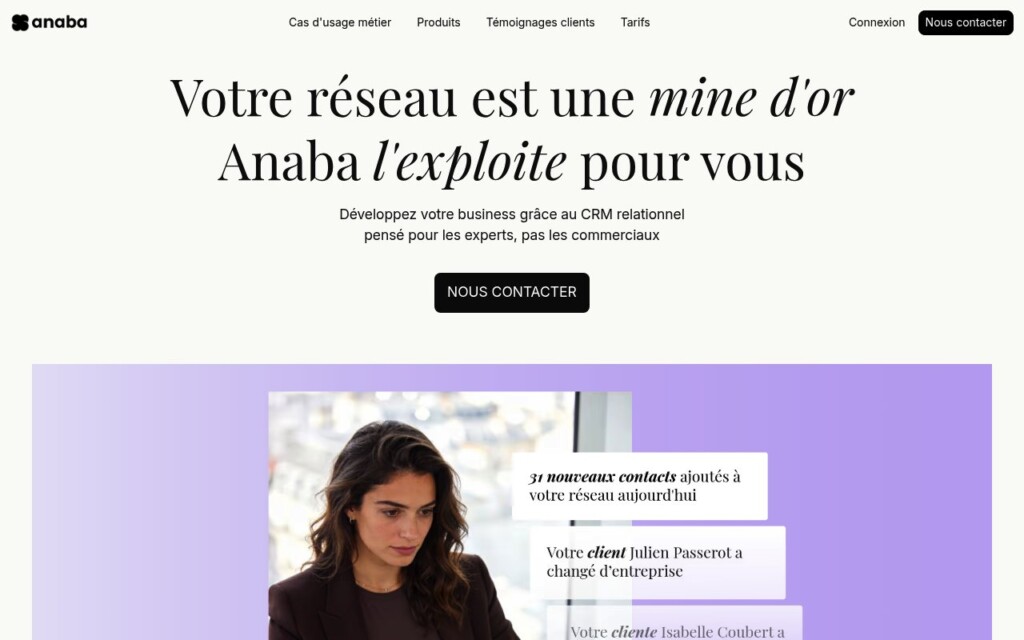
2) Anaba: A lightweight French CRM focused on contact management
Anaba is positioned as a small-business tool for organizing contacts and tracking customer interactions, without the sprawl of a full CRM suite.
The tradeoff is straightforward: it’s easy to adopt, but companies looking for deeper marketing automation, analytics, or complex workflows may outgrow it quickly.
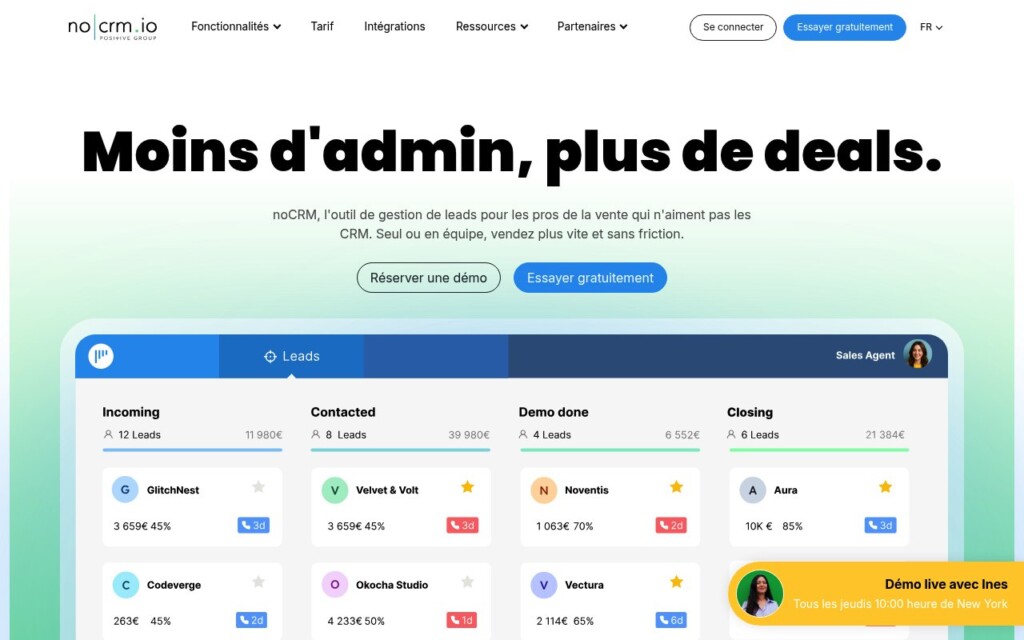
3) noCRM: A lead-first tool for sales teams that hate “traditional CRM”
noCRM markets itself as the anti-CRM: less database maintenance, more lead tracking and deal execution.
The ranking highlights its simplicity and competitive pricing, especially for small teams and startups. But if you need built-in marketing automation or customer service modules, you’ll likely be stitching together other tools.
4) Axonaut: A French “business cockpit” that bundles CRM with invoicing and admin
Axonaut is framed as an all-in-one platform for very small and midsize businesses, combining CRM with invoicing, basic accounting, and project management.
That breadth is the selling point, but it can also mean some modules won’t go as deep as best-of-breed standalone products.
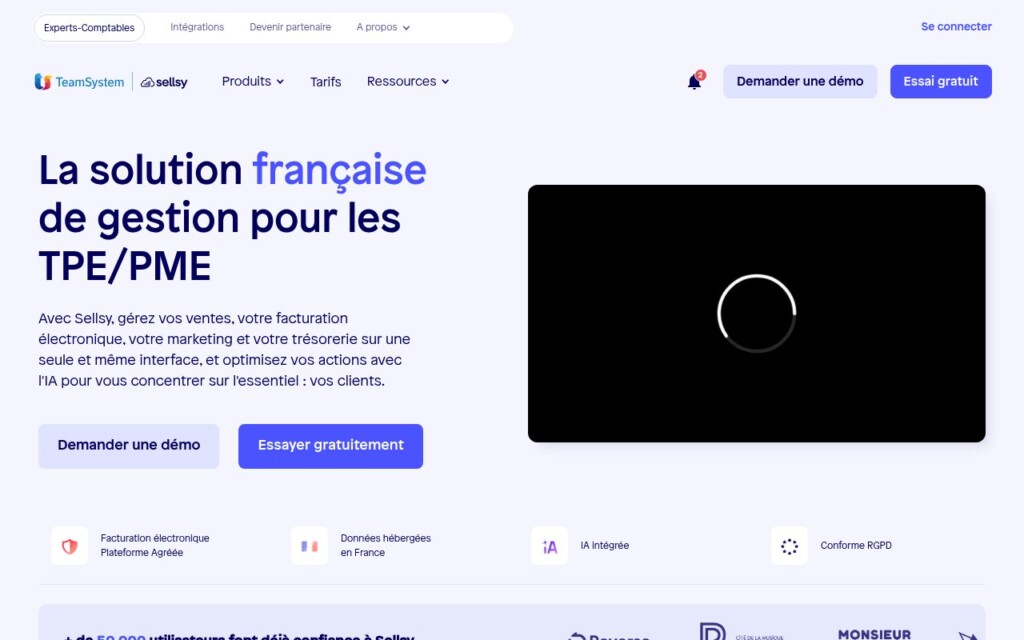
5) Sellsy: A French CRM built for SMBs that also want billing and sales ops
Sellsy targets small and midsize companies that want a 360-degree view of commercial operations, prospecting through retention, plus strong invoicing and sales administration tools.
The article underscores GDPR compliance as a key strength. The downside: feature richness can mean a steeper learning curve, and the product may feel too big for micro-businesses while still not as endlessly customizable as enterprise platforms.
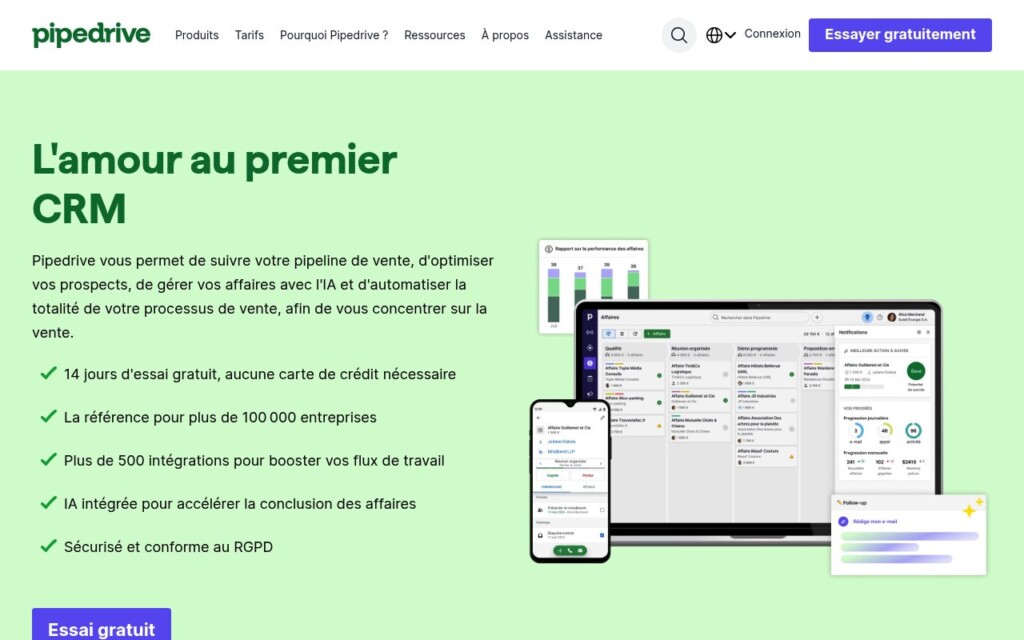
6) Pipedrive: The pipeline-focused favorite for teams that live in the deal board
Pipedrive is praised for what it’s known for in the U.S., too: a visual pipeline, fast onboarding, and a sales-first experience built around moving deals forward.
The ranking notes that teams needing deeper marketing automation or integrated customer service may find it narrower than broader CRM suites.
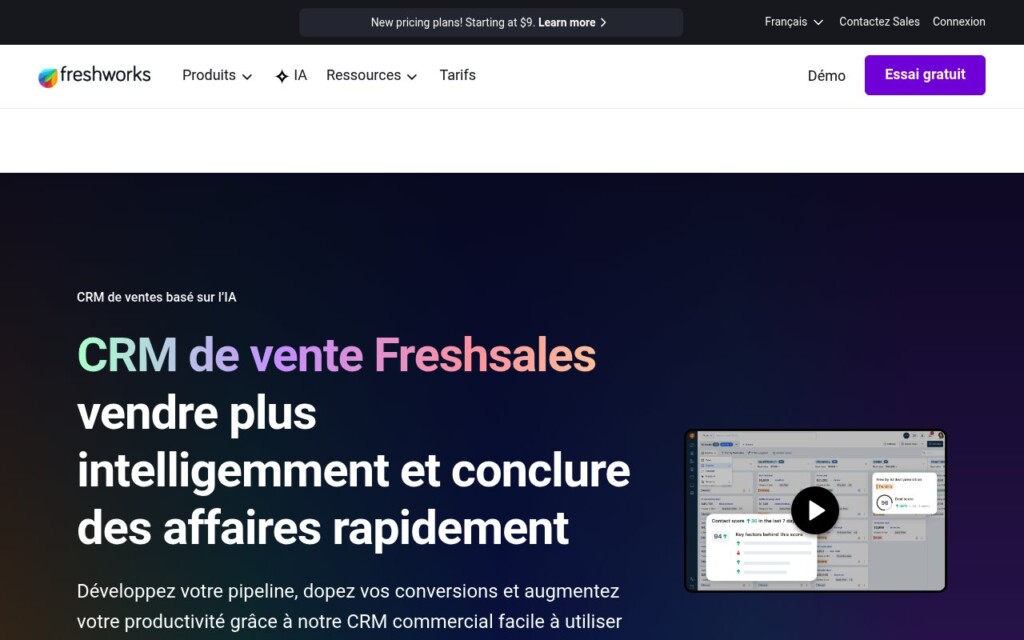
7) Freshsales (Freshworks CRM): A modern, balanced sales CRM
Freshsales is positioned as a middle-ground option, modern UI, solid sales features, and enough depth to satisfy mid-sized teams without overwhelming them.
It also benefits from the broader Freshworks ecosystem if companies want to expand into adjacent tools. But highly specific customization or complex ERP-style integrations may require extra work.
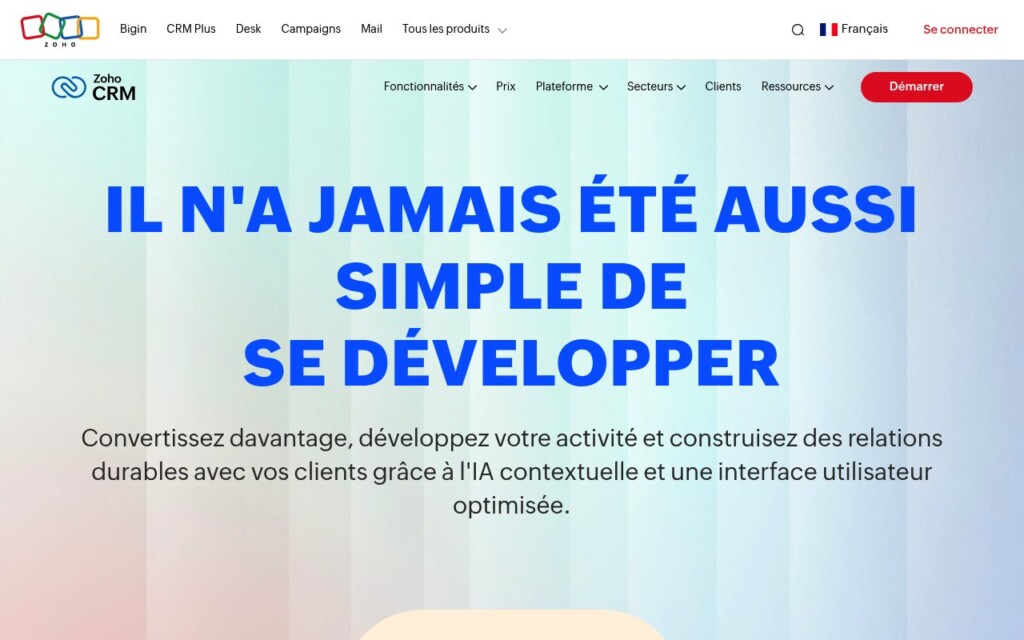
8) Zoho CRM: Modular, customizable, and budget-friendly, if you can configure it
Zoho CRM’s pitch in the ranking is flexibility: pick what you need, customize workflows and reporting, and scale up over time.
The flip side is familiar to many Zoho users: the power is real, but setup can be more involved than plug-and-play CRMs, especially if you’re aiming for heavy customization.
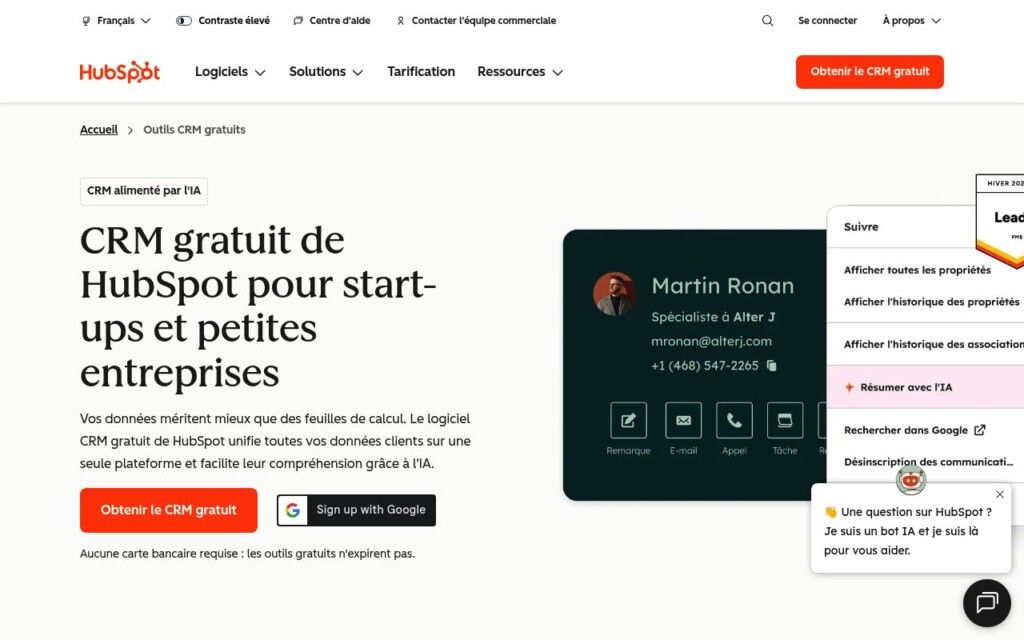
9) HubSpot CRM: The free on-ramp to an all-in-one marketing and sales machine
HubSpot gets credit for its free core CRM and its tightly integrated marketing, sales, and service tools, especially for inbound marketing strategies.
The warning is also standard: “free” is the entry point. As teams scale, add automation, and raise usage limits, costs can climb quickly, and the ecosystem can take time to master.
10) Salesforce: The enterprise standard, powerful, customizable, and complex
Salesforce rounds out the list as the global leader, built for large organizations that need deep customization, robust integrations, and serious scalability.
The ranking also points to the obvious drawback: implementation complexity and cost. For smaller companies, Salesforce can be more platform than they need.
How the outlet says it built the ranking
The French analysis says it weighed more than feature checklists. Key criteria included vendor transparency around pricing and terms, the quality of training and human support, flexibility and integration options, and overall value, not just sticker price.
It also distinguishes between “specialists” (tools that do one thing extremely well, like lead management) and broader suites that aim to cover sales, marketing, and service under one roof.
What to check before you pick a CRM
The article’s advice maps closely to what U.S. buyers should be doing, especially as CRMs become the system of record for revenue teams.
Start by defining what’s broken today and what success looks like (conversion rate, response time, pipeline visibility). Then pressure-test usability with the people who will actually use it, not just the admins.
Integration is the next make-or-break: email, accounting, ecommerce, marketing automation, and internal data systems. Finally, scrutinize support, training, security, and privacy compliance, GDPR in Europe, and an expanding patchwork of state privacy laws in the U.S.
The bigger takeaway for U.S. readers
France’s 2026 CRM wish list looks like a preview of where the broader market is headed: fewer disconnected tools, more automation that feels practical, and rising expectations around data governance.
Even if your company will never buy a “French-first” CRM, the ranking is a reminder that the next CRM battle isn’t just about features, it’s about adoption, trust, and whether AI actually makes sales teams faster instead of just more monitored.
| Logiciel CRM | Type de Clients | Points Forts Clés | Origine / Focus |
|---|---|---|---|
| Simple CRM | TPE, PME et grandes entreprises françaises | Simplicité, IA intégrée, complet (ventes, marketing, support) | France / Solution #1 revendiquée |
| Anaba | Petites entreprises françaises | Gestion de contacts, simplicité, efficacité | France / Contacts clients |
| noCRM | Équipes commerciales petites et agiles | Gestion des leads, prix compétitifs, facilité d’usage | International / Gestion des leads |
| Axonaut | TPE et PME françaises | Tout-en-un (facturation, compta, gestion de projet), 100% français | France / Plateforme polyvalente |
| Sellsy | PME françaises orientées ventes et facturation | CRM complet, facturation, gestion commerciale, conformité RGPD | France / Ventes et facturation |
| Pipedrive | Équipes commerciales PME en France et Europe | Pipelines de vente, exécution commerciale, rapidité | International / Pipelines de vente |
| Freshsales (Freshworks CRM) | Équipes ventes de taille moyenne en France | Modernité, simplicité, fonctionnalités avancées pour les ventes | International / Gestion des ventes |
| Zoho CRM | PME et entreprises de services en France | Flexibilité, modularité, personnalisation, suite d’outils | International / Suite d’outils |
| HubSpot CRM | Entreprises de toutes tailles en France | Gratuit, complet (marketing, ventes, service client), inbound marketing | International / Centralisation des opérations |
| Salesforce | Grandes entreprises et organisations complexes en France | Leader mondial, solution puissante, gestion avancée des relations clients | International / Solution d’entreprise |