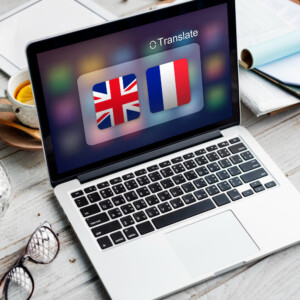
For years, online retailers fought for visibility on Google. Now they’re fighting to show up inside the answers people get from ChatGPT, Perplexity, Google’s Gemini, and other AI tools, and one French sports-nutrition brand says a full English-language site overhaul paid off fast.
Florian Zorgnotti, a Nice-based SEO consultant who’s worked in search since 2016, says he helped Shopify store SuperNutrition.fr translate and rebuild its site for English readers. In the first months after launch, he reports, sales attributed to AI-sourced traffic jumped 300%, with conversion topping 5%, a level many e-commerce sites would envy even on their best paid campaigns.
Why French-only sites are getting shut out of the AI economy
Zorgnotti’s core argument is simple: most large language models are trained heavily on English-language material, and their “research” layers tend to surface English sources even when a user asks a question in another language.
Ask an AI tool “best omega-3 supplements for athletes,” and it’s unlikely to cite a product page written only in French, no matter how strong the product is or how well the page ranks in France. For a French brand trying to scale internationally, he says, English isn’t a nice add-on anymore. It’s table stakes for what marketers are starting to call “Generative Engine Optimization,” or GEO, optimizing to be referenced by AI answers, not just ranked in blue links.
The AI search behavior most marketers still underestimate: “query fan-out”
One reason English matters so much, Zorgnotti says, is a behind-the-scenes mechanism used by modern AI search experiences: query fan-out. Instead of running a single search, the system breaks a user’s prompt into multiple parallel sub-queries, pulls sources for each, then synthesizes a response.
So a French-language question like “which omega-3 should I take to recover after training?” can trigger a burst of English sub-queries such as “best omega-3 post-workout recovery,” “omega-3 dosage for athletes,” “EPA DHA ratio sports nutrition,” and “omega-3 inflammation muscle soreness.” Even if the original question is in French, English often becomes the pivot language because that’s where the densest scientific literature, reviews, and technical content live.
At catalog scale, that matters. A single user prompt can create a dozen “citation opportunities” that effectively play out on English pages. If your store exists only in French, you’re competing for a thin slice of those opportunities, mostly the ones that stay local due to geography, regulations, or France-specific brands.
What they actually changed: four layers, not a quick translation
Zorgnotti says the win didn’t come from dumping copy into an automated translator and calling it a day. To get AI systems to reliably quote and recommend pages, he describes a four-part build focused on how AI crawlers ingest and reuse information.
1) Translation built for AI “quotability,” not word-for-word accuracy.Blog intros were rewritten to answer the query directly in the first two sentences, using declarative language and putting key numbers up top. The idea: AI tools tend to quote passages that read like clean answers, not marketing hooks.
2) Full multilingual structured data (JSON-LD).On Shopify templates, product pages, collections, articles, FAQs, and organization pages, he says the team implemented English-appropriate schema with careful handling of language signals (likeinLanguage), linked entities, andsameAsprofiles. Structured data remains one of the most underused signals for machine parsing, he argues.
3) Explicit rules for AI crawlers.He describes configuring robots.txt (and optionally ai.txt and llms.txt) to clarify what can be ingested by bots such as GPTBot, ClaudeBot, and PerplexityBot. The goal: avoid default settings that can be restrictive, or ambiguous, about AI access.
4) Clean hreflang and canonical setup.The French and English versions were separated so they wouldn’t compete with each other in search, with each version served to the right audience without diluting signals across markets.
The results: 300% more AI-attributed sales, and unusually high conversion
In the first months after the English version went live, Zorgnotti reports:
,AI-attributed sales up 300%, based on cross-channel attribution tracking and monitoring of commercial prompts.
,Conversion rate above 5%on AI-sourced traffic, which he says was multiple times higher than typical “classic” organic search traffic.
,Regular citationsin ChatGPT and Perplexity answers for English-language product queries.
That high conversion rate tracks with how AI traffic behaves, he argues: shoppers arrive “pre-qualified.” By the time they click through, the AI conversation has already done much of the comparison shopping, so the product page is more like the last step than the first.
What U.S. and global e-commerce operators should take from this
Zorgnotti’s takeaway is less about France and more about the new reality of discovery: AI visibility is becoming its own channel, sitting alongside SEO rather than replacing it, and it may convert better because it captures users later in the decision cycle.
But he warns that translation alone won’t do it. If the English version isn’t built to be ingested, understood, and cited, through structure, schema, crawl rules, and clean international SEO, brands can spend money and still stay invisible inside AI answers. And measuring that visibility, he adds, is its own project: Google Search Console won’t show what’s happening inside ChatGPT-style interfaces.
The bigger implication: the window may be open right now because many smaller international retailers still haven’t adapted. If AI tools keep becoming the front door to shopping research, the brands that publish in English, and publish in a way machines can reuse, could lock in an early advantage before the space gets crowded.