

Mercedes-Benz is trying to reinvent the family van—and the chauffeured shuttle—around an all-electric platform it calls the VLE, a “Grand Limousine” designed to carry 4 to 8 passengers in what the company frames as a rolling lounge.
The headline claim: more than 700 km of WLTP-rated range (about 435 miles), paired with a high-tech cabin built around rear-seat comfort and screens. Mercedes is also signaling a premium price position, aiming to move beyond the more work-van roots of its earlier EQV electric people-mover.
A 700+ km (WLTP) range claim—tempered by real-world expectations
Mercedes is making range the centerpiece of the VLE pitch, advertising more than 700 km on the WLTP test cycle. For buyers who rack up long highway miles—especially with passengers and luggage—range anxiety remains the biggest barrier to an electric van, and Mercedes is clearly trying to make “vacation road trip” part of the VLE’s core identity.
The automaker is also talking up a new technical foundation, including an 800-volt architecture mentioned in recent materials around the model. In the EV world, 800V systems are generally associated with higher charging power and improved thermal management—two factors that matter more as vehicles get larger and heavier.
Specialty outlets are already cautioning that the WLTP number won’t be what most drivers see on the highway. Top Gear, for example, points to ranges closer to 300 miles for many versions depending on use and conditions. That gap between WLTP certification and loaded, high-speed driving isn’t unusual, but it’s a reminder that a big, comfort-first van isn’t built to chase efficiency records at speed.
Mercedes also notes that some figures are still described as preliminary in its public materials, with values subject to change before full validation by a recognized testing organization. For many shoppers, the real question is simpler: how far can it go between charging stops on the highway at 130 km/h (about 81 mph) with six people and luggage?
Even with those caveats, the strategy is clear: reposition an electric van as a long-distance grand-touring vehicle. In that context, high range and fast charging are inseparable—especially for a vehicle priced in luxury territory.
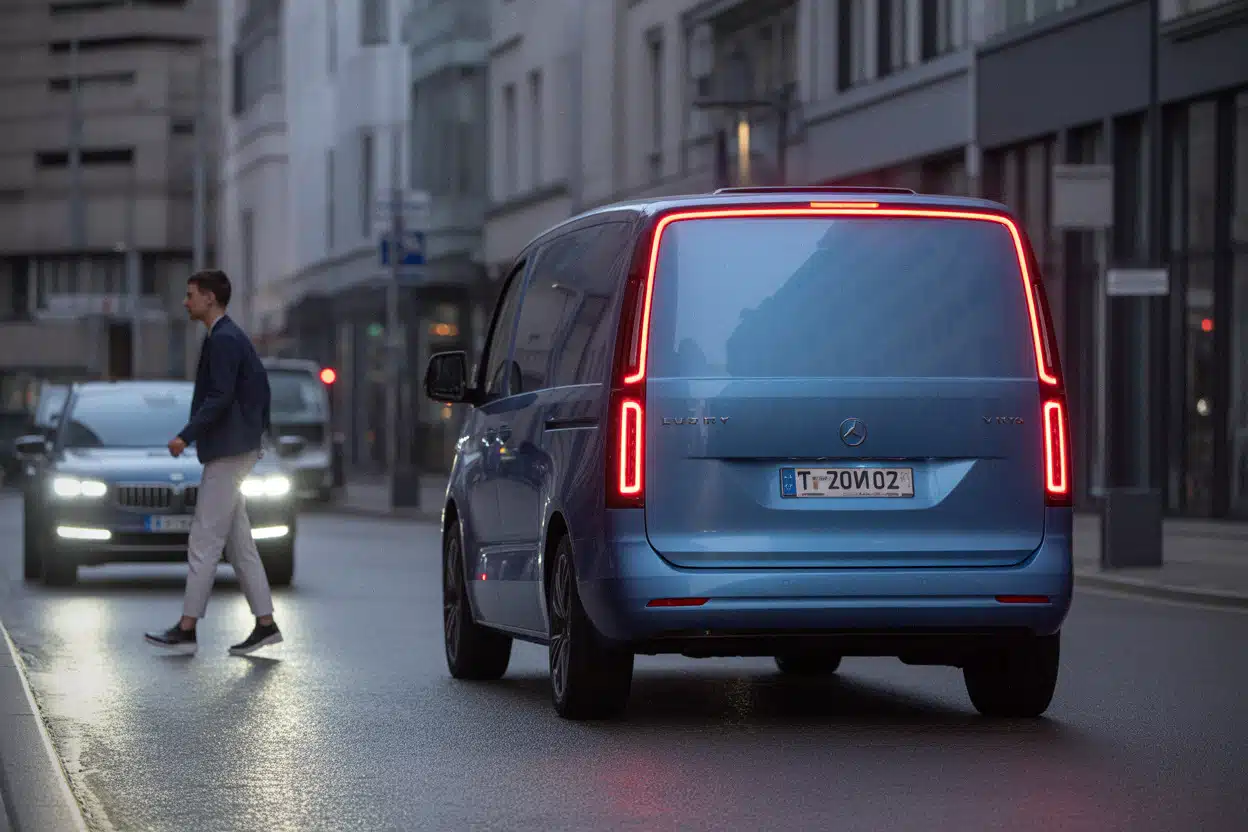
From EQV to VLE, Mercedes aims higher—and tries to shed the “utility” vibe
The VLE is being positioned as more of a break than an evolution from the EQV. The earlier model, derived from a more utilitarian base, was often described as rougher in feel, with an electric experience limited by a range seen as too short for long-haul use.
That contrast matters because the EQV was already expensive, with prices cited above €80,000 depending on configuration—about $86,000—making it a tougher sell when real-world endurance didn’t match expectations.
With the VLE, Mercedes appears to be chasing customers who compare it less to traditional minivans and more to premium sedans—or to high-end chauffeured transport. The “rolling lounge” idea isn’t new, but it can land differently in a large electric van, where quiet operation and the absence of a traditional gearbox can amplify the sense of smooth, effortless travel at steady speeds.
Mercedes’ own label for the vehicle—“Grand Limousine”—won’t convince everyone. International test drives have pointed out that, even with a carefully designed LED lighting signature, the VLE still reads as a van, especially from the rear. For luxury buyers, that’s not just an aesthetic question: some want discreet functionality, while others want a more status-forward silhouette.
Weight is another unavoidable factor. Versions discussed in the press can exceed 3.5 metric tons (about 7,700 pounds), which affects acceleration, braking distances, tire wear, and the demands placed on driver-assistance systems. The VLE isn’t being sold as sporty; it’s being sold as stable and reassuring, built to keep comfort high over hours on the road.
In that sense, the shift from EQV to VLE looks like a change in doctrine. Where the EQV could feel like a premiumized electrified work vehicle, the VLE is pitched as a luxury product—one that will ultimately be judged not only by screens and a range claim, but by long-term reliability, build quality, charging partnerships, and resale value.
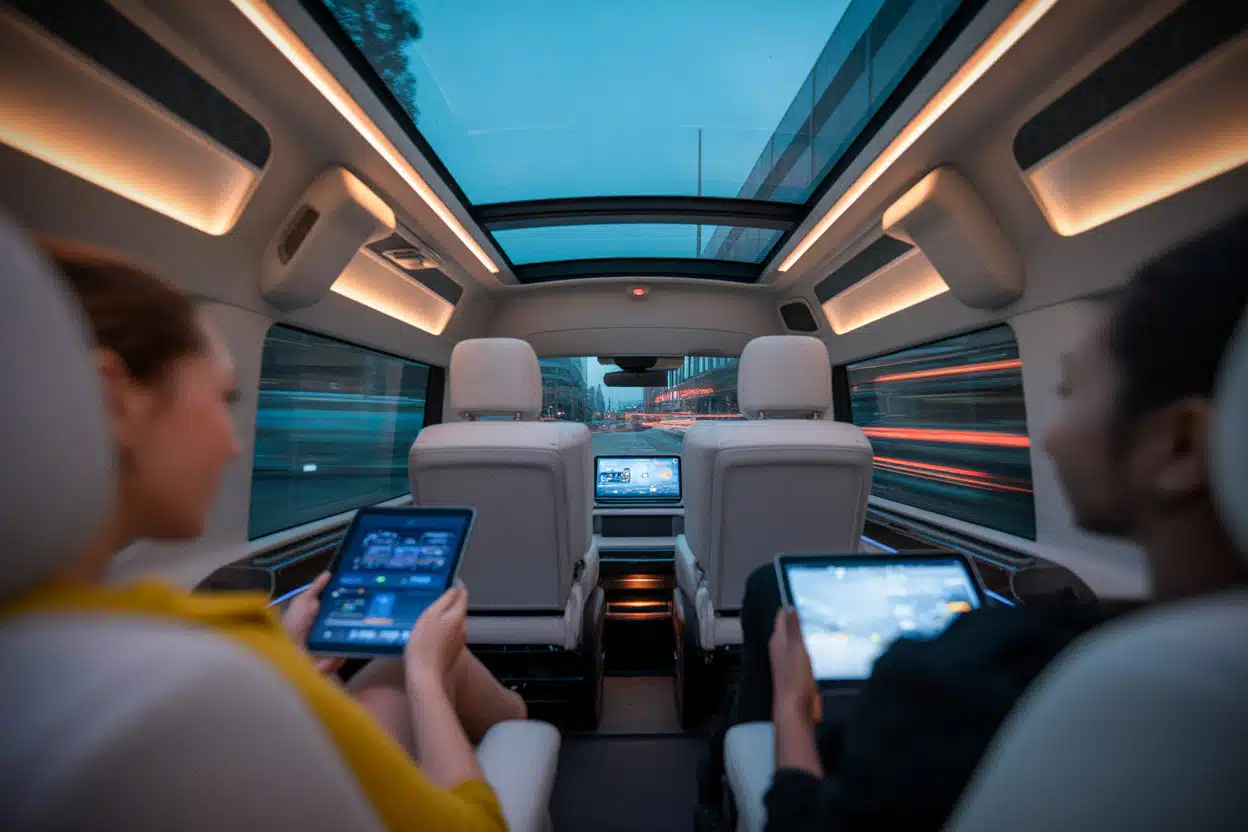
Inside, Mercedes puts the spotlight on the back seats
The core of the VLE story is in the rear cabin. Mercedes is highlighting what it calls the MBUX Rear Space Experience, a passenger-focused setup built around screens, controls, lighting, and digital services meant to turn the interior into a workspace or a relaxation zone.
The message is straightforward: this isn’t just transportation. Mercedes wants a “business class” feel for families and for chauffeur-driven clients alike.
That atmosphere is reinforced by a panoramic Sky View roof and a more elaborate lighting treatment. Ambient lighting becomes part of the staging—useful on long trips, and also a signal of how much the premium market now values interior mood and design identity.
The van format brings constraints, but it also brings flexibility. Seating for up to eight people supports real-world use cases: hotel shuttles, airport transfers, team travel, and large families. In an upscale electric configuration, Mercedes is betting that travel time becomes part of the experience—work on the move, watch a movie, talk without raising your voice, or keep kids occupied through a dedicated interface.
Comfort, though, isn’t only about visible features. Sound insulation and suspension tuning become decisive in a heavy vehicle, especially when passengers sit far from the front axle. Mercedes’ presentation materials point to limousine-like road manners combined with MPV versatility—an ambitious promise in a segment where compromises show up quickly as body motion, harsh impacts, wind noise, or comfort changes depending on load.
One more issue rarely highlighted in brochures: digital restraint. More screens and features demand frictionless ergonomics and a clear update policy. Premium buyers expect stable software, user profiles, reliable connectivity—and confidence that services won’t vanish after a few years. In a high-priced vehicle, the software experience is part of the value, just like the seats and trim.
Fast charging, planning tools, and the long-trip reality check
For a luxury electric van, the real test happens at highway rest stops. The VLE is framed around fast charging consistent with its claimed 800V setup. Mercedes talks about high charging power and time savings, while adding the usual caveats: preliminary values that depend on conditions, battery temperature, and the charging station. For drivers, the promise is measured in minutes saved, not kilowatts.
Mercedes is also pitching the ecosystem around charging. The company points to public-charging services, including reservation functions at certain stations and account-based integration. For premium customers, the appeal is reduced uncertainty—because on peak travel days, charger availability can become the stress point, and easy planning, payment, and access can matter as much as peak charging speed.
Competition is still limited, but organizing. Electric vans and large electric people-movers remain a niche compared with SUVs, yet demand exists for specific uses: hotels, premium ride services, corporate fleets, and big families. In this segment, buyers often weigh interior space, range, operating costs, and brand image. The VLE is leaning hard into premium tech, but it will still need to prove that insurance costs, maintenance, and depreciation don’t erase the day-to-day benefits.
Weight also brings regulatory and practical considerations. Once a vehicle crosses certain thresholds, requirements can change by country—license rules, specific limits, or parking restrictions. Professional buyers, including shuttle operators and chauffeurs, pay close attention because those details can determine profitability. At this price level, purchases tend to be analytical, not impulsive.
Early impressions converge on a similar theme: the VLE can be impressive, but not perfect. Some observers praise its versatility and refinement while noting that even a luxury van remains an unusual object in car culture. Mercedes’ challenge will be to turn that paradox into an advantage—making the van format the best tool for comfortable group travel without giving up technology, quietness, or a sense of status.
Frequently asked questions
What range is Mercedes claiming for the VLE in 2026? Mercedes-Benz is communicating a claimed range of more than 700 km on the WLTP cycle, with caveats tied to certification and real-world conditions.
Is the VLE replacing the Mercedes EQV? The VLE is positioned as a major evolution of Mercedes’ electric van lineup, aiming for a more premium base and significantly higher range than what’s generally associated with the EQV.
How many passengers can the Mercedes VLE carry? Mercedes presents the vehicle as capable of carrying 4 to 8 passengers depending on the interior layout.
Does the Mercedes VLE use an 800-volt system? Recent materials around the model mention an 800V architecture, typically linked to faster charging and improved charging performance, with values depending on version and conditions.
Key takeaways
Mercedes’ VLE targets the premium electric van segment with seating for 4 to 8 people, a claimed 700+ km WLTP range, and an 800V fast-charging focus. The cabin pitch centers on rear-seat tech—MBUX Rear Space Experience—and a Sky View panoramic roof, with pricing positioned at luxury levels in a still-limited competitive field.
Sources
“On a testé le Mercedes VLE, le luxueux van électrique pour des vacances en business class” (Nouvel Obs); “Mercedes-Benz VLE Review 2026” (Top Gear); “Review: The New Mercedes-Benz VLE Is a Private Jet for the Road” (Robb Report); “The all-new electric VLE | The Walkaround” (YouTube); Instagram reel referenced in the original article.
Key Takeaways
- The Mercedes VLE targets the premium electric van segment, with seating for 4 to 8 passengers
- The claimed range exceeds 700 km (WLTP), with a possible gap in real-world use
- Mercedes highlights an 800V architecture and fast charging geared toward long-distance travel
- The passenger experience is central, with MBUX Rear Space Experience and a Sky View roof
- Pricing remains at luxury levels, facing still-limited competition
Frequently Asked Questions
What range will the Mercedes VLE have in 2026?
Mercedes-Benz is communicating an estimated range of over 700 km on the WLTP cycle, with the usual caveats related to certification and real-world driving conditions.
Is the VLE replacing the Mercedes EQV?
The VLE is positioned as a major evolution of the brand’s electric van lineup, aiming for a more premium platform and significantly more range than what’s typically associated with the EQV.
How many passengers can the Mercedes VLE carry?
The vehicle is presented as being able to seat 4 to 8 passengers, depending on the chosen configuration.
Does the Mercedes VLE use an 800-volt system?
Recent coverage of the model mentions an 800V architecture, generally associated with faster charging and better charging performance, with figures depending on the version and conditions.



