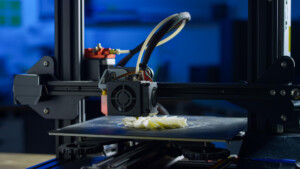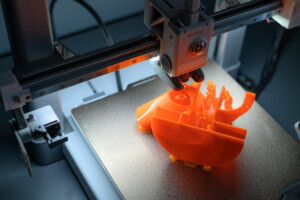
In Paris, 3D printing has moved from “cool prototype trick” to a serious business tool, and companies are using it to build parts faster, tweak designs on the fly, and avoid the upfront costs of traditional manufacturing.
The boom has also created a crowded marketplace of print shops and specialized vendors across the French capital. For startups and established manufacturers alike, the challenge isn’t whether to use additive manufacturing, it’s how to choose the right technology and the right provider to hit deadlines, control costs, and get professional-grade results.
This guide breaks down the main 3D printing methods companies are using in Paris, what to look for in a vendor, and where the technology is headed next.
Paris’ 3D-printing surge is about speed, flexibility, and customization
Paris-based businesses are under constant pressure to stay nimble, especially in product development, where a slow prototype cycle can kill momentum. 3D printing offers a shortcut: teams can go from a digital model to a physical part in days, sometimes in as little as 24 to 72 hours.
That speed matters, but so does flexibility. Instead of investing in expensive equipment or committing to tooling like molds and dies, companies can outsource prints, iterate quickly, and order only what they need, whether that’s a one-off test piece or a small production run.
The main 3D printing technologies companies use, and what they’re best at
Paris’ local market offers a wide range of additive manufacturing options. The right choice depends on what you’re making, how strong it needs to be, and how clean the finish must look.
FDM (Fused Deposition Modeling)is often the go-to for fast, budget-friendly functional prototypes. It’s widely available and works well when you need a part quickly and don’t require a showroom finish.
SLA (Stereolithography)is prized for precision and smooth surfaces. Companies often choose it for detailed models, presentation pieces, and parts where fine features matter.
SLS (Selective Laser Sintering)is built for tougher, more industrial applications. It’s commonly used for durable parts and limited-run production where strength and repeatability are key.
DLP (Digital Light Processing)is similar to SLA but can be faster in some workflows, making it attractive when turnaround time is critical.
How to choose a 3D printing service in Paris without getting burned
With more vendors competing for business, the smartest buyers focus on a few practical filters: technical capability, guidance, turnaround time, and transparent pricing.
Technical expertise and hands-on supportcan make or break a project. A strong provider won’t just “hit print”, they’ll help troubleshoot files, optimize designs for manufacturability, and advise on material choices based on strength, flexibility, and real-world use.
Companies also look for vendors who can prove they’ve handled similar jobs before, especially in regulated or high-stakes fields like medical devices, aerospace, or industrial tooling.
Turnaround time, cost, and customization optionsare the other big differentiators. In a city where timelines are tight, many providers advertise rush production in 24 to 48 hours. But speed only helps if quality holds up, so buyers often compare lead times alongside finishing services, delivery options, and how clearly the vendor explains pricing.
3D printing in Paris is no longer just for prototypes
While rapid prototyping remains the headline use case, Paris companies are increasingly using additive manufacturing for real production work, especially small batches and specialized components.
Industries adopting 3D printing include aerospace, architecture, fashion, medicine, and mechanical engineering. Architects use printed scale models to sell designs and spot issues early. Medical teams use printed anatomical models for training and planning, and in some cases produce highly customized components tailored to individual patients.
For manufacturers, the appeal is straightforward: additive manufacturing can reduce the need for traditional tooling, making short runs and frequent design changes far more economical.
The tradeoffs: where 3D printing still falls short
3D printing comes with clear advantages: faster development cycles, less material waste, simplified logistics, and near-limitless customization. It’s also well-suited to design changes, teams can revise a file and print a new version without retooling an entire production line.
But there are limits. For large-scale production, per-unit costs can still be too high, and print times can become a bottleneck. Some industrial-grade materials remain harder to source or more expensive, and many parts require post-processing, sanding, curing, polishing, or coating, to reach a professional surface finish.
What’s next through 2026: smarter machines, more materials, and more automation
By 2026, experts expect professional 3D printing in Paris to become more accessible, especially as high-performance equipment spreads beyond large corporations to small and mid-sized businesses.
Automation is also poised to reshape the workflow. AI-assisted design tools and automated quality control could improve consistency and reduce failure rates, two pain points that still frustrate companies trying to scale additive manufacturing.
Meanwhile, the materials menu keeps expanding. Beyond standard plastics, vendors are increasingly working with composites, bio-based polymers, and specialized alloys, opening the door to new industrial uses that weren’t practical just a few years ago.
Which projects benefit most, and how long a prototype typically takes
In Paris, 3D printing is commonly used for detailed architectural models, custom mechanical parts, functional prototypes, and personalized fashion or design accessories.
For a standard prototype, many providers can deliver within 24 to 72 hours, depending on file complexity and shop capacity. More demanding parts, especially those requiring specialized materials or tight tolerances, can take several additional days.
For massive production volumes, though, traditional methods like injection molding often remain the better deal, especially when unit cost is the top priority.
| 🔹 Élément | 🔸 Information |
|---|---|
| 🏙️ Contexte à Paris | L’impression 3D séduit les entreprises pour sa flexibilité, sa rapidité et sa capacité de personnalisation. |
| 🚀 Usages principaux | Prototypage rapide, production en petites séries et fabrication d’objets sur mesure. |
| ⚙️ Technologies clés | FDM (rapide et économique), SLA/DLP (précision), SLS (robustesse industrielle). |
| 🧩 Critères de choix | Compétences techniques, accompagnement, délais, coûts, technologies et niveau de personnalisation. |
| ⏱️ Délais moyens | En général 24 à 72 heures pour un prototype standard à Paris. |
| ✅ Avantages | Gain de temps, réduction des coûts de prototypage, faible logistique, grande liberté de conception. |
| ⚠️ Limites | Moins rentable pour la grande série, choix de matériaux limité et nécessité de post-traitement. |
| 🔮 Tendances 2026 | Démocratisation des machines, nouveaux matériaux, intégration de l’IA et amélioration du contrôle qualité. |
| Critère | Niveau d’importance | Questions à poser |
|---|---|---|
| Technologie disponible | Essentiel | Est-ce adapté à mes besoins techniques? |
| Délais / rapidité | Très important | Pouvons-nous obtenir nos pièces sous 48 h? |
| Coûts / Devis précis | Important | Y a-t-il des frais cachés ou un forfait global? |
| Personnalisation | Variable | Quel degré de personnalisation est proposé? |
| Méthode | Petite série | Grande série |
|---|---|---|
| Impression 3d | Optimale | Moins efficace |
| Injection plastique | Coût élevé | Très rentable |