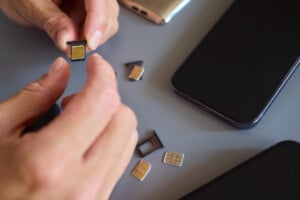
You land after a long flight, flip your phone off airplane mode, and get nothing. No maps. No rideshare. No messages. For years, that moment has kicked off the same scramble: hunt for airport Wi‑Fi, find a kiosk, fumble with a SIM tray pin, and hope you don’t lose a chip the size of a fingernail.
That hassle is disappearing fast thanks to eSIM, a built-in digital SIM that lets travelers activate cell service in minutes, often before they even take off. It’s an “invisible” upgrade, but it’s changing how Americans stay connected abroad, cutting down on surprise roaming bills and eliminating the plastic SIM-card shuffle.
What an eSIM is, and why it matters
eSIM stands for “embedded SIM.” Instead of a removable card, the SIM is built into your phone, tablet, smartwatch, or even some laptops. It’s installed at the factory and lives on the device’s hardware, which means you don’t swap anything in and out.
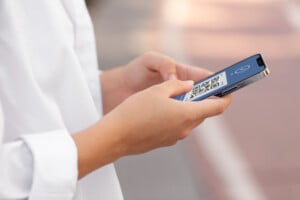
The practical difference is huge: rather than buying a physical SIM, you download a carrier profile digitally, usually by scanning a QR code or entering an activation code. Within minutes, your device connects to the network you chose, no tiny tray required.
And it’s not just for phones. As more gadgets come with cellular connectivity, wearables, connected laptops, and Internet-of-Things devices, eSIM makes it easier for manufacturers to add mobile service without designing around a removable slot.
Why travelers are switching: fewer fees, faster service, less friction
For Americans traveling internationally, eSIM’s biggest selling point is cost control. Traditional roaming through your home carrier can get expensive fast, especially if you’re relying on data for navigation, translation, and work. With eSIM, you can often buy a local or regional data plan for your destination at a lower price than roaming rates.
It also solves the “dead-on-arrival” problem. If you purchase an eSIM plan ahead of time, you can activate it as soon as you land and get online immediately, no airport lines, no language barrier at a phone shop, no guessing which prepaid plan you need.
eSIMs also make it easier to juggle multiple numbers or plans. Many devices can store several eSIM profiles, letting you keep your U.S. number active for calls and texts while using a separate data plan abroad, or switch plans as you move between countries.
Security is another quiet advantage. A physical SIM can be removed and moved to another device. An eSIM can’t be “pocketed” the same way; it’s tied to the device, which can add a layer of protection if your phone is lost or stolen.
And yes, there’s an environmental angle: fewer plastic SIM cards produced and tossed means less waste over time. It’s not going to save the planet by itself, but it’s a real reduction in disposable hardware.
How to set up an eSIM in a few minutes
Activating an eSIM is designed to be simple, more like installing software than swapping hardware. The exact menus vary by device, but the flow is usually the same.
First, confirm your device supports eSIM. Most newer iPhones, Google Pixels, and many Samsung Galaxy models do, along with a growing list of tablets and smartwatches.
Next, choose a provider. That could be your existing carrier (many U.S. carriers support eSIM now) or a travel-focused eSIM seller that offers country-by-country data plans. After you buy a plan, you’ll typically receive a QR code by email or inside an app.
On your phone, go to cellular/mobile settings and choose the option to add an eSIM or add a mobile plan. Scan the QR code, follow the prompts, and you’re set. After that, switching between your physical SIM and eSIM, or between multiple eSIM plans, usually takes just a few taps in settings.
eSIM vs. the old SIM card: the real-world difference
Physical SIM cards still work, and they’re not disappearing overnight. But eSIM removes the most annoying parts of the experience: no store visit, no waiting in line, no tiny piece of plastic to lose, and no need to open your phone at all.
The bigger shift is flexibility. Because eSIM is software-based, changing carriers or adding a temporary travel plan can be faster and easier than the old model, especially when you’re crossing borders and need service immediately.
The bottom line: a “digital passport” for staying connected
eSIM isn’t flashy. There’s no new gadget to show off, no dramatic redesign. But for travelers, and anyone who moves between plans, countries, or devices, it’s the kind of behind-the-scenes tech that removes friction you didn’t realize you’d been tolerating.
As more carriers and device makers treat eSIM as the default, the travel ritual of hunting for a SIM kiosk after landing may soon feel as outdated as printing boarding passes at home.
| Caractéristique | Carte SIM Traditionnelle | eSIM |
|---|---|---|
| Format physique | Petite carte en plastique (Mini, Micro, Nano) | Intégrée à l’appareil, invisible |
| Installation | Insertion manuelle dans un tiroir | Activation numérique (scan QR, code) |
| Changement d’opérateur/forfait | Remplacement physique de la carte | Changement de profil logiciel, sans manipulation |
| Gestion de plusieurs profils | Nécessite plusieurs tiroirs ou appareils | Plusieurs profils stockés, activation facile |
| Risque de perte/dommage | Élevé (perte, casse du tiroir ou de la carte) | Nul (intégrée à l’appareil) |
| Impact environnemental | Production et déchet de plastique | Réduit (dématérialisé) |
| Voyages internationaux | Achat de SIM locale ou frais d’itinérance élevés | Activation de forfaits locaux instantanée et économique |