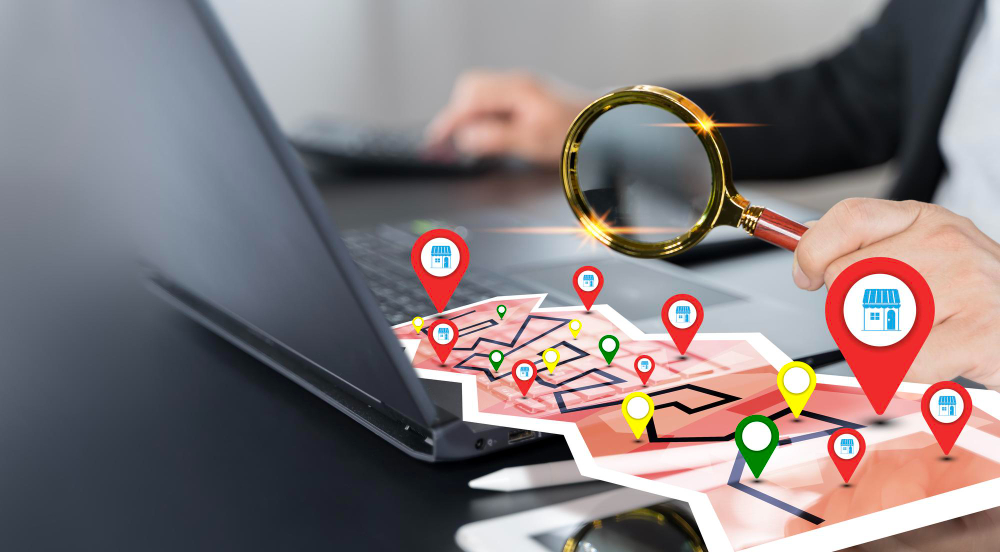
Nearly half of all Google searches are local, and the payoff is fast. Studies cited by SEO researchers show 46% of searches carry local intent, and 76% of people who run a local search visit a business within 24 hours.
That’s why, for small businesses, contractors, and neighborhood retailers, the most cost-effective marketing move in 2026 often isn’t a flashy ad campaign. It’s showing up when someone nearby types “emergency plumber,” “best sushi,” or “dentist near me” and taps the first option on Google Maps.
If your business isn’t in that map box at the top of the results, the “Local Pack,” typically three listings, many customers won’t scroll. They’ll call whoever’s visible.
Local SEO, explained for Americans who don’t have time for marketing theory
Local SEO is the set of steps that helps your business appear in Google Maps and location-based search results. Think of it as the digital version of being on the busiest corner in town, except the “corner” is your customer’s phone.
Unlike traditional SEO, where you’re competing with huge national brands for broad keywords, local SEO is about winning searches tied to a place. A dentist in Toledo isn’t competing with every dentist in America, just the ones in and around Toledo.
The numbers driving the Google Maps gold rush
The article cites widely referenced industry stats that explain why local search converts so well. People searching locally aren’t browsing, they’re trying to buy, book, or visit.
Among the figures highlighted: 86% of users rely on Google Maps to find local businesses, 98% read reviews before contacting a local company, and about 42% click results in the Local Pack, the map section that dominates the top of the page.
What Google actually rewards in local rankings
Google’s local algorithm leans on three core signals: relevance (are you a match?), distance (are you close?), and prominence (do you look trusted and well-known?). In practice, that boils down to a few make-or-break factors.
1) Your Google Business Profile is the main event.Local SEO experts cited in the piece point to your primary category, what you tell Google you are, as one of the strongest ranking signals. “Electrician” beats “Contractor.” “Italian restaurant” beats “Restaurant.”
Google also looks at whether your profile is complete: hours, description, photos, services, and regular updates. Businesses open at the time of the search can also get a lift.
2) Reviews aren’t just reputation, they’re ranking fuel.The article references an analysis of roughly 2 million Google Business Profiles suggesting top-three local listings average around 250 reviews, while positions four through 10 tend to have fewer than 200.
But freshness matters as much as volume. A steady drip of new reviews, say, a couple each week, can outperform a competitor with hundreds of older reviews and months of silence. And responding to reviews helps, too; top performers tend to reply consistently and thoughtfully, not with one-line brush-offs.
3) NAP consistency: the boring detail that quietly kills rankings.NAP stands for Name, Address, Phone number. Google wants those details to match everywhere, your website, Google profile, Yelp, Facebook, local directories. Even small differences (like adding “Suite A” in one place but not another) can weaken trust signals.
4) Your website still matters, especially the local cues.On-page signals, your city, service area, contact page, and mobile performance, help confirm to Google that you’re legitimate and relevant to a specific location. The article cites local SEO experts who estimate on-page factors make up about 36% of local organic ranking weight.
The three mistakes that keep small businesses invisible
Mistake #1: A Google Business Profile that’s unclaimed or half-finished.Google often auto-generates listings. If you never claim yours, you may be stuck with wrong hours, the wrong category, or outdated contact info, and you have limited control over fixes.
Mistake #2: No system for asking for reviews.Many owners wait for reviews to “just happen.” They usually don’t, until someone’s mad. The article’s example is blunt: a contractor who texts every customer a review link after each job can rack up dozens of reviews in months, while a competitor might collect only a handful.
Mistake #3: A website that never mentions where you actually work.If your site talks about services but never says “Serving [City]” (naturally, in headings, page titles, and contact info), Google has less confidence connecting you to local searches.
A step-by-step playbook to optimize your Google Business Profile
Step 1: Claim or create your profile.Search your business name in Google Business Profile. If a listing exists, request ownership and complete verification (postcard, phone, or email depending on the business).
Step 2: Pick the right primary category.Be specific. This is one of the highest-impact choices you’ll make.
Step 3: Fill out every core detail.Use your real business name (don’t stuff keywords), correct address, main phone number, website, and accurate hours, including holiday hours.
Step 4: Write a tight, local description.You have limited space. Explain what you do, what you’re known for, and where you serve. Mention your city naturally, no spammy repetition.
Step 5: Add strong photos, and keep them current.Aim for at least 10: storefront, interior, team, and examples of work or products. Photos drive clicks and calls.
Step 6: Turn on attributes that matter.Accessibility, contactless payment, outdoor seating, online booking, these can help you appear in filtered searches.
Step 7: Post updates regularly.Google Business Profile posts function like mini-updates: promos, new services, events. The article recommends 1–2 posts per week to signal activity.
Step 8: List services and products.Add descriptions and even ballpark pricing when possible. It’s another relevance signal.
Step 9: Build a review routine.Create a short review link and send it by text or email within 24 hours of service. Add a QR code at the register or on invoices. Respond to every review, good and bad.
Step 10: Monitor monthly.Google lets the public suggest edits to your listing. If you’re not watching, incorrect info can slip in and cost you customers.
A real-world example: how a local contractor flipped the switch in four months
The article describes an anonymized case: a plumbing and heating contractor in a city of about 80,000 people (roughly 50,000 Americans). He’d been in business for 12 years, had a solid offline reputation, and was invisible online.
His Google profile existed but wasn’t claimed. His website didn’t mention the city. He had just four Google reviews.
Over four months, the business claimed and fully optimized the profile (including 15 photos), started texting customers for reviews after each job, added local language across the website, built two service pages targeting the city, and posted twice a week on the profile.
The takeaway: this kind of jump isn’t rare when a business starts from zero and executes the basics consistently, especially in markets where competitors are still asleep at the wheel.
When it makes sense to hire a local SEO consultant
Many small businesses can handle the fundamentals themselves. But the article argues it’s time to bring in help when you’ve optimized your profile and still don’t show up after about three months, when competitors outrank you despite weaker reviews, or when you’re managing multiple locations.
A credible consultant won’t promise “#1 on Google” with no audit. They should show real case studies, spell out what they’ll do in the first month, define success metrics (calls, direction requests, form fills, Local Pack visibility), and ensure you retain ownership of your Google profile and website assets.
The bottom line for 2026: local search is where purchase intent lives
Google Ads can buy you instant visibility, but it disappears the moment you stop paying. Local SEO is slower, but it compounds, building a durable presence in the exact moment customers are ready to act.
For many American small businesses, the smartest growth strategy this year isn’t trying to “go viral.” It’s making sure the next person who searches “near me” finds you first, and trusts you enough to tap “Call.”
| SEO classique | SEO local | |
|---|---|---|
| Cible | Audience nationale ou mondiale | Clients dans votre zone géographique |
| Résultats visés | Pages organiques classiques | Local Pack (carte) + résultats organiques locaux |
| Outil principal | Site web optimisé | Fiche Google Business Profile + site web |
| Délai | 6 à 12 mois en général | 4 à 8 semaines pour les premiers effets |
| Budget | Souvent élevé (contenu, liens) | Accessible, même avec peu de moyens |
| Indicateur | Avant | Après |
|---|---|---|
| Avis Google | 4 | 47 |
| Note moyenne | 3,8/5 | 4,7/5 |
| Appels depuis la fiche GBP | ~5/mois | ~35/mois |
| Position sur “plombier + ville” | Hors top 10 | Top 3 Local Pack |
| Demandes de devis | 8/mois | 29/mois |
| En autonomie | Avec un consultant | |
|---|---|---|
| Coût | Gratuit (hors temps) | 500 à 2 000 €/mois selon les missions |
| Vitesse | Lente (courbe d’apprentissage) | Rapide (expérience terrain) |
| Profondeur | Bases accessibles | Audit technique, stratégie multi-pages, netlinking local |
| Suivi | Difficile sans outils | Reporting mensuel, ajustements continus |
| Risque d’erreur | Élevé (pénalités GBP possibles) | Faible |
| SEO local | Google Ads local | |
|---|---|---|
| Coût | Gratuit (hors temps ou prestataire) | Payant au clic (CPC) |
| Durée des effets | Durable (continue même si vous arrêtez) | S’arrête dès que vous coupez le budget |
| Délai | 4 à 12 semaines | Immédiat |
| Confiance | Forte (résultats organiques perçus comme plus fiables) | Moindre (identifié comme publicité) |
| Idéal pour | Visibilité long terme | Lancement rapide, promotions ponctuelles |