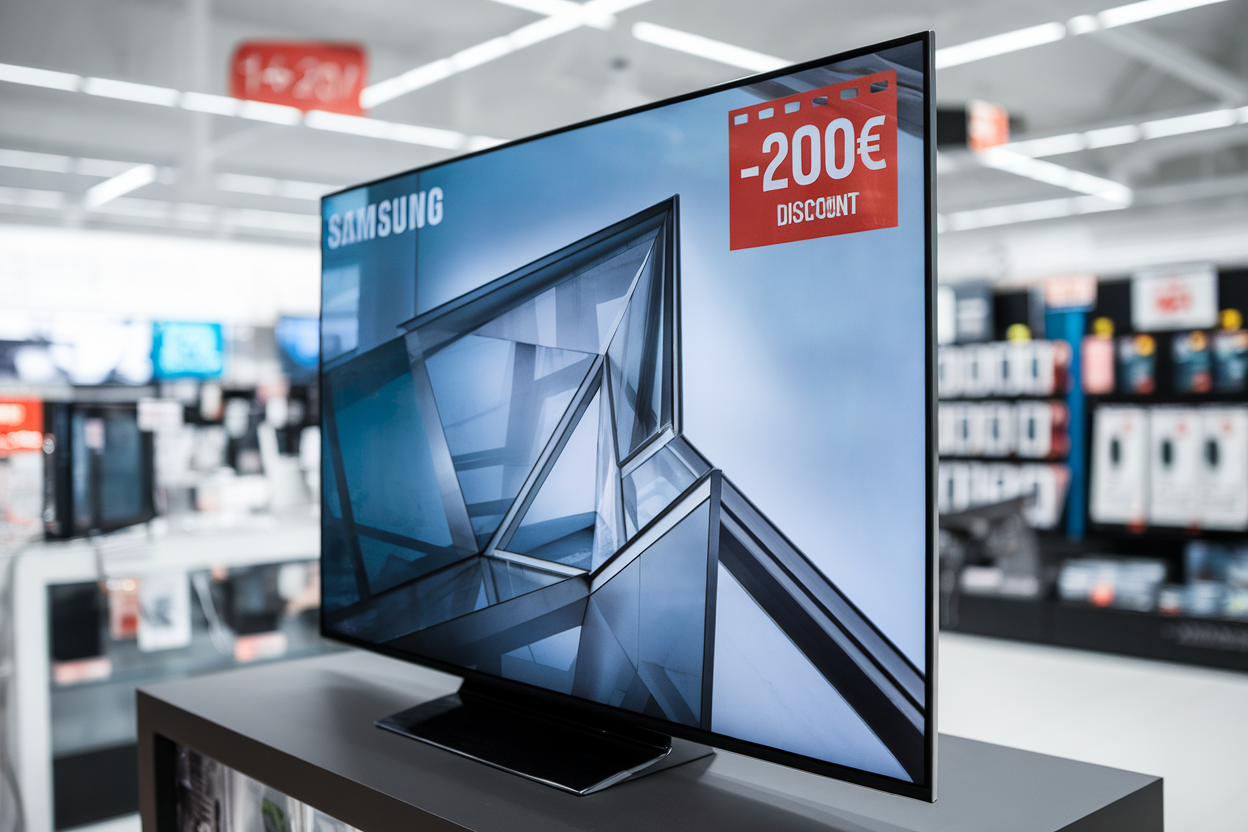
Thierry Henry, one of soccer’s most recognizable legends, has been drafted into a retail pitch ahead of the 2026 FIFA World Cup, spotlighting a handful of Samsung TVs and an OLED model advertised at €200 off.
That discount works out to about$215at current exchange rates, and the timing is no accident. With the World Cup coming to the U.S., Canada, and Mexico in 2026, brands and retailers are already trying to turn “watch parties” into a reason to upgrade the biggest screen in your house.
Henry’s name is the hook, and it’s aimed straight at sports fans
According toLe Figaro, Henry “selected” four Samsung TV models being promoted by Boulanger, a major French electronics retailer roughly comparable to Best Buy in the U.S.
The logic is simple: pair a soccer authority with products designed for watching soccer. The pitch implies Henry’s choices are guided by what fans care about, smooth motion, sharp picture quality, and that stadium-like immersion, though the reporting doesn’t spell out specific criteria or testing.
For the retailer and Samsung, the value isn’t just star power. It’s decision control. A short, “approved” list reduces the overwhelm of endless model numbers and nudges shoppers toward the inventory the store is ready to move.
The $215 OLED discount is the trigger, but the fine print is the real story
The headline-grabbing piece of the promotion is the OLED TV marked down by €200 (about$215). That’s the kind of clean, easy-to-understand number that can push a browsing shopper into buying mode.
But a single discount figure doesn’t tell you whether it’s actually a standout deal. The real questions are the ones shoppers have to chase down: how long the offer runs, whether stock is limited, and whether the discount applies across screen sizes or only to specific versions in a lineup.
The marketing also leans on urgency, “before the World Cup”, even though 2026 is still a long way off. A TV purchase usually comes down to more immediate realities: where it’ll fit, how far you sit from the screen, and whether it matches your setup (streaming box, cable, gaming console, sound system).
Why OLED keeps getting top billing for big sports moments
OLED has become shorthand for premium picture quality, especially deep blacks and high contrast, features that can make night games and high-contrast scenes look more dramatic.
That’s exactly what shopping-focused coverage tries to activate: the promise of a visible upgrade without dragging readers into a technical debate about panels, processors, and motion handling.
Retail “curated picks” simplify shopping, while steering you to what’s being pushed
Boulanger’s role here is central. Retailers don’t just sell TVs; they package a story around them, especially when a major sports event offers a ready-made narrative.
Curated selections solve a real problem, TV lineups are confusing, with differences in display tech, image processing, operating systems, ports, and sizes. But they also introduce bias: the “best” options are often the ones that are easiest to promote, most available, or most profitable.
The takeaway for consumers is straightforward. A celebrity-backed shortlist can be a useful starting point, but it’s not a universal stamp of approval. If you’re buying for the 2026 World Cup, the smartest move is still matching the screen to your room, your viewing habits, and your actual sources, then checking whether the deal holds up against the broader market.
What this says about the TV market as the 2026 World Cup approaches
Big tournaments have long been a sales engine for TVs because they give people a concrete reason to upgrade: friends coming over, marquee matches, and the feeling that your current screen suddenly isn’t “good enough.”
In that playbook, the event provides the emotional push, OLED provides the “quality” justification, and a $215 discount provides the final nudge. Whether it’s a smart buy depends less on Thierry Henry’s name and more on the details shoppers can verify before they hit checkout.