
As heat waves intensify in 2026, air conditioning in a car is increasingly treated as a safety system—not just a comfort feature. Repair shops see the same pattern every summer: when temperatures spike, A/C complaints surge.
Industry figures cited by specialized outlets put the seasonal jump in stark terms: A/C breakdowns are reported to be 3.5 times more frequent in summer, while appointments tied to the cooling system rise 43% over the same period.
What surprises many drivers is where the advantage appears to fall. Even though electric vehicles are often criticized for winter range losses, EVs can be less prone to certain summer A/C failure modes than gas-powered cars—largely because of how their systems are built.
Why gas cars’ accessory belts can make A/C more failure-prone in extreme heat
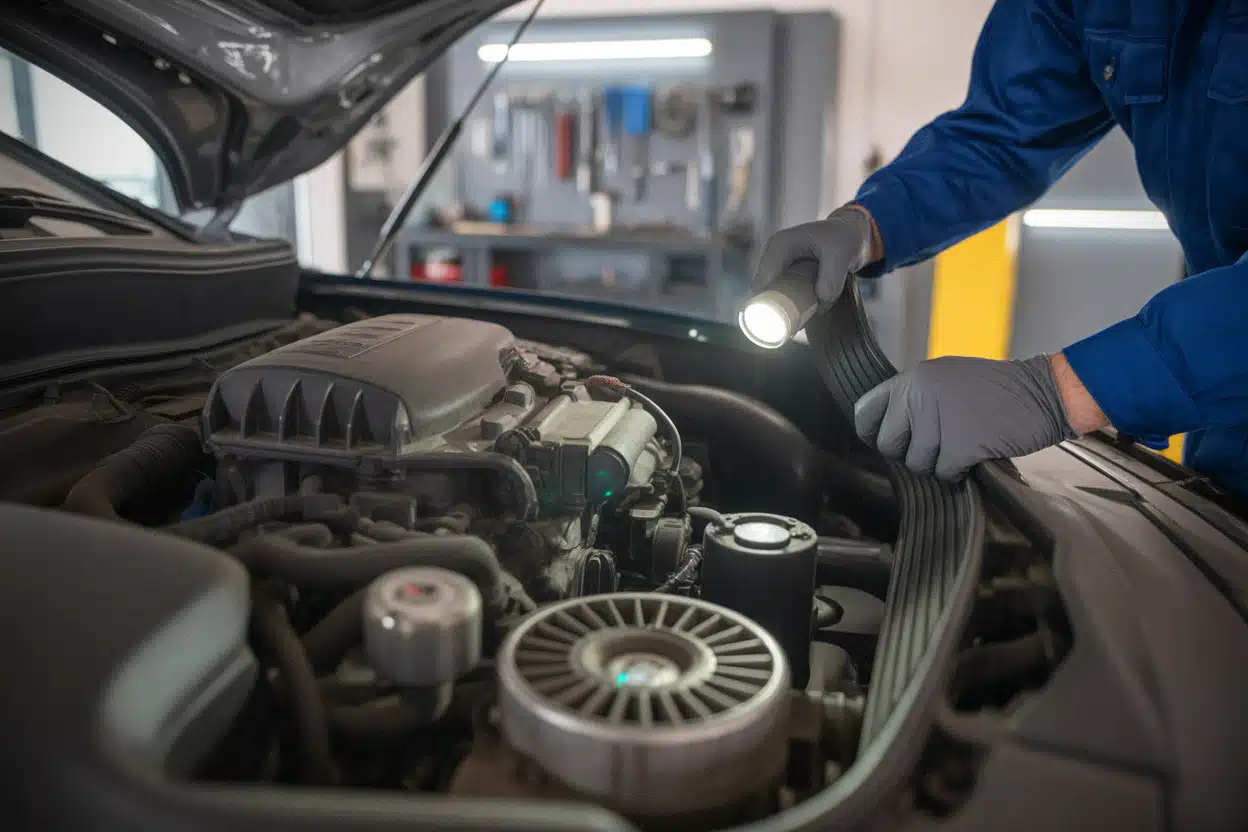
In many gas-powered cars, the A/C compressor is driven mechanically by the accessory belt. That belt often does more than run the A/C—it can also drive the alternator and, depending on the vehicle design, help power components tied to engine cooling.
In a heat wave, that setup can become a weak point. With the engine already hot and traffic crawling, drivers often crank the A/C to maximum to cool a cabin that’s been baking in the sun. That sudden demand ramps up compressor load quickly, which can stress an aging belt, a belt that isn’t properly tensioned, or worn pulleys.
In the most expensive scenarios, a belt failure can mean more than losing cold air. A break can lead to a loss of charging through the alternator and, depending on the vehicle’s architecture, can worsen overheating if cooling-related components are affected.
The summer maintenance numbers—A/C failures reported at 3.5 times the usual rate and cooling-system work up 43%—don’t mean every breakdown traces back to the belt. A/C systems can also fail because of refrigerant leaks, a damaged condenser, or faulty sensors. But the figures reflect a real summer double hit: heavier A/C use and higher overall thermal stress on the engine.
There’s also a compounding effect on long highway drives with a loaded vehicle. The engine must shed its own heat while also driving a power-hungry compressor, increasing overall load. In older or poorly maintained vehicles, even a small shortfall in coolant can tip the system into trouble. Some “A/C problems” in a heat wave are actually engine-cooling weaknesses exposed by extreme temperatures and then aggravated by heavy A/C use.
That’s why repair pros regularly emphasize basics: check coolant level, watch temperature warnings, and avoid demanding an abrupt temperature drop when the engine is already very hot. The bigger point is structural—on a gas car, A/C isn’t an isolated module. It’s intertwined with an engine system where cascading failures become more likely when the heat settles in.
EVs’ electric compressors avoid a key mechanical stress point
In an electric vehicle, the A/C compressor is typically an electric compressor powered by the high-voltage battery. It doesn’t rely on an engine-driven belt. Removing that mechanical chain eliminates several common failure paths: no belt slip tied to compressor load, no belt tension issues for that function, and fewer interactions with an alternator because the electrical system is designed around power electronics.
That doesn’t mean EVs can’t have A/C problems. They still use a full air-conditioning circuit—refrigerant, condenser, evaporator, valves, sensors, and electronic controls. A refrigerant leak, a condenser punctured by road debris, or a failed pressure sensor can happen in either type of vehicle.
But in a heat wave, the stress is less about mechanical drive. The compressor’s effort isn’t transmitted through a shared belt that also supports other components. In an EV, the system “pays” mainly in energy: A/C draws electricity without imposing the same distributed mechanical load.
Electric operation also allows more precise control. The compressor can be modulated based on cooling demand rather than engine speed. In stop-and-go traffic, a gas engine may be idling—A/C can still work, but balancing available power, airflow, and under-hood temperatures can be less optimal. An EV can maintain a consistent cooling strategy as long as the battery can supply energy, with regulation handled electronically.
That architecture also supports features that have become common in EVs: preconditioning the cabin while parked, sometimes scheduled before departure or triggered remotely. By cooling the cabin before driving, the system can avoid a sudden high-power demand once the trip starts. Some gas cars offer pre-ventilation depending on the model, but the approach is less widespread and more dependent on the engine running.
The tradeoff for EVs isn’t belt breakage—it’s energy use and overall thermal management. Effective A/C consumes power, and in extreme heat the battery may also need cooling. So while the drive mechanism can be more reliable, the constraint shifts toward consumption, software strategy, and the system’s ability to hold safe temperatures over time.

Heat waves still cut EV range—and can slow fast charging
Even if an EV’s A/C system may be less exposed to certain mechanical failure modes, extreme heat is still bad for efficiency. Lithium-ion batteries operate best near 20°C to 25°C—about 68°F to 77°F—a reference often cited in educational explainers on the topic.
Above that range, the vehicle has to manage high ambient temperatures, cool the cabin, and sometimes deal with road heat that raises temperatures in tires and other components. That combination can reduce range, even if the effect isn’t always as dramatic as winter losses.
A/C is a direct energy draw. The key difference is how drivers feel the cost: in a gas car, you burn more fuel and add mechanical strain; in an EV, you lose driving range. On long trips, that shows up when the estimated remaining distance drops faster than expected—especially at low speeds in city driving or during long stops, when the A/C is fighting constant sun exposure. The impact varies with vehicle size, insulation, glass area, temperature setting, and the intensity of sunlight.
Heat can also affect charging. During a heat wave, charging power may be reduced automatically and progressively as the battery approaches an overheating threshold, protecting the pack. For summer travel, that can mean a fast-charge stop takes longer than expected if the battery is already hot or if the charging station sits in direct sun. Drivers who chain together highway driving, fast charging, and immediate departure may see power limits that can be mistaken for a charger malfunction.
Over the long term, repeated exposure to high heat can accelerate battery aging. Commonly repeated industry guidance says cooling quality matters—for example, liquid cooling is often presented as more protective than simple ventilation in certain heavy-use scenarios. Modern EVs rely on sensors and active thermal management to limit these effects, but a heat wave remains an added stressor.
So the EV advantage on A/C “breakdowns” doesn’t mean there are no downsides. It means the main constraint shifts: fewer risks tied to mechanical drive, more emphasis on energy and thermal management. For drivers, that can translate into planning routes, keeping a buffer of range, and adjusting charging habits during peak heat.
Maintenance and common mistakes when it’s 104°F outside
During a heat wave, not every roadside failure is caused by the A/C—but A/C use often exposes underlying weaknesses. For gas cars, the priority is the health of the engine cooling system. Low coolant, aging hoses, a partially clogged radiator, or a failing fan can send temperatures climbing quickly. With A/C adding load, symptoms can appear faster—and at the worst possible time.
Another factor is abrupt use. Turning the A/C to maximum immediately in a scorching cabin increases compressor demand. Specialists often recommend briefly ventilating first—cracking the windows if conditions allow—then setting a reasonable target temperature, such as around 24°C (about 75°F) instead of aiming for very cold air. That approach can reduce extreme cycling and wear without making the trip miserable.
For EVs, A/C maintenance still matters. Drivers should watch for signs of refrigerant leaks, odors that can indicate a dirty evaporator, and reduced cooling performance. An A/C system that no longer cools effectively can force the compressor to run longer, which can further cut range. Using preconditioning when available can also reduce the initial thermal shock and lower the peak power needed once driving.
Across both vehicle types, small choices help in extreme heat: sunshades, parking in shade when possible, and regularly checking tire pressure. On the highway, a less overheated cabin reduces A/C demand and can help limit driver fatigue. Newer vehicles’ automatic climate control can handle part of the workload, but it can’t compensate for neglected maintenance or extreme use on a system that’s already compromised.
One safety point is often overlooked: losing A/C during a heat wave can push drivers to travel at high speed with windows down, increase fatigue, and reduce alertness. Repair professionals emphasize that A/C isn’t just comfort—especially for children, older adults, and long trips. With heat episodes becoming more frequent in 2026, the issue goes beyond gas versus electric: it’s also about preparing any vehicle before peak summer travel.
Frequently asked questions
Why does a gas car’s A/C fail more often during a heat wave? On many gas cars, the A/C compressor is driven by the accessory belt, which also drives other components. In extreme heat, cooling demand rises and the compressor works harder; a worn or poorly tensioned belt—or a tired pulley—can fail more easily. Heat also stresses the engine cooling system, increasing the risk of cascading failures.
Can an EV still have an A/C failure? Yes. Even without an accessory belt, an EV has a complete A/C circuit with refrigerant, condenser, evaporator, sensors, and control electronics. Leaks, condenser damage, or sensor failures are still possible. The main difference is reduced risk tied to mechanical drive of the compressor.
Does a heat wave reduce EV range because of A/C? Yes. A/C uses electricity and can reduce range, especially in city driving, at low speeds, or during long stops. Because lithium-ion batteries are most comfortable around 68°F to 77°F, high heat also adds thermal-management demand that can increase consumption.
Why can fast charging take longer in extreme heat? When the battery is hot, the vehicle may automatically reduce charging power to prevent overheating. On summer trips, highway driving plus high outside temperatures plus fast charging can trigger this limit, extending the stop without necessarily indicating a problem with the charger.
What settings help reduce A/C problems during extreme heat? Briefly ventilate the cabin before demanding heavy cooling, then aim for a reasonable setpoint. In an EV, using preconditioning while parked—when available—can avoid a sudden power draw at departure and improve comfort without unnecessary consumption.
Key takeaways
On gas cars, A/C can add stress to the accessory belt system and raise the risk of failures during heat waves. On EVs, an electric compressor reduces mechanical break risks tied to belt drive. But summer heat still cuts EV range and can slow fast charging through thermal limits—making planning and moderate settings important for peak travel days.
Sources
Clubic: “Climatisation en canicule : voiture électrique ou thermique, laquelle résiste le mieux ?” and “Canicule : l’erreur avec la clim qui fait tomber en panne beaucoup d’automobilistes,” plus related Clubic social posts; ENGIE Vianeo guidance on heat waves and EV range.
Key Takeaways
- In a combustion vehicle, the A/C puts load on the accessory belt and increases the risk of failure during heat waves.
- In an EV, the electric compressor reduces mechanical failures related to belt-driven operation.
- In summer, A/C failures are reported to be 3.5 times more frequent, and cooling-related shop work increases by 43%.
- Heat waves reduce an EV’s driving range and can slow charging due to thermal limiting.
- Preconditioning, maintenance, and moderate settings reduce incidents during extreme heat.
Frequently Asked Questions
Why does an internal-combustion car’s A/C break down more often during a heat wave?
On many gas-powered cars, the A/C compressor is driven by the accessory belt, which also drives other components. During a heat wave, the demand for cooling goes up, the compressor works harder, and a worn or poorly tensioned belt—or a tired pulley/tensioner—can fail more easily. Heat also puts extra stress on the engine’s cooling system, which can lead to cascading failures.
Can an electric car have an A/C failure?
Yes. Even without a dedicated accessory belt, an EV still has a complete A/C system with refrigerant, a condenser, an evaporator, sensors, and control electronics. Leaks, impact damage to the condenser, or faulty sensors can still happen. The main difference is the reduced risk of failures related to mechanically driving the compressor.
Does a heat wave reduce an EV’s range because of the A/C?
Yes. A/C uses electricity and can reduce range, especially in city driving, at low speeds, or during long stops. Since lithium-ion batteries are happiest around 68°F to 77°F (20°C to 25°C), extreme heat also requires additional thermal management, which can further increase energy use.
Why can DC fast charging take longer in very hot weather?
When the battery is hot, the vehicle may automatically reduce charging power to prevent overheating. On a summer trip, the combination of highway driving, high outside temperatures, and DC fast charging can trigger this power limiting, extending the stop—without necessarily meaning there’s a problem with the charger.
What settings help limit A/C problems during a heat spike?
It’s recommended to briefly ventilate the cabin before asking for maximum cooling, then set a reasonable temperature. In an EV, preconditioning while parked—when available—helps avoid a sudden power draw at departure and improves comfort without unnecessary energy use.
Sources
- Climatisation en canicule : voiture électrique ou thermique, laquelle résiste le mieux ?
- Canicule : l’erreur avec la clim qui fait tomber en panne beaucoup d’automobilistes
- Canicule : et si la climatisation donnait l'avantage à …
- Sous canicule, la clim peut tourner à l'avantage du VE
- Canicule et autonomie de la voiture – ENGIE Vianeo