
A large, family-sized SUV tied to Xiaomi is already circulating on Chinese social media, and the early details are converging around one headline claim: up to 1,500 kilometers—about 930 miles—of total driving range.
Spotted in China and widely referred to as the Sky Nomad N90, the vehicle is described in leaks and prototype sightings as an EREV (extended-range electric vehicle): a mostly electric drivetrain backed by a small gasoline engine used primarily as a generator. The same reports point to a battery larger than 70 kWh and an overall length of about 5.3 meters (roughly 17.4 feet).
There’s still no confirmed launch date, pricing, or any indication the model will be sold outside China. But the consistency of the leaked specs—big footprint, family-and-leisure positioning, and an EREV setup—offers a window into what Xiaomi and its growing orbit of auto brands may be trying to build next.
A 17.4-foot EREV SUV aimed at families—and the outdoors
The Sky Nomad N90 is being described as a full-size SUV, around 5.3 meters (about 17.4 feet) long, based on reporting from specialized outlets and observations of prototypes on the road in China. In the Chinese market, that size typically targets families and multi-row use, with an emphasis on long-trip comfort, cargo space, and features.
Test images circulating online suggest a tall, substantial vehicle with relatively smooth, efficiency-minded styling—an approach often used to reduce wind noise and improve steady-speed consumption.
One detail repeatedly highlighted in leaks is an outdoors angle. Reported elements include an integrated tent or a roof-related camping setup, nodding to “glamping” and domestic weekend travel that have become a distinct lifestyle segment in China. If confirmed, that kind of equipment can affect roof structure, load management, highway energy use, and even how certain accessories are approved.
On the cabin side, sources cited in the leaks describe a modular interior, including seats that can rotate and a layout designed to turn the space into a lounge or rest area. That trend has been growing in large electrified vehicles, where EV packaging can enable flatter floors, more storage, and more screens and connectivity. In this segment, the pitch is increasingly about how people use the vehicle while stopped—at highway rest areas, campsites, or during charging.
Choosing a large SUV also has an industrial logic: it can better accommodate high-capacity batteries and more easily integrate advanced driver-assistance hardware, sensors, and a powerful onboard computer—strategic components for a consumer-tech company. For Xiaomi, which has already signaled major ambitions in autos, a vehicle like this can serve as a rolling showcase and potentially create a halo effect for the rest of its lineup if the ramp-up continues.
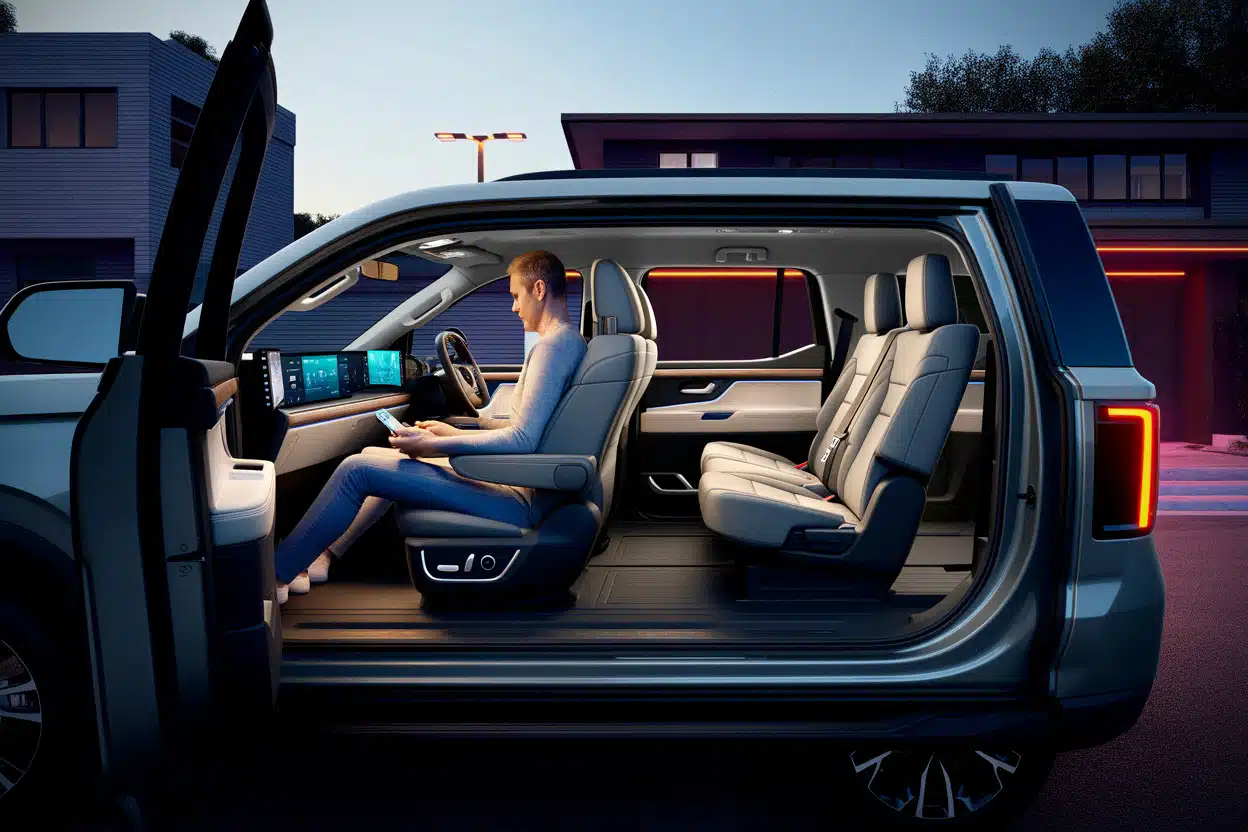
70+ kWh battery, with 250 to 310 miles of EV-only range claimed
The most frequently cited numbers around the N90 center on its battery—said to be larger than 70 kWh—and an all-electric range that would land between 400 and 500 kilometers (about 250 to 310 miles), depending on version and the certification cycle referenced. On paper, that’s unusually high for an extended-range EV, since many EREVs rely on smaller packs meant mainly for city driving.
Here, the apparent strategy is different: deliver genuinely long electric driving for a large share of real-world use, while keeping a gasoline backup to avoid long charging stops when a trip changes unexpectedly.
Those range figures come with an important caveat. In China, published numbers often use the CLTC test cycle, which tends to be more optimistic than Europe’s WLTP standard. A 400–500 km CLTC figure can translate to a lower number under other conditions—especially at sustained highway speeds, with air conditioning, passengers, and luggage. For an SUV longer than 17 feet, weight and aerodynamics matter, and family use—vacation departures, mountain driving, towing, or a roof box—can cut range sharply.
The tradeoff is central. A bigger battery adds electric miles, but it also adds weight and cost, and it can make charging slower if peak charging power isn’t competitive. The leaks do not confirm charging speed, whether the vehicle uses an 800-volt architecture, or the exact battery chemistry. Still, the logic of a consumer-electronics player entering autos suggests Xiaomi would focus heavily on user experience—route planning, preconditioning, thermal management, smartphone integration, and ecosystem tie-ins.
In practice, an EREV with a 70+ kWh battery could function like a near-EV for many households: charge at home or work during the week, drive mostly electric day to day, then rely on the range extender for longer departures. That reduces dependence on fast-charging networks, which can still be uneven by region. But the value proposition ultimately hinges on final pricing and the real-world fuel cost of running the generator—both unknown so far.
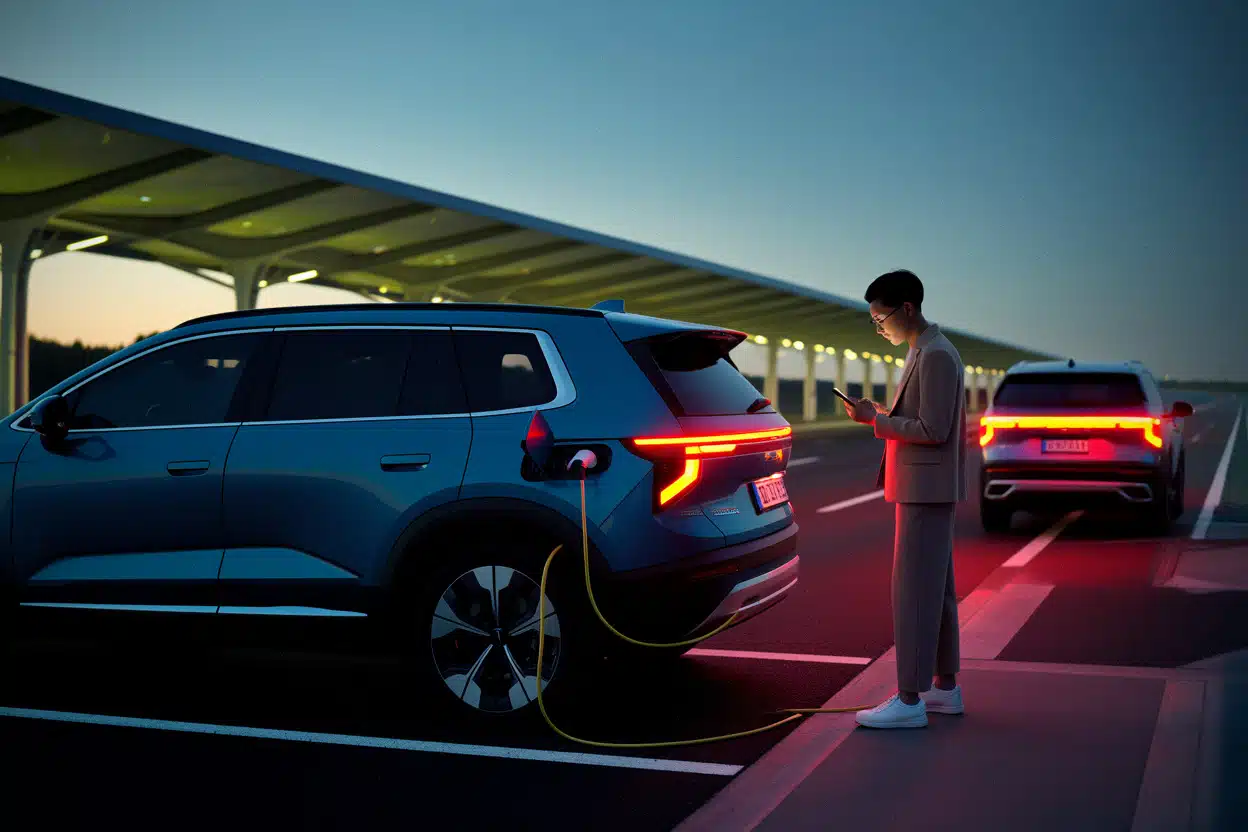
A 1.5-liter turbo generator and a headline 930-mile total range
The most talked-about claim remains the reported total range: more than 1,500 kilometers—about 930 miles—enabled by the EREV architecture and a gasoline engine serving mainly as a generator. The information circulating points to a 1.5-liter turbo engine as the range extender.
In this kind of setup, the wheels are typically driven by one or more electric motors, while the gasoline engine recharges the battery or supplies electricity directly when that’s more efficient.
Technically, the appeal is twofold. First, the gasoline engine can run in a steadier efficiency band than in a conventional hybrid, potentially improving consumption at constant speeds. Second, drivers get an experience closer to an EV—instant torque and relative quiet in city driving—without the anxiety of running the battery to zero. That matters in markets where charging infrastructure isn’t uniform, or for drivers who regularly take very long trips without wanting to plan around charging stops.
Still, the 1,500 km figure should be treated cautiously. It depends on favorable assumptions—steady speeds, moderate load, and the test cycle used. In a large family SUV, highway consumption can swing the outcome significantly. Even an optimized range extender burns fuel, and the final number also depends on the size of the gas tank, which has not been disclosed. But as a messaging tool, a number like 1,500 km is powerful: it pushes the vehicle into a psychological zone where drivers stop worrying about range, similar to how long-range diesel SUVs or large-tank hybrids once did.
There are also regulatory implications. Depending on the country, EREVs may be treated like plug-in hybrids or placed in a separate category, with different tax incentives, driving restrictions, and emissions rules—factors that can shape export plans. A China-first strategy could still deliver volume, but expansion would require adapting the product to local rules and expectations around safety, driver assistance, and connectivity.
Competitive pressure would come from both directions: big-battery EV SUVs and plug-in hybrids with long combined range. The range-extender choice may appeal to some buyers, but it also invites criticism—mechanical complexity, maintenance, weight, and continued reliance on gasoline. Success would likely depend on transparency around real-world consumption and the quality of software integration, an area where Xiaomi’s credibility is on the line.
“Sky Nomad” as a sub-brand, and a strategic shift after the SU7
Sky Nomad is appearing in multiple reports as an automotive sub-label alongside other identified models, suggesting a segmentation strategy. In the auto industry, adding brands and sub-brands is a common way to target specific uses—sport sedans, family SUVs, city cars—while tuning design and marketing. For Xiaomi, it could also allow different pricing and equipment levels without tying everything to a single flagship identity.
A large EREV SUV can also be read as a response to market reality. Fully electric sales are growing, but buyers increasingly compare total ownership cost, resale value, charging convenience, and charger availability. An EREV promises a softer transition by keeping long-distance capability without relying exclusively on fast charging. And on a heavy SUV, energy compromises become more pronounced—helping explain why some automakers are exploring mixed solutions.
The positioning also fits a tech-company product mindset: selling an ecosystem of connected services, updates, navigation, entertainment, voice assistants, and smart-home synchronization. A big family SUV is a natural platform for that, with more room for screens, speakers, sensors, and longer in-vehicle time. The leaked talk of a modular cabin and leisure-focused features reinforces the idea of a vehicle designed as an “experience platform,” not just transportation.
The open question is scale and manufacturing maturity. Building a 5.3-meter SUV that can credibly claim 1,500 km of range implies a robust supply chain, durability validation, refined thermal management, and careful calibration of the range extender. Legacy automakers learned those skills over multiple product cycles. Xiaomi may move faster through partnerships, but trust is earned through reliability, service networks, and transparency. More leaks—or official announcements—later in 2026 should clarify whether the N90 is mainly a prototype for attention or a model close to production.
For consumers, the appeal boils down to one practical test: does it deliver an EV-like daily experience without constraints on long trips. If it does, the N90 could further popularize the EREV formula and push more competitors to offer similar options—especially in family segments where space and range matter more than outright performance.
FAQ
Is the Sky Nomad N90 a fully electric SUV? No. The available information describes it as an EREV—an extended-range electric vehicle. Electric motors provide propulsion, and a gasoline engine mainly acts as a generator to extend range.
What does the claimed 1,500 km range mean? It refers to total range combining battery energy and energy supplied via gasoline used by the range extender. The number depends on the test cycle and driving conditions and can vary significantly in loaded highway use.
What EV-only range is being reported? Reports cite a battery larger than 70 kWh and an electric-only range between 400 and 500 km, depending on version and the measurement method referenced.
Will the N90 be sold in Europe in 2026? There is no reliable information confirming sales in Europe at this stage. The cited details mainly come from observations and sources tied to the Chinese market.
Key takeaways
Leaks tie Xiaomi to a “Sky Nomad N90” EREV SUV claiming up to 1,500 km (about 930 miles) of total range. Reports also cite a 70+ kWh battery with 400–500 km (about 250–310 miles) of EV-only range, plus a 1.5-liter turbo gasoline generator. At roughly 5.3 meters (17.4 feet) long, it’s positioned as a family vehicle with an outdoors/camping angle.
Sources
Auto Plus; Instagram post; Les Numériques; CarNewsChina; Xiaomi-miui.gr
Key Takeaways
- The Sky Nomad N90 attributed to Xiaomi targets 1,500 km (about 930 miles) of total range using an EREV architecture.
- The announced battery exceeds 70 kWh, with 400 to 500 km (about 250 to 310 miles) possible in electric-only mode depending on the source.
- A 1.5-liter turbo engine would act as a range extender to reduce charging constraints on long trips.
- Its roughly 5.3 m (about 17.4 ft) length and leisure-oriented positioning clearly target family use.
Frequently Asked Questions
Is the Sky Nomad N90 a 100% electric SUV?
No. Available information describes it as an EREV (extended-range electric vehicle). It’s driven by the electric motor, and a gasoline engine mainly acts as a generator to extend range.
What does the claimed 1,500 km range mean?
It refers to total range combining battery energy and the energy provided by fuel for the range extender. This figure depends on the test cycle and driving conditions and can vary significantly during loaded highway driving.
What electric-only range is mentioned for the N90?
Reports mention a battery of over 70 kWh and an electric-only range between 400 and 500 km, depending on the version and the measurement methods cited.
Will the N90 be sold in Europe in 2026?
At this stage, there’s no reliable information confirming a European launch. The details cited mostly come from observations and sources tied to the Chinese market.
Sources
- Sky Nomad N90 : 1 500 kilomètres d'autonomie pour ce grand SUV familial signé Xiaomi !
- Over 1500km daw yun range ng Sky Nomad N90!
- Xiaomi lâche le tout-électrique pour un SUV de 5,3 mètres …
- Xiaomi's first full-size SUV: Sky Nomad N90 spotted in China, 500+km EREV with built-in tent
- Xiaomi Sky Nomad N90 : Le SUV qui se transforme en …