
Rising gasoline and diesel prices are quickly changing how drivers in France shop for their next car—pushing more buyers toward electric vehicles in both showrooms and the used-car market.
Industry players, including used-car intermediaries such as CapCar, say demand strengthens as fuel gets more expensive, driven by a straightforward calculation: cut the monthly cost tied to filling up. That shift is also showing up in registration data. In early 2026, electric vehicles already account for more than 27% of new-car registrations, a higher level than a year earlier, according to figures cited by multiple market observers.
The move isn’t uniform. Urban households—better served by charging infrastructure—are switching more easily, while rural buyers often wait for longer-range models or simpler home-charging options. On the used market, gradually falling prices are widening access, even as battery condition and warranty coverage become central questions.
What’s emerging is less a sudden “all-electric” moment than a steady tilt: each jump at the pump pushes more shoppers to run the numbers on real-world costs, available incentives, and the day-to-day realities of charging.
CapCar says used EV sales are climbing as fuel costs rise
On France’s used-car market, several intermediaries report a sharp increase in electric-vehicle transactions. CapCar, cited in coverage recapping the trend, describes a dramatic rise in used EV sales in a segment long held back by battery anxiety and limited supply.
Higher fuel prices are changing the logic for many shoppers. Used EVs are becoming a gateway to going electric at a time when new models remain more expensive and delivery times can vary widely by brand.
Monthly budget pressure is often the trigger. As the cost of a tank climbs, buyers start comparing fuel spending with charging costs—while also factoring in the price per kWh and where they’ll charge. Sellers also report more requests for valuations, a sign that some owners want to sell a gasoline or diesel car to help finance an EV.
Even so, the used EV market isn’t one-size-fits-all. Small city cars and compacts—typically used for daily trips—often sell more easily. Buyers look closely at maintenance history, battery capacity, fast-charging capability, and warranty terms. Intermediaries emphasize checks and transparency because battery condition weighs heavily on value—often more than mileage does for a conventional car.
Fuel prices are also influencing negotiations. Some buyers will pay more upfront if they expect to cut day-to-day costs quickly, especially high-mileage drivers. Others remain cautious, choosing hybrids or newer gasoline/diesel models if charging feels complicated. In that environment, platforms position themselves as a way to reduce uncertainty so used EVs don’t feel like a “gamble.”
Dealers say pump prices are changing the sales conversation
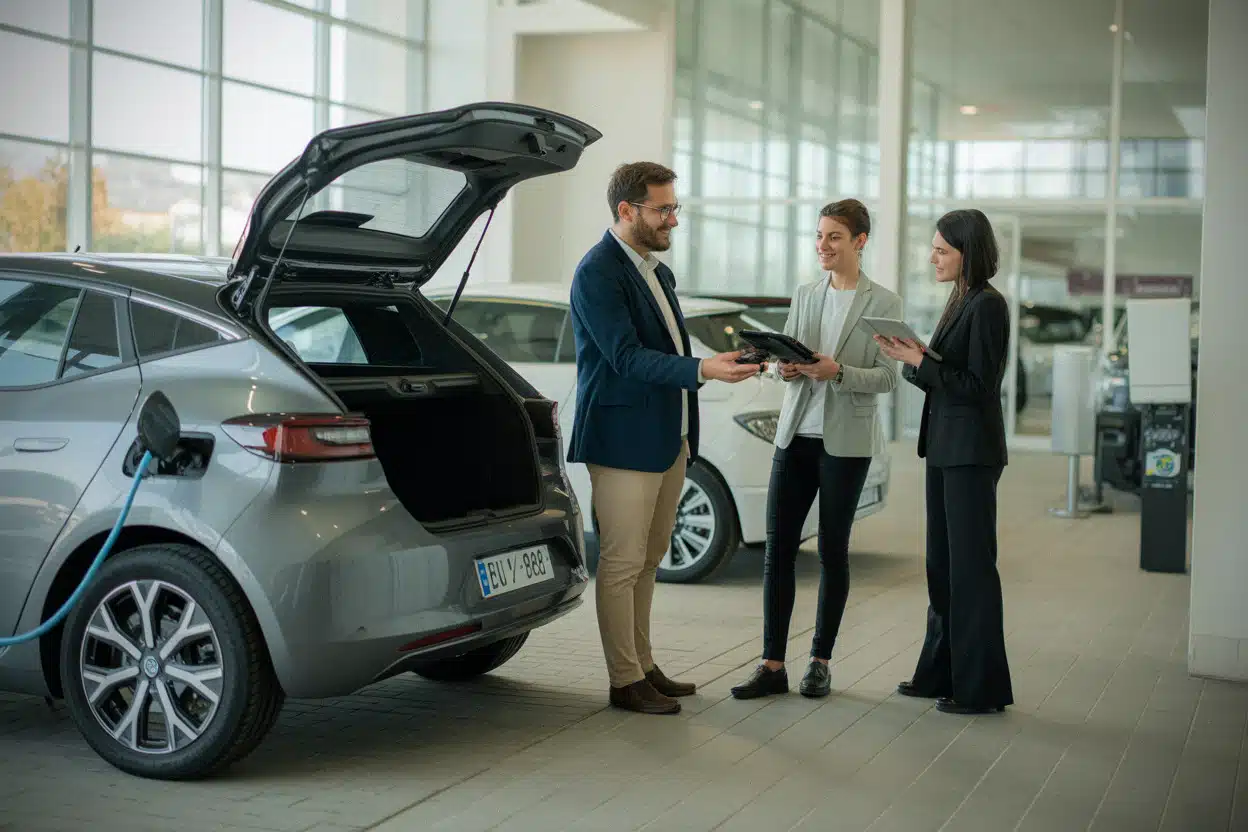
In dealerships, the rising cost of gasoline and diesel is reshaping the pitch. Multiple industry voices cited in French press accounts describe purchases picking up when prices at the pump climb.
The change is showing up in how customers arrive: not necessarily ready to switch powertrains, but coming in with a specific, numbers-driven question—what does it cost to drive 100 kilometers in a gasoline or diesel car, and what does it cost in an EV depending on how they charge? That more “accounting-style” approach tends to favor EVs, where energy use in kWh is seen as more predictable than fuel prices.
Total cost is now central to the discussion. Sellers increasingly talk about monthly payments that include energy, maintenance, and sometimes insurance—not just the sticker price. Reduced maintenance—fewer wear parts—appeals to some buyers. But the conversation quickly runs into charging: whether a home charger can be installed, how available public chargers are, and how long charging takes on the road.
Availability matters, too. When an EV model can be delivered quickly, it can win over shoppers who initially planned to buy a gasoline or diesel car—especially if they fear another run-up in fuel prices. Long waits can push buyers toward used vehicles. Automakers, having expanded their EV lineups, are also steering more battery versions into their ranges, influencing inventory and promotions.
Dealers also report a broader mix of shoppers. Suburban households driving longer distances focus on real-world range—especially in winter—and the fast-charging network on highways. Professionals, including tradespeople and delivery drivers, look for stable operating costs and ask about depot charging. Higher fuel prices may bring people through the door, but they also highlight a hard limit: access to charging has become as decisive as comfort or power.
Electric vehicles pass 27% of new registrations in early 2026
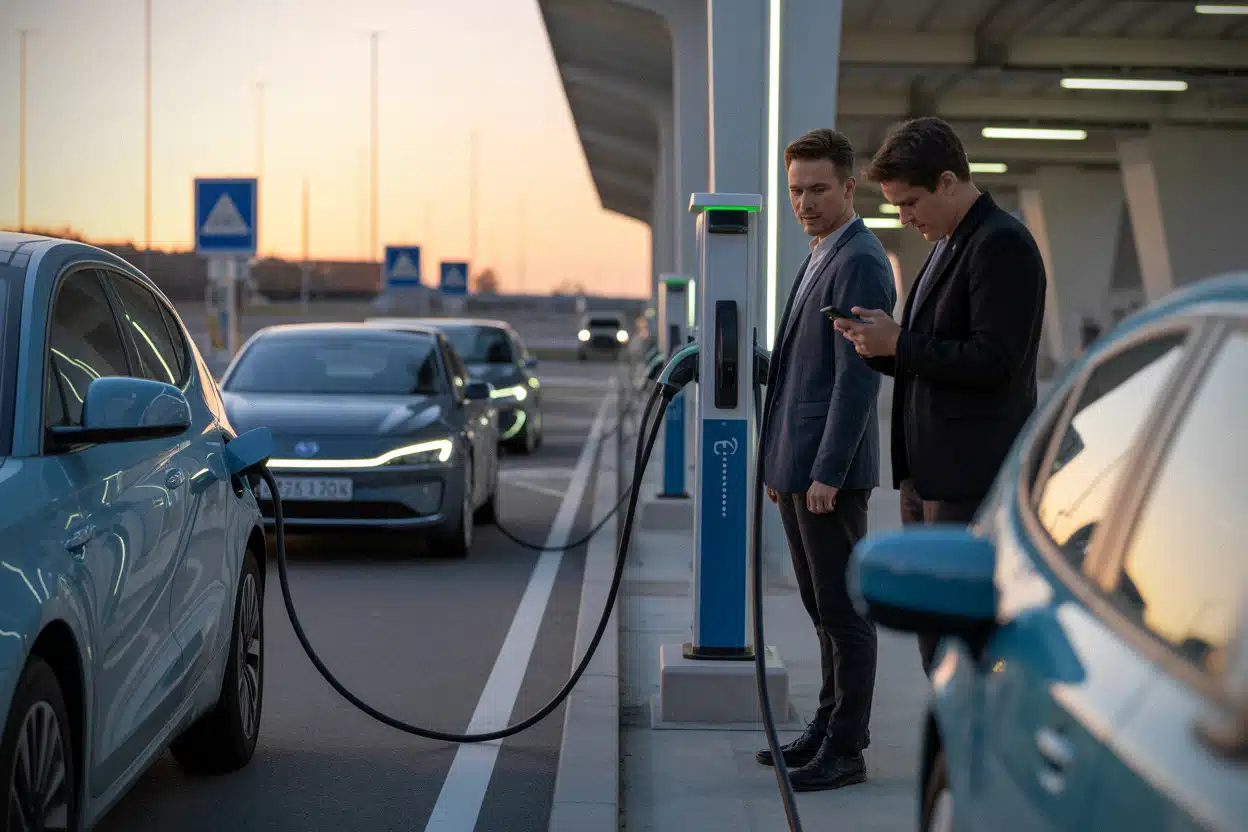
Registration figures cited across multiple analyses point to a clear rise. In early 2026, electric cars represent more than 27% of new registrations—described as higher than the level seen a year earlier.
That market share reflects a deeper shift: a growing slice of buyers is moving to electric, sometimes out of conviction, but often out of economic rationality as fuel prices rise. The pace differs by powertrain category, but the signal is clear—EVs are becoming a majority option within parts of the new-car market.
The increase is tied to several forces working together. Fuel prices are climbing, making potential savings more obvious for high-mileage drivers. Automakers are offering more models in segments once dominated by gasoline and diesel. Public policy—bonuses, premiums, or tax treatment depending on the case—also steers purchases, as do corporate strategies to electrify fleets to control operating costs and meet internal goals.
Still, the 27% figure needs context. It applies to new registrations, a market heavily influenced by financing deals, business purchases, and commercial strategy. It does not mean the overall vehicle fleet on the road has changed at the same rate, since most cars in circulation remain gasoline or diesel. But it does signal a shift in the flow of vehicles entering the market—one that could reshape the used market in coming years as more EVs come up for resale.
Analysts also point to threshold effects: as EV share rises, public charging becomes more structurally important, and resale value may increasingly hinge on standardized criteria such as charging speed, usable battery capacity, efficiency, and connector compatibility. Fuel prices aren’t the only driver, but they can act as a psychological and budget trigger that makes a transition—already encouraged by industrial supply and public policy—feel acceptable.
Charging access, kWh pricing, and real-world range still hold some buyers back
Higher fuel prices may push shoppers toward EVs, but they don’t erase practical constraints. The biggest barrier remains charging—especially for households without private parking. Without home or workplace charging, the theoretical savings can shrink if drivers rely only on more expensive fast chargers.
Another hurdle is the price of electricity itself. The price per kWh varies by operator, subscription, and charger type, making comparisons less intuitive than the posted price at the pump.
Real-world range is also a sticking point. Official ratings don’t always match how people drive—highway speeds, temperature, and vehicle load all matter. Drivers who travel long distances want a buffer and worry about charger availability during vacation travel. Even as networks expand, the gap between advertised and experienced range remains a source of skepticism.
Finally, cost and risk still shape decisions. Purchase prices remain higher for comparable equipment, even if leasing offers and incentives lower the barrier. Used EVs can look attractive, but battery questions return immediately: remaining capacity, charging history, warranty coverage, and potential repair costs. That uncertainty helps explain why some buyers prefer newer vehicles with stronger warranties or models with an established reliability reputation.
Infrastructure and geographic equity also weigh heavily. Large metro areas, better supplied with chargers, make adoption easier. Rural areas often move more slowly due to fewer nearby public chargers and housing less suited to home charging. Local governments and operators promise deployments, but the pace varies—and lines at chargers during peak travel periods remain a recurring complaint.
Frequently asked questions
Why do higher fuel prices boost interest in electric cars? When gasoline and diesel rise, energy spending becomes more visible in household budgets. Many drivers then compare per-mile costs between filling up and charging, making EVs more competitive—especially for high-mileage drivers.
Is the shift happening in the used market too? Yes. Platforms such as CapCar report higher used-EV sales. Buying used can reduce the price premium versus new, but shoppers need to verify battery condition, warranty coverage, and charging capability.
What does “more than 27% of registrations” mean? It refers to the share of electric cars among new registrations in the new-car market in early 2026. It signals faster adoption in new purchases even though the overall fleet remains mostly gasoline and diesel.
What are the main obstacles despite higher pump prices? The most-cited barriers are easy access to charging, varying kWh prices across networks, real-world range depending on conditions, and resale value tied to battery health in the used market.
Key takeaways
Higher fuel prices are pushing some drivers toward EVs as a budget calculation. CapCar and other players report rising used-EV sales. In early 2026, EVs exceed 27% of new registrations, while charging access, kWh pricing, and range remain major constraints.
Sources
Auto Orange (Green Auto); franceinfo; Auto Orange; Capital.fr (Facebook post); Dailymotion.
Key Takeaways
- Rising fuel prices are pushing some drivers toward electric vehicles for budget reasons
- CapCar and other players are seeing an increase in used EV sales
- In early 2026, electric vehicles account for more than 27% of new registrations
- Charging, the price per kWh, and driving range remain barriers
Frequently Asked Questions
Why do higher fuel prices make electric cars more attractive?
When gas and diesel prices rise, energy costs become more noticeable in people’s budgets. Many drivers then compare the cost per mile of filling up versus charging, which makes EVs more competitive—especially for high-mileage drivers.
Is the growth also visible in the used-car market?
Yes. Platforms like CapCar report an increase in used EV sales. Buying used can offset part of the higher upfront cost of a new vehicle, but buyers should check the battery’s condition, the warranty, and charging capabilities.
What does the threshold of more than 27% of EV registrations in early 2026 mean?
It refers to the share of electric cars among new vehicle registrations in the new-car market. That level signals faster purchase momentum, even though the overall vehicle fleet on the road is still mostly gas-powered.
What are the main barriers despite higher prices at the pump?
The most commonly cited barriers are easy access to charging, the price per kWh across charging networks, real-world range depending on driving conditions, and resale value in the used market tied to battery condition.
Sources
- La hausse des prix du carburant a favorisé les ventes de voitures …
- Prix des carburants : les ventes de voitures électriques continuent …
- Prix du carburant en hausse : les automobilistes vont-ils passer à l …
- La flambée des prix du carburant fait exploser le marché … – Facebook
- La demande de voitures électriques en hausse suite à la guerre au …