
Fiat has started selling its Topolino in the United States, pitching the two-seat electric mini-car at a starting price of $13,995. The company says the tiny EV can travel up to 46 miles on a charge and tops out at 19 mph—specs that make clear it’s not meant for highways or even most everyday commuting.
According to information published by Reuters and echoed by multiple business outlets, Fiat is aiming the initial rollout at tightly defined use cases: private communities, resorts, and golf courses. The approach reflects a cautious market test for an ultra-compact “neighborhood” vehicle in a country where drivers typically expect higher speeds, longer range, and more cargo and passenger capacity.
The launch also comes as Stellantis—the automaker that owns Fiat—looks for growth in electric vehicles with segmented products designed to keep ownership costs down. In the Topolino’s case, regulatory and certification constraints are central to how widely it can spread.
Fiat’s U.S. plan: sell local-use vehicles before chasing broader demand
At $13,995, the Topolino lands in an unusual slice of the U.S. market. Fiat isn’t positioning it for intercity travel or highway driving; it’s targeting short, repetitive trips where low speeds are the norm. Reuters reported the brand is focusing first on private communities, resorts, and golf courses—places where speed limits are often enforced and convenience matters more than versatility.
That strategy mirrors an existing reality in parts of the U.S., where compact low-speed vehicles—sometimes close in spirit to golf carts—are already used on internal roads in residential developments and tourist complexes. By entering that ecosystem, Fiat reduces the risk of the Topolino being judged against full-size cars or higher-priced electric city cars with more range and power.
Fiat is also leaning on a simple economic pitch: a light, straightforward vehicle with a modest battery can come in at a relatively low entry price for an EV. The under-$15,000 threshold is a powerful psychological marker, even though the final cost can vary with options, local taxes, insurance, and any equipment needed for broader certification if the vehicle’s use expands.
Fiat is also trying to tap the appeal of micro-mobility—something easy to park and suited to “last-mile” movement in pedestrian-heavy areas. But the company is not promising an immediate push into major U.S. city centers. Starting in controlled environments gives Fiat a runway to measure demand, satisfaction, durability, and maintenance before widening distribution.
Regulation is a key part of that calculus. Low-speed vehicles can fall into specific categories depending on jurisdiction, with different requirements than conventional passenger cars. By beginning in places where road-use rules are simpler, Fiat can reduce early compliance risk and avoid rushed technical changes.
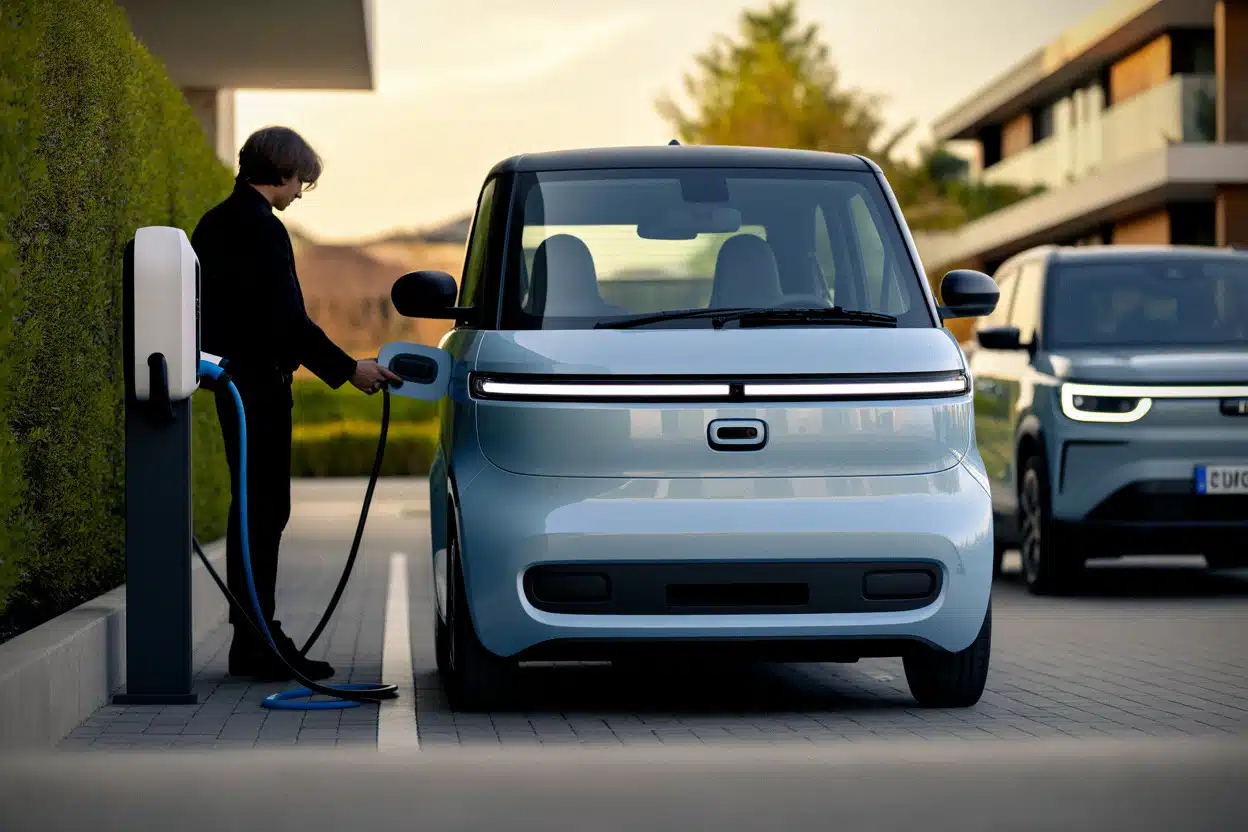
A 5.4-kWh battery and about five hours to charge
The Topolino is listed with a 5.4-kWh lithium-ion battery and a full recharge time of about five hours, according to details cited by multiple outlets referencing Reuters. That’s a sharp departure from today’s mainstream EVs, where battery packs often exceed 40 kWh. Fiat’s bet is that highly local driving allows a smaller battery—cutting weight, cost, and potentially materials use.
Fiat’s stated range is up to 46 miles. In a resort setting, a gated residential community, or for internal transportation, that could cover several days of light use. In more typical urban driving, it would demand careful charging habits—especially if temperature, hills, or passenger load reduce real-world performance.
The five-hour charge time points toward basic plug-in charging rather than DC fast charging. For owners at a residence, hotel, or golf club, overnight charging or charging during off-hours may be enough. The tradeoff is flexibility: without fast charging, the vehicle becomes less practical for unexpected trips or users without reliable access to a charger.
Fiat is also emphasizing light weight. Reuters reported the Topolino weighs slightly more than 1,000 pounds and is about 8 feet long. That footprint makes parking and maneuvering easier—two priorities in tourist areas and space-constrained neighborhoods. But the format typically comes with compromises in protection, noise insulation, high-speed comfort, and cargo capacity, reinforcing Fiat’s message that this is a calm-zone vehicle.
Behind those choices is a straightforward industrial logic: keep the product simple and accessible for a clearly defined use case. That can appeal to fleet operators such as hotels or residential communities that value predictable maintenance and low energy costs, even if it turns off buyers looking for a do-it-all daily car.
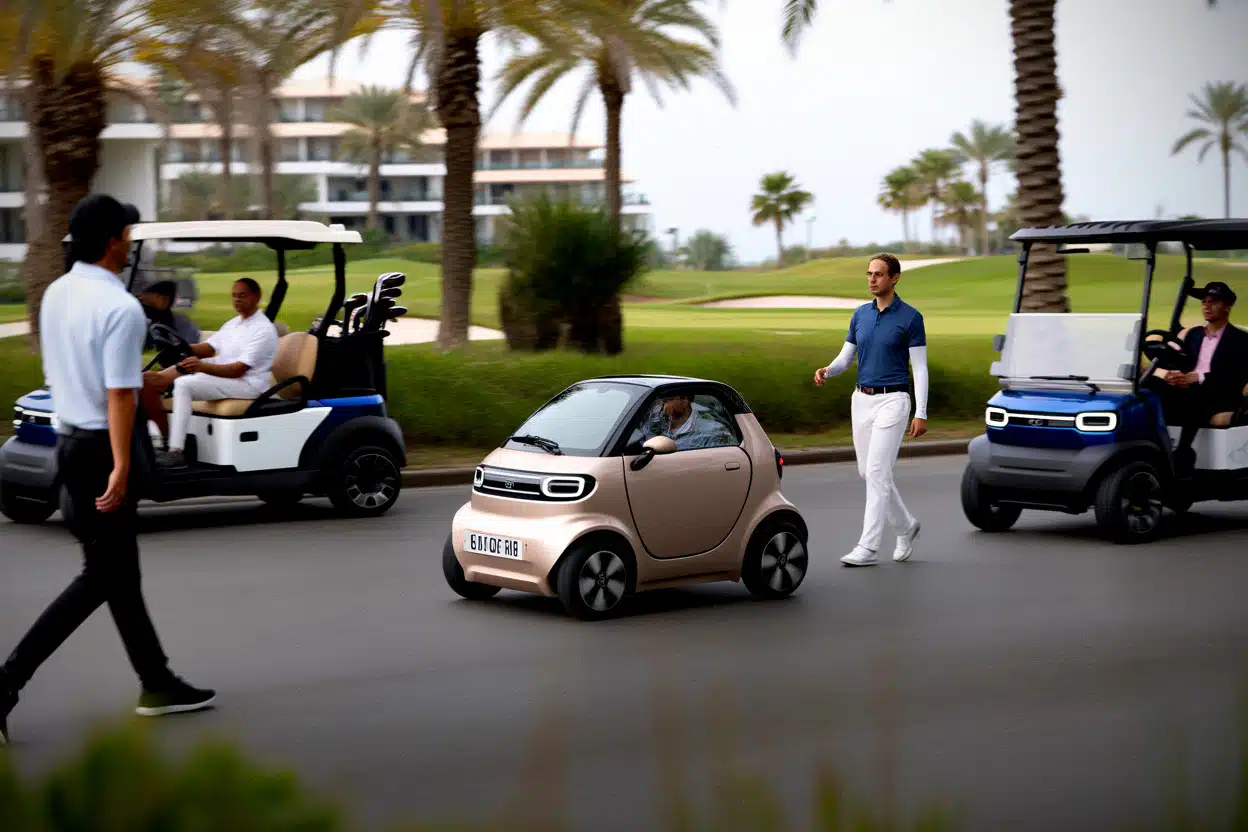
Top speed of 19 mph puts certification—and where it can drive—at the center
The Topolino’s stated 19 mph top speed places it firmly in low-speed territory, aligning with the environments Fiat is targeting first. That cap can reduce risk in areas shared with pedestrians and matches the internal rules of many private sites. But it also sharply limits access to normal road networks, shaping how big the addressable market is without changes.
In the U.S., low-speed vehicle categories are regulated and can vary by state, including required equipment, registration rules, licensing, and which roads are allowed. Automakers have to balance simplicity, cost, and compliance. A vehicle designed mainly for resort roads doesn’t necessarily need the same equipment as a car mixing with city traffic, and that affects both price and design.
Several specialized publications have raised the possibility of a kit that could bring the vehicle into compliance for broader use, with some media citing 2026 as a timeline for a “street-legal” option. For buyers, the key questions would be what the kit includes, how much it costs, how it’s installed, and what legal limits remain—since certification can still be partial, restricted to certain roads, equipment requirements, and speed thresholds.
Because of its size and speed, the Topolino sits on the border between multiple categories: microcar, low-speed vehicle, site mobility, and leisure transport. That gray zone can widen potential use cases, but it can also confuse consumers. Fiat’s decision to start where road use is secondary helps sidestep some of that complexity, but any move toward broader urban buyers would require clear guidance on where it can legally operate.
Stellantis tests a niche where low-speed vehicles already have a foothold
Fiat’s U.S. Topolino launch fits into Stellantis’ broader push to cover multiple price points and use cases in EVs. In the U.S., low-speed compact vehicles already serve residential developments, campuses, industrial sites, and recreation. Fiat’s entry brings a mainstream brand with a design-forward identity into a space often dominated by more utilitarian products.
Targeting resorts and golf courses is also a practical commercial move. Those customers often buy in fleets, plan replacements, and pay close attention to energy and maintenance costs. But they also demand fast repairs and reliable parts availability—meaning Fiat will need a service setup that works even if early volumes are limited.
The business model may also lean on accessories and options—personalization, charging solutions, maintenance contracts, and safety equipment tailored to specific uses. With a low starting price, profitability can shift toward services, after-sales support, and variants.
For now, Fiat appears to be insulating the Topolino from direct comparisons with conventional cars by framing it as local mobility. Whether it stays a profitable, limited-use product for private sites—or expands if regulation and certification options open more city use—will depend on demand and local rules.
Key Takeaways
- Fiat launches the electric Topolino in the U.S. starting at $13,995
- The model claims 46 miles of range and a top speed limited to 19 mph
- 5.4 kWh battery, with a full charge said to take about five hours
- The launch initially targets private communities, resorts, and golf courses, not highway use
Frequently Asked Questions
What is the price of the Fiat Topolino in the United States?
Fiat says the Topolino will start at $13,995 in the U.S. market, according to information reported by Reuters.
What range and top speed are announced?
The Topolino is rated for up to 46 miles of range (74 km) and a top speed of 19 mph, making it mainly suited for local trips.
How long does it take to recharge the battery?
Fiat lists a 5.4 kWh battery and a full recharge in about five hours, consistent with simple on-site charging.
Where does Fiat plan to sell the Topolino first?
The automaker is initially targeting private communities, resorts, and golf courses—settings where speeds are low and trips are short.
Will the Topolino be legal to drive on public roads everywhere in the United States?
That depends on local regulatory classifications and required equipment. Some industry outlets mention a road-legalization kit with a timeline pointing to 2026, but exact use will vary by state and applicable rules.
Sources
- Fiat lance la Topolino mini-voiture électrique aux États-Unis au prix …
- Fiat lance la Topolino mini-voiture électrique aux États-Unis au prix …
- Fiat launches Topolino mini EV in U.S. with $13,995 price tag | Reuters
- Fiat Topolino Arrives in US at $13,995 – The EV Report
- Fiat lance la mini-citadine électrique Topolino aux États-Unis au prix …