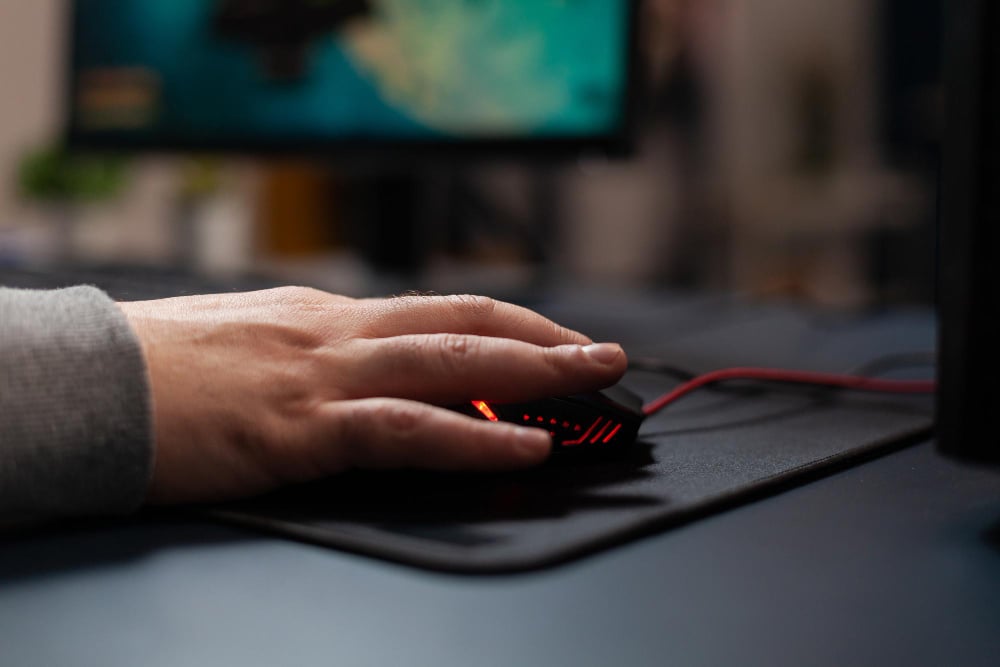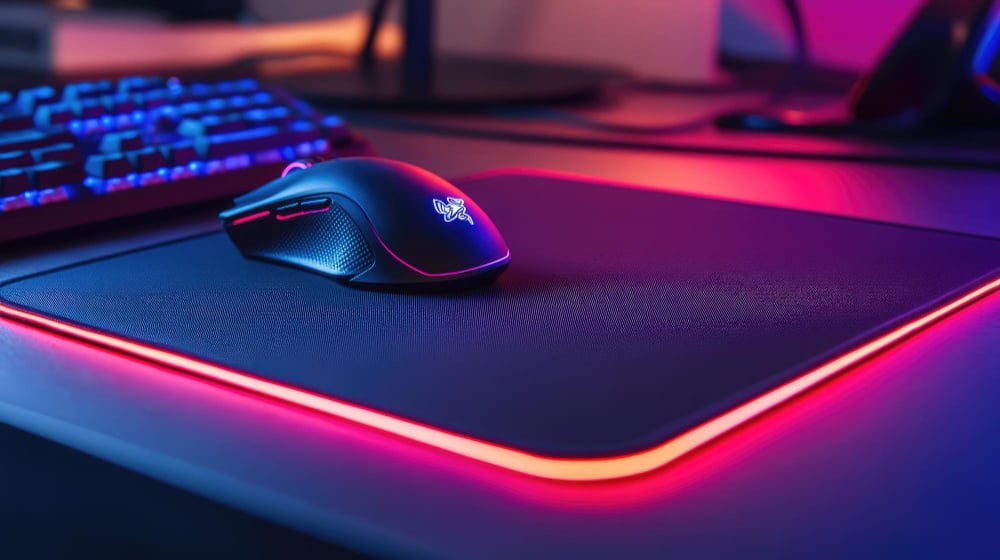
In elite esports, where a single missed pixel can cost a match, pros are pouring money into an unlikely piece of gear: the mouse pad.
High-end Japanese pads, often priced like premium peripherals, have become a quiet status symbol in competitive gaming circles because they promise something players actually feel: cleaner tracking, more consistent glide, and fewer “why did my aim do that?” moments when the pressure spikes.
It sounds trivial until you watch how modern esports is played. The mouse pad isn’t decoration. It’s the surface that decides how your sensor reads movement, how your hand stops on a dime, and how your wrist survives a six-hour scrim block.
The mouse pad effect: why the surface under your hand can change your game
Most people treat mouse pads like desk accessories. Pros treat them like performance equipment, right up there with a mouse, monitor, and sensitivity settings.
A gaming-grade pad is built for consistency: a uniform surface that optical and laser sensors can read reliably, a grippy base that won’t shift during fast flicks, and materials engineered to balance speed with control. Change the texture, and you change how the cursor accelerates, how it stops, and how “locked in” your aim feels.
Precision matters, especially when the margins are microscopic
The biggest selling point is tracking accuracy. Premium pads are designed to be uniform across the entire surface, so the sensor reads tiny micro-movements without skipping or jittering.
That consistency is crucial in games that demand surgical aim, think Counter-Strike-style headshots or tight camera control in fast shooters. Even the best mouse can feel “off” if the surface underneath it is inconsistent.
Glide isn’t just about being fast. It’s about predictable friction, enough resistance to stop precisely, but not so much that your arm fights the pad all day.
For pros who practice for hours, that balance can reduce wrist and forearm fatigue. Many high-end pads also use stitched edges to prevent irritation and fraying, and thickness choices that help keep the wrist comfortable during long sessions.
Why Japan? Craft culture meets esports engineering
The appeal of Japanese premium pads isn’t random. It’s tied to a manufacturing culture that prizes detail, repeatability, and refinement, traits Americans might associate with high-end camera lenses, chef’s knives, or boutique mechanical keyboards.
Instead of mass-market “one surface fits all,” many Japanese makers lean into meticulous material selection and tight quality control. For a pro, that reliability matters: your gear can’t feel different from one week to the next.
Kaizen and shokunin: the mindset behind the gear
Two Japanese concepts help explain the obsession.Kaizenmeans continuous improvement, constant tweaks to materials, weaving methods, coatings, and ergonomics.Shokuninrefers to the craftsperson’s pride in mastering every detail of the work.
In mouse-pad terms, that shows up as cleaner stitching, more durable surfaces, and a glide that stays consistent instead of breaking down after a few months of heavy use.
Not all pads feel the same: “speed,” “control,” and hybrid surfaces
Serious players don’t just buy “a pad.” They buy a surface that matches their style and sensitivity.
Speed padsminimize friction for fast, reactive movement, popular with players who rely on quick flicks and constant repositioning.Control padsadd texture and stopping power for micro-adjustments, often favored by precision aimers.Hybrid padstry to split the difference, offering a smoother glide without sacrificing too much braking.
Size is strategy, especially for low-sensitivity players
Pros often go big, and it’s not for aesthetics. Large pads give players room for wide, uninterrupted swipes, critical for low-sensitivity (low-DPI) setups where you physically move the mouse farther to cross the screen.
More space means fewer moments where you run out of pad mid-fight. It also helps reduce strain over time by letting the arm move naturally instead of forcing tight wrist-only motion.
Materials that hold up under punishment
What separates premium pads from cheap ones is how they’re built: dense micro-woven fabrics for consistent sensor response, specialized synthetic fibers for durability, and experimental coatings that blend cloth comfort with the speed of harder surfaces.
Equally important is the underside. High-end Japanese pads often use high-grip rubber bases designed to stay planted on the desk, even during aggressive play. Stitched edges aren’t just cosmetic, they prevent peeling and fraying that can ruin the feel of the pad and irritate the player’s arm.
Performance is the hook, but design helps sell the obsession
Japanese pads also tend to look different from the loud, logo-heavy style common in mainstream gaming gear. Many lean minimalist: muted colors, subtle textures, or art inspired by traditional Japanese design.
For players who spend thousands of hours at a desk, that calmer aesthetic can be part of the appeal. A setup isn’t just hardware, it’s an environment, and pros are famously picky about anything that affects focus.
The bottom line: a mouse pad as a competitive investment
The rush toward high-end Japanese mouse pads isn’t a fad so much as a reflection of where esports is headed: tiny advantages, relentlessly pursued.
When your career depends on consistency, a pad that tracks cleanly, stays put, feels comfortable, and doesn’t wear out quickly becomes more than an accessory. It’s part of the control system, one more way top players try to make sure the only variable in a match is the opponent.
| Matériau dominant | Caractéristiques principales | Avantages pour le joueur | Exemples d’application |
|---|---|---|---|
| Tissu micro-tissé | Surface douce, friction modérée, bonne réactivité du capteur. | Équilibre vitesse/contrôle, confort, absorption de la sueur. | Polyvalent pour la plupart des jeux. |
| Synthétique (polyester, nylon) | Haute densité, faible friction, grande durabilité, lavable. | Glisse rapide et constante, facile d’entretien, résistant. | FPS nécessitant des mouvements rapides. |
| Hybride (tissu + revêtement spécial) | Combinaison de textures, glisse contrôlée, toucher unique. | Précision améliorée, sensations tactiles distinctes. | Jeux de stratégie ou de précision. |
| Caoutchouc naturel (base) | Adhérence maximale, amortissement, stabilité. | Stabilité parfaite sur le bureau, confort pour le poignet. | Essentiel pour tous les types de tapis. |