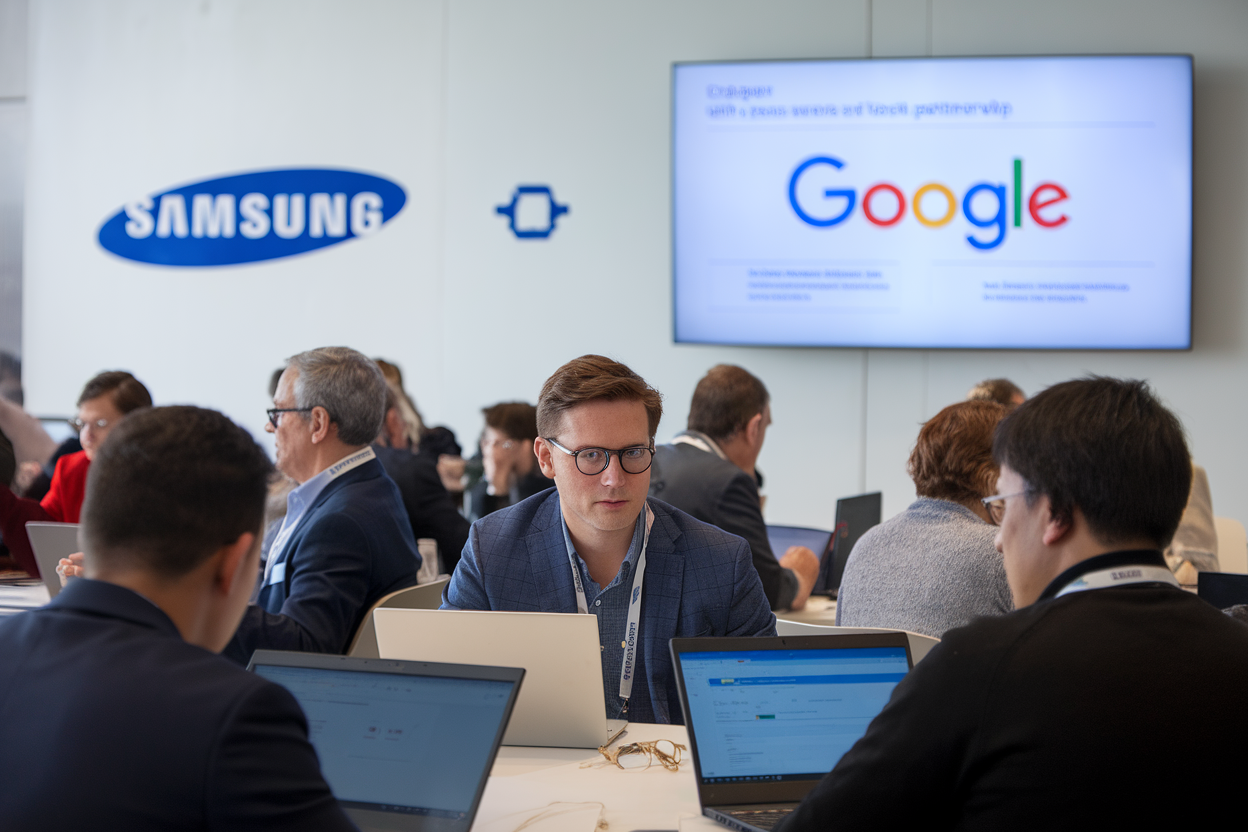
Google is talking with Samsung about manufacturing next-generation chips, according toThe Information. At the same time, Google is reportedly preparing to swap out a key Samsung component inside future Pixel phones: the 5G modem.
The takeaway is messy, but telling. Google and Samsung aren’t “partners” in one big, unified way anymore. They’re tied together piece by piece: a chip here, an AI deal there, and, if the reporting holds, a major breakup on cellular connectivity.
Pixel 11 could switch to a MediaTek 5G modem in 2026
A report focused on Google’s roadmap says the Pixel 11, expected in 2026, may use a MediaTek M90 5G modem instead of Samsung’s Exynos 5400i. If that happens, it would be one of Google’s clearest moves yet to reduce reliance on Samsung for critical Pixel hardware.
The same reporting suggests Google had already considered a MediaTek modem for the Pixel 10, described as arriving in late August, before sticking with Samsung. In other words, this wouldn’t be a last-minute pivot. It would be a decision Google has weighed, delayed, and revived.
Why does a modem matter so much? Because it’s not a plug-and-play part. The modem influences battery life, heat, call reliability, 5G performance, carrier certification, and launch timing. Changing suppliers can ripple through the entire product schedule.
At the same time, Google is still in talks with Samsung to make “next-gen” chips
Here’s the twist:The Informationreports Google is also in discussions with Samsung about producing next-generation chips. The report, as summarized in the French article, doesn’t specify which chips or which Google products they’d power, but Samsung being in the conversation signals Google is keeping its manufacturing options open.
That two-track strategy isn’t contradictory in the semiconductor world. Big tech companies routinely split relationships across components to avoid being cornered by any single supplier. Google can pursue Samsung’s chipmaking capacity or process technology while sourcing other parts, like modems, from rivals such as MediaTek.
Gemini keeps Google and Samsung aligned on software, even if hardware diverges
The Google-Samsung relationship also runs through software. A separate source cited in the article points to a deeper partnership to integrate Google’s Gemini AI into Samsung’s upcoming Galaxy S26 lineup.
For Americans, the significance is straightforward: Samsung is still the biggest Android powerhouse in the U.S. premium market, and Google still wants its AI services embedded where the most Android users are. Even if Google shifts Pixel components away from Samsung, Gemini could tighten the companies’ bond on the consumer-facing experience.
Samsung is juggling other chip suitors, including ByteDance
Samsung’s chip business isn’t just about Google. The article also cites reporting that ByteDance, the Chinese parent company of TikTok, is in talks with Samsung to manufacture a chip, aiming to receive samples by the end of March and eventually produce at least 100,000 units.
That matters because it turns chipmaking into a competition for factory slots. If Samsung is courting multiple major customers at once, capacity, execution, and delivery timelines become leverage, and risk, for everyone involved.
A modular partnership is replacing the old Google-Samsung storyline
Put it all together and the picture is clear: Google and Samsung are moving toward a modular relationship. Google may lean on Samsung for manufacturing discussions around future silicon, while handing other critical parts, like a 5G modem, to MediaTek.
For consumers, the impact shows up in the stuff people actually feel: signal strength, battery life, overheating, and camera performance. For the industry, it’s a bigger power struggle over who controls the roadmap for high-end Android hardware, and who gets to set the standards for on-device AI.