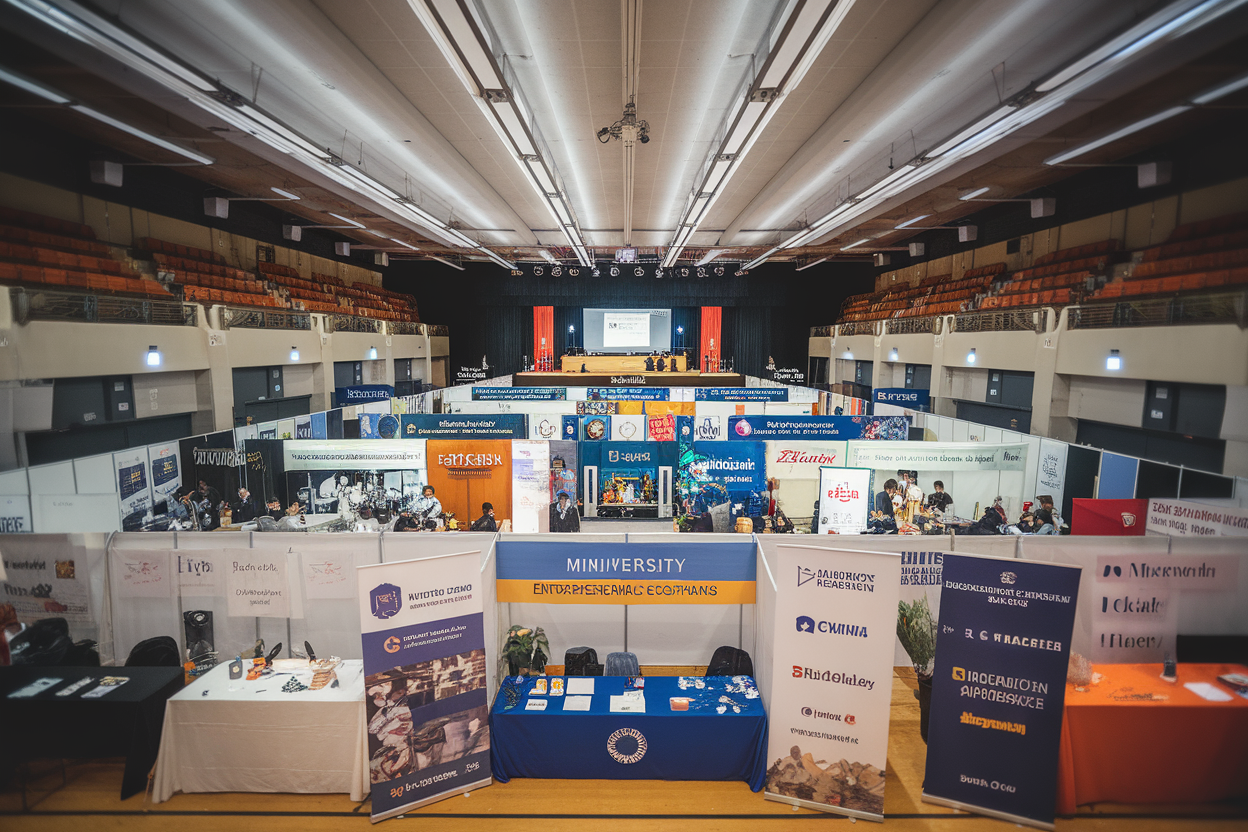
Inside a rugby stadium in Toulouse, France, a group of middle schoolers from a small town showed up with a business pitch, and proved they could hold their own in a room full of would-be entrepreneurs.
The student-run “mini-company,” called Lumiclé, traveled from Collège Saint-Louis in Capdenac to the region’s annual mini-enterprise expo, where nearly 120 student teams set up booths, demoed ideas, and delivered rapid-fire pitches to visitors and judges, according to the Toulouse education authority. Think science fair meets startup conference, just scaled down, and with real pressure to perform.
A stadium turned into a startup floor
The event took place Thursday, May 23, 2024, at Stade Ernest-Wallon, best known as the home venue for Toulouse’s pro rugby club. For Americans, picture a high school entrepreneurship showcase staged inside a minor-league ballpark: loud, competitive, and impossible to fade into the background.
The Académie de Toulouse, which oversees public education in the region, said the expo drew close to 120 mini-enterprises spanning ages from middle school through college. Local outletLa Dépêche du Midireported that Lumiclé was among the middle school teams making the trip to Toulouse to present their work.
Some event write-ups referenced “Hall 8” as the location, another way of describing the exhibition space used for the festival. Either way, the point was the same: this wasn’t a classroom presentation. It was a public-facing demo where students had minutes to grab attention and explain themselves.
What Lumiclé is, and what the students were really judged on
Lumiclé is a mini-enterprise run by 8th- and 9th-grade students (the French equivalents are 4e and 3e) at Collège Saint-Louis in Capdenac, according toLa Dépêche du Midi. The name hints at “light” and “key,” but the reporting focuses less on the product itself than on the experience: building something as a team and defending it in public.
That’s the core of these programs. Students don’t just display an object, they have to explain their process, justify choices, divide responsibilities, and deliver a coherent pitch to strangers who ask real questions.
In a crowded expo hall, that skill matters. A project that can’t be explained quickly gets lost. A pitch that’s all hype gets exposed just as fast.
Nearly 120 teams, from middle school to college
The scale is what makes the event a gut-check. With close to 120 teams in the same space, younger students end up presenting alongside older, more advanced groups, sometimes with sharper prototypes and more polished delivery.
But that gap can be the point. Seeing what older students do well forces younger teams to tighten their message: What’s the problem? What’s the solution? Why should anyone care? It’s the difference between a guided class assignment and a real-world demo where every step has to make sense.
Pitching, booth duty, and the pressure test of a live audience
Organizers and local coverage describe the expo as a test of the full package: visuals, demos, teamwork, and the ability to handle questions on the fly. Students have to pull people in, figure out what a visitor wants to know, make a case, and leave a clear takeaway, often while repeating the same pitch dozens of times.
That’s also where outside partners come in. One publication tied to the event said Lumiclé was supported by a group called Mégapub, suggesting the students had help on presentation, communication materials, or branding, exactly the kind of real-world feedback these programs are designed to introduce.
A prize, plus something that lasts longer
La Dépêche du Midialso reported that a Saint-Louis mini-enterprise received recognition tied to the Toulouse trip, underscoring that the work didn’t go unnoticed.
But the bigger payoff is what students carry home: learning to separate an argument from a slogan, to absorb criticism without falling apart, and to adjust either the project, or the way they explain it, based on what lands with an audience. For Lumiclé, the Toulouse expo wasn’t just a field trip. It was a public stress test of how well a student-built “company” can stand up when the room gets loud.