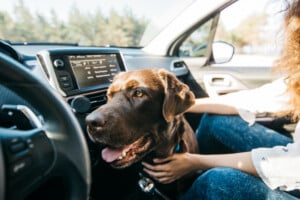
Your dog doesn’t need to be in the driver’s seat to cause a crash. An unrestrained pet can climb into your lap, slip under the pedals, or turn into a high-speed projectile in a sudden stop.
In much of Europe, that’s not just dangerous, it’s illegal. French road-safety rules treat pets like cargo: they must be secured so they can’t interfere with driving or fly forward in a collision. The same logic applies on U.S. roads, even if the laws vary by state and your insurance company’s fine print may matter after a wreck.
Here’s what the French rules say, the safest gear options, and the practical habits that keep both you and your dog out of trouble on the road.
What the law is getting at: control the car, secure the “load”
French traffic rules boil down to two common-sense requirements: the driver must stay in full control at all times, and anything being transported must be properly secured. Under that framework, a dog roaming the cabin, jumping on the driver, blocking the pedals, or distracting you, counts as a violation.
If you’re stopped, the cited fine is about €35, roughly $40 at current exchange rates. But the bigger risk is what happens after a crash: if your dog wasn’t secured, insurers may argue you increased the danger and try to limit coverage.
Even in the U.S., where the exact statutes differ, the safety principle is the same. If your dog can reach you while you’re driving, you’ve got a problem.
The safest option: a crash-worthy crate
A sturdy travel crate is widely considered the most reliable way to protect a dog in a hard brake or collision. Done right, it keeps your pet contained and prevents them from becoming a hazard to everyone in the car.
Where to put the crate:
For medium to large dogs, the most stable spot is typically the cargo area, braced against the rear seats so it can’t slide. For small dogs, placing a properly secured crate on the floor behind a front seat can reduce movement and keep the crate from tipping.
Some people put tiny carriers on the front passenger seat, but that comes with a major warning: an airbag can seriously injure a small dog in a crash. If you must use that position, follow your vehicle’s safety guidance and avoid putting a pet where an airbag could deploy into them.
There’s also a behavioral upside: many dogs relax in a crate because it feels like a den. The key is to introduce it at home first, treats, a favorite toy, or a shirt that smells like you, so the crate signals comfort, not panic.
For big dogs in the back: use a solid barrier, not a flimsy net
If your Labrador, German Shepherd, or Golden Retriever rides in the cargo area, a rigid barrier between the cargo space and the cabin can make a huge difference. The goal is simple: keep the dog from being thrown forward if you slam the brakes or get hit.
Not all barriers are equal. A metal gate that’s firmly anchored to the vehicle’s frame points is far more protective than a soft net, which can tear or give way under the force of a large dog in a crash.
Before long drives, check the straps, mounts, and latches. A 30-second inspection can prevent a catastrophic failure.
The everyday go-to: a crash-tested harness and seat-belt tether
For many owners, the most practical daily setup is a dog safety harness connected to a short tether that clicks into the seat-belt buckle. It keeps your dog from climbing into the front and helps limit movement during sudden stops.
One rule is non-negotiable: never clip a seat belt directly to your dog’s collar. In a crash, that can cause choking or severe neck injuries. Use a properly fitted harness designed for car travel.
When you shop, look for harnesses that have been crash-tested by recognized programs. Marketing claims are cheap; test results are what matter.
Road-trip habits that can save your dog’s life
Heat can turn deadly fast.Don’t leave your dog alone in a parked car, even with the windows cracked. The article warns that cabin temperatures can top 122°F in under 10 minutes in hot weather. Heatstroke is a veterinary emergency and can be fatal.
Stop about every two hours.On longer drives, plan breaks roughly every two hours for water and a short walk. Keep your dog leashed at rest stops; traffic, unfamiliar smells, and open doors are a recipe for a bolt.
Head out the window isn’t harmless.Flying debris can injure eyes, wind can contribute to ear problems, and a sudden stop can send a dog off-balance. Keep windows up enough to prevent your dog from leaning out.
Build up to longer drives.If your dog gets carsick or anxious, start with short trips to positive destinations, like a park, before attempting a multi-hour haul.
Watch the meal timing.Avoid feeding right before you leave. The guidance here: give the last full meal at least two hours before departure, and keep fresh water available.
Choosing the right setup depends on your dog’s size
There’s no one-size-fits-all solution. Small dogs often do best in a secured crate; medium dogs may be safest in a crash-tested harness or crate; large dogs riding in the cargo area need either a properly sized crate or a rigid, well-mounted barrier.
But the bottom line doesn’t change: an unsecured dog can become a projectile in a crash. Whatever setup you choose, don’t turn the key until your dog is restrained.
| Taille du chien | Solution recommandée | Niveau de sécurité |
|---|---|---|
| Petit chien | Caisse de transport ou cage de transport au sol (derrière le siège avant) | Très élevé |
| Chien de taille moyenne | Harnais de sécurité + attache ceinture de sécurité (siège arrière) | Élevé |
| Grand chien | Coffre + grille de séparation métallique fixée aux montants | Très élevé |