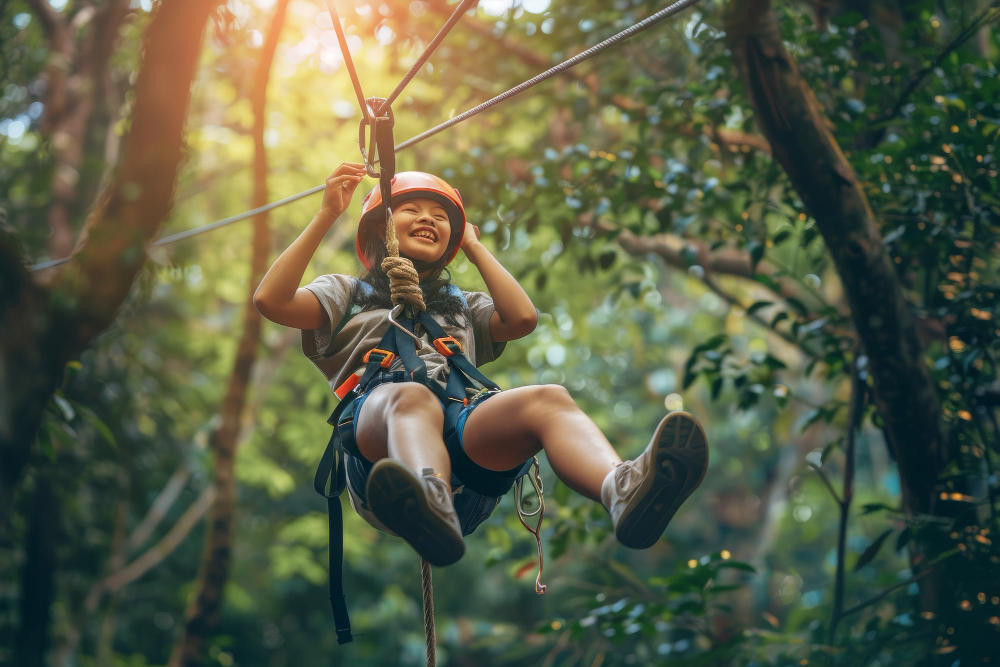
Adventure parks, those treetop obstacle courses and zip-line circuits that have become a go-to weekend outing, are surging in popularity across Europe. Behind the boom is a quieter revolution: safety systems designed to keep guests clipped in from start to finish, cutting down on user error and easing the workload for staff.
French manufacturers, led by brands like CLiC iT, are pushing “continuous belay” technology, patented setups built around a continuous lifeline that prevents accidental unclipping. The pitch is simple: fewer mistakes, smoother traffic flow on busy days, and more confidence for families, schools, and corporate groups.
Why “continuous connection” is becoming the new standard
The biggest risk on a high-ropes course isn’t usually equipment failure, it’s a human mistake at a transition point, when someone fumbles a carabiner or unhooks at the wrong time. Continuous safety systems are built to remove that moment of vulnerability.
Instead of relying on guests to clip and unclip correctly at every platform, the system keeps them attached the entire time. In practice, that means a trolley or guided connector travels along a fixed cable, so participants move from element to element without ever fully disconnecting.
Patented lifelines, fewer bottlenecks, less stress for staff
Operators who install patented continuous lifelines say the benefits show up immediately on the ground. When guests don’t have to manage traditional carabiners at each station, lines move faster and backups ease, especially during peak hours.
It also reduces what instructors and monitors have to watch for. With fewer opportunities for a wrong clip, staff can focus more on coaching, pacing, and spotting guests who are nervous or physically struggling.
How it works: the “never unclip” approach
A continuous lifeline system typically uses a cable-based track with a trolley that slides along the route. The participant’s lanyards are designed to interface with that trolley, making it difficult, or impossible, to detach in the middle of the course.
The result is a simplified experience for first-timers and kids, and a more predictable safety routine for operators training seasonal employees.
What gear matters most on a ropes course
Even with continuous systems, the basics still matter. Parks typically build their safety setup around a combination of harnesses, certified pulleys, appropriate lanyards (often with energy absorbers), and connectors designed for the specific lifeline technology in use.
Choosing the right mix depends on the audience, children’s routes versus advanced courses, and the park’s expected volume. The article emphasizes that compatibility across components makes maintenance easier and allows parks to upgrade parts of a system without rebuilding everything.
Why “Made in France” is part of the sales pitch
French manufacturers are also leaning hard into local production and tight quality control, arguing that shorter supply chains improve traceability and responsiveness. They position their products as built to meet strict European personal protective equipment rules, standards that are broadly comparable in spirit to the rigorous certification culture Americans associate with regulated safety gear.
For operators, the promise is practical: faster support, on-site training, and equipment designed around real-world testing rather than lab-only assumptions.
The bigger takeaway for the industry
As adventure parks expand and attract more casual visitors, not just hardcore thrill-seekers, operators are under pressure to make courses feel safer and easier to navigate without watering down the experience. Continuous-connection systems are emerging as a key tool to do that, turning safety from a constant manual task into something engineered into the course itself.
| 🔹 Élément | 🔸 Information |
|---|---|
| 🇫🇷 Fabrication française | Savoir-faire reconnu basé sur la qualité, l’innovation et une production locale maîtrisée |
| 🧗 Parcours en hauteur | Activité en plein essor nécessitant des systèmes de sécurité fiables et adaptés |
| 🔒 Sécurité continue | Dispositif empêchant tout décrochage grâce à une connexion permanente sur le parcours |
| 🧩 Ligne de vie continue | Câble avec chariot intégré permettant une progression sans manipulation ni erreur |
| 💡 Solutions brevetées | Technologies testées et certifiées offrant sécurité accrue et conformité aux normes EPI |
| ⚙️ Équipements clés | Longes, harnais, poulies et mousquetons spécifiques assurant protection et fluidité |
| 📈 Avantages terrain | Réduction des risques, meilleure gestion des flux et amélioration de l’expérience utilisateur |
| 🛠️ Exploitants | Gain de temps, maintenance simplifiée et formation facilitée des équipes |
| Équipement | Fonction principale | Atout majeur |
|---|---|---|
| Longes | Assurer la liaison entre l’utilisateur et laligne de vie | Grande résistance à l’usure et amortissement en cas de choc |
| Harnais | Soutenir le corps en cas de chute | Confort optimal et simplicité d’ajustement |
| Poulies | Permettre la progression sur câbles et tyroliennes | Glisse fluide, compatibilité avec leslignes de vie continues |
| Mousquetons spécifiques | Connecter rapidement différents points d’ancrage | Simplicité d’ouverture mais sécurité anti-décrochage |
| Type | Spécificités |
|---|---|
| Traditionnelle | Nécessite une vigilance à chaque atelier |
| Sécurité continue | Zéro décrochage accidentel possible |