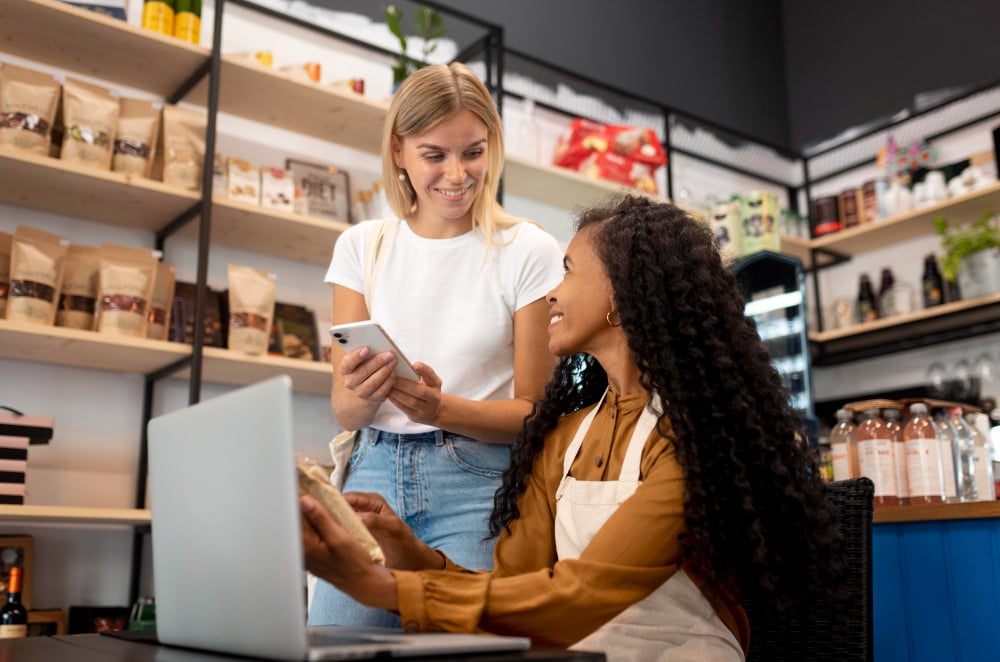
Americans still buy most things in person. But getting them through the door is getting harder.
Even as roughly 85% of purchases are still made in physical stores, in-store traffic has fallen about 20% since 2020, squeezed by the convenience of e-commerce and mega-marketplaces. Retailers that fight back by turning shopping into an experience, not a transaction, are seeing visits jump 30% to 50% and average basket size climb about 25%.
The message for 2026 is blunt: discounts alone won’t save brick-and-mortar. Stores that feel like destinations, fun, sensory, and shareable, are the ones pulling customers off their couches and back onto Main Street.
Make your storefront stop people in their tracks
Your window display is your first pitch, and you’ve got about three to five seconds to land it. Strong lighting, clean staging, and a display that changes often can turn a forgettable facade into a magnet.
A practical cadence: refresh the window every three to four weeks. It signals momentum, like a restaurant with a new seasonal menu, and gives regular passersby a reason to look again.
To break through the visual noise, add something unexpected: kinetic mannequins, a small art installation, or a mirror setup that makes people pause. Some retailers are experimenting with 3D hologram-style visuals that appear to float, creating a “wait, what is that?” moment that people photograph and post.
Use lighting like a director, not a utility bill
Lighting doesn’t just help customers see. It tells them what matters. A spotlight on a new arrival, backlighting behind a message, or a string of lights that subtly guides the eye can shape how shoppers move, and what they notice.
Retailers also test different color temperatures (warmer vs. cooler light) to match the mood of the brand and the reality of the space. The goal is simple: make the product look irresistible, not flat.
Turn your store into an event space, on purpose
Workshops, demos, creator meet-and-greets, and invite-only shopping nights can turn a store into a community hub instead of a place people “run into” when they need something. Events create urgency, exclusivity, and a reason to show up now.
The retailers who do this well plan a full-year calendar, anchored to big shopping moments, but also built around original themes: DIY classes, tastings, styling sessions, or personalized consultations. These are the kinds of experiences that travel on social media because they look like something, not just a sale sign.
Partner locally to borrow each other’s audiences
Local collaborations can expand reach fast, especially for small and mid-sized retailers. Think cross-promotions that feel natural: a florist teaming up with a wine shop for a “bouquets and bottles” workshop, or a salon partnering with a boutique for a makeover night.
Done right, partnerships don’t just add foot traffic, they deepen neighborhood credibility. You’re not just selling products; you’re showing you’re part of the local fabric.
Win the online search before the in-store visit
For many shoppers, the trip starts on a phone, even if the purchase ends at the register. That makes your Google Business Profile (the listing that shows up in Google Search and Maps) non-negotiable: accurate hours, current photos, clear categories, and a steady stream of reviews.
One stat retailers cite often: about 88% of consumers trust online reviews as much as personal recommendations. Translation: a handful of recent, detailed reviews can outperform a lot of paid marketing.
On social, the play is consistency over perfection. Post new arrivals, behind-the-scenes clips, customer testimonials (with permission), and quick expert tips. Short videos on Instagram Reels and TikTok keep your store top-of-mind, especially when you use location tags and neighborhood hashtags.
Run hyper-local ads that give people a reason to walk in
Geo-targeted ads on Facebook, Instagram, and Google can reach people within a tight radius of your store, down to specific ZIP codes or a few miles around your address. The key is offering something that requires an in-person visit: an in-store-only discount, a gift with purchase, or early access to an event.
Retargeting, ads shown to people who visited your site but didn’t buy, can also nudge shoppers who are already interested. Keep the message simple and the offer concrete.
Use immersive tech to create “you had to be there” moments
Shoppers come to stores for what the internet can’t deliver: sensory discovery, human interaction, and surprise. That’s where immersive tech can pay off, if it’s used to reduce friction or add delight.
Examples include interactive kiosks to browse the full catalog, smart mirrors that let customers virtually try on outfits, or touchscreens that help personalize products. Some retailers are also experimenting with 3D dynamic displays that make visuals appear to hover in space, an attention-grabber that can increase dwell time and spark impulse buys.
Train staff to deliver the one thing Amazon can’t
Tech doesn’t replace people. It raises the bar for them.
Stores that outperform invest in warm greetings, active listening, and real product knowledge, then back it up with customer data. A basic CRM system can track preferences, purchase history, and key dates (like birthdays) so returning shoppers feel recognized instead of processed.
Design for the senses, sound, scent, touch, and comfort
Atmosphere isn’t fluff; it’s strategy. Music can slow shoppers down and extend browsing time. A subtle signature scent can make a brand memorable. Temperature, cleanliness, and layout shape whether people linger or leave.
Hands-on elements matter, too: samples, tastings, live demos, and textures customers can feel. The more senses you engage, the more likely shoppers are to remember the visit, and buy.
Build a loyalty program people actually want
Retailers often cite a classic rule of thumb: keeping a customer costs about five times less than acquiring a new one. A well-designed loyalty program increases repeat visits and purchase frequency, especially when rewards are straightforward.
Think stackable discounts, birthday perks, early access to private sales, and points that convert into real products. Digital loyalty, through an app or phone-number-based account, makes it easier to manage and enables personalized outreach without slowing down checkout.
Measure what works, then keep iterating
If you don’t measure, you’re guessing. Retailers are increasingly using door counters and POS data to track traffic, conversion rates, average basket size, and peak hours, then tying those numbers back to specific campaigns and events.
Customer feedback fills in what spreadsheets miss. Quick checkout surveys, email polls, or even casual conversations can reveal why people didn’t buy, what they couldn’t find, or what made them stay longer.
The retailers winning in 2026 treat strategy like a loop: test small, learn fast, scale what works, and retire what doesn’t.
The 2026 playbook: what to do first
The stores that thrive won’t be the ones shouting the loudest about promotions. They’ll be the ones building a place people want to visit, then using digital tools to make that visit happen.
- Refresh window displays every 3–4 weeks with strong lighting and bold visuals
- Schedule monthly in-store events that create routine and urgency
- Keep your Google Business Profile current and actively ask for reviews
- Add at least one immersive element (interactive screen, AR, hologram-style display) to create surprise
- Train staff for personalized service and sharper product guidance
- Run geo-targeted ads with in-store-only offers
- Launch a digital loyalty program that rewards repeat visits
- Track traffic, conversion, and basket size, and adjust relentlessly
Brick-and-mortar isn’t dying. It’s being forced to earn the trip. Retailers that embrace that reality, and invest in experience as aggressively as they once invested in inventory, are the ones positioned to turn falling foot traffic into a comeback story.
| 🔹 Élément | 🔸 Information |
|---|---|
| 📊 Constat marché | 85 % des achats restent en magasin, mais le trafic a chuté de 20 % depuis 2020 |
| 🛍️ Évolution client | Les consommateurs recherchent désormais une expérience sensorielle et humaine, au-delà de l’achat |
| 🚀 Leviers efficaces | Expérience immersive, animations et technologies peuvent augmenter la fréquentation de 30 à 50 % |
| 🪟 Vitrine & attractivité | Une vitrine renouvelée régulièrement et visuellement impactante capte l’attention en quelques secondes |
| 🎉 Animation & événements | Ateliers, démonstrations et partenariats locaux génèrent du trafic et renforcent l’engagement |
| 📱 Digital & visibilité | Google Business Profile, réseaux sociaux et publicité géolocalisée attirent des visiteurs en magasin |
| 🧑💼 Expérience en magasin | Accueil personnalisé, ambiance sensorielle et technologies immersives augmentent le panier moyen (+25 %) |
| 🎯 Fidélisation | Programme de fidélité digitalisé améliore la rétention et la fréquence d’achat |
| 📈 Pilotage & performance | Analyse des données (trafic, conversion, avis clients) pour ajuster la stratégie en continu |
| Stratégie | Impact sur le trafic | Coût de mise en œuvre | Délai de résultat |
|---|---|---|---|
| Vitrine renouvelée régulièrement | Moyen à élevé | Faible | Immédiat |
| Événements et animations | Élevé | Moyen | Court terme |
| Publicité géolocalisée | Élevé | Moyen | Court terme |
| Technologies immersives (hologrammes, écrans interactifs) | Très élevé | Moyen à élevé | Immédiat |
| Programme de fidélité | Moyen | Faible | Moyen terme |
| Optimisation Google Business Profile | Moyen | Gratuit | Moyen terme |
| Partenariats locaux | Moyen | Faible | Court terme |